Martyr
Nikita Sukharev
Christian martyred for the faith of Christ in 1942, during the Soviet persecution.
Life
Holy Martyr Nikita Sukharev was a peasant and weaver, a member of the church community of Orekhovo-Zuevo, and he died in the prison of Omsk on 4 July 1942 after seeking the reopening of his church.
The struggle for the church
In 1939, in the town of Orekhovo-Zuevo in the Moscow region, the last of the churches still serving in the district was closed, the church of the Nativity of the Mother of God, built and adorned between 1872 and 1901. The faithful did not accept the decision. Under Soviet law only the "twenty" registered with the authorities could petition for its reopening, so in May 1940 the parishioners elected its members anew, with Dimitri Ivanovich Volkov as warden, born in 1871, a carpenter, retired. Nikita Andreevich Sukharev, born in 1876 in the village of Pochinki in the Ryazan province, to the peasants Andrei Kuzmich and Anisia Alekseevna Sukharev, had finished the village school and worked as a weaver at a factory in the town; at retirement age he was a member of the church council.
The twenty asked for the registration of a priest, and Metropolitan Sergius, the locum tenens of the patriarchal throne, sent an archpriest from Zagorsk, who demanded five hundred roubles and left, never to return. The authorities offered pretexts, asking first for the building to be repaired. The parishioners collected three thousand roubles, paid all the taxes and repaired the church. The warden Volkov and Nikita Sukharev then went to the chairman of the town soviet, who answered that the workers demanded the church be closed. They hired a lawyer in Moscow and went twice to the regional offices, then, on 15 May 1941, lodged a complaint with the Supreme Soviet. The NKVD recruited an informer from among the twenty, who reported that Nikita Andreevich complained that the authorities were closing churches and that he had said that all that was happening in the country resembled the persecution of Christians in Roman times.
Arrest and death
On 22 June 1941, on the very day the war began, the Moscow NKVD leadership decided to arrest the two, and the next day Volkov and Sukharev were arrested. At the interrogation Nikita Andreevich said that he had perhaps been arrested for the church literature he kept and for taking part in the reopening of the church, and he denied any counter-revolutionary act. When Moscow was threatened by German troops, the investigators and the prisoners were sent to Omsk, where exhausting interrogations resumed on 3 September. Sukharev admitted that he had said at a meeting of the twenty that, although the constitution provides for freedom of faith, in fact the church could not be reopened, and that, speaking with a woman, he had said that as the Roman persecution ended and Christianity triumphed, so the present one would end. He admitted being a member of a group of churchmen but denied any activity against the authorities. The warden Volkov answered in the same way.
On 4 September 1941 the investigation ended. On 27 December 1941 the Special Council of the NKVD sentenced both to five years of exile in the Omsk region, but they were not released from prison. Advanced age, the hard transport, the interrogations and hunger wore them out. Dimitri Volkov died on 4 March 1942 in Omsk prison no. 1, and Nikita Sukharev four months later, on 4 July 1942, in the same prison; both were buried in unknown graves.
He is remembered on 4 July, on 7 February (a movable day) in the Synaxis of the New Martyrs and Confessors, on 26 February in the Synaxis of the Saints of the Omsk Metropolis, and on 5 September (a movable day) in the Synaxis of the Saints of Moscow, in the new style.
Commemorated the same day June 21
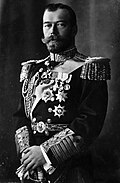 Nicholas IIPassion-Bearer · Emperor of RussiaJun 21
 Julian of TarsusMartyrJun 21
 Luarsab II of KartliMartyr · King of KartliJun 21
 Anastasia of SerbiaVenerable · Wife of Stefan NemanjaJun 21
 Archil of KakhetiMartyr · Georgian prince of KakhetiJun 21
 George LavrovConfessor · Archimandrite of Danilov MonasteryJun 21
 Julian of OrtaSaint · DeaconJun 21
 Fyodor IvanovichRight-Believing · Prince of StarodubJun 21
- Alexander IvanovskyHieromartyr · PriestJun 21
- Vasil DimitrovSaintJun 21
- Abraham of PinegaVenerable · Venerable of PinegaJun 21
- AgofredusVenerableJun 21