Hieromartyr
Paul Fokin
Cleric martyred for the faith of Christ in 1918, during the Soviet persecution.
Life
Holy Hieromartyr Paul Fokin, a priest, was born in 1883 in a family of servants of the Church; his mother was a prosphora baker. Besides him there were in the house two brothers, who became priests, and two sisters, Eugenia and Vera. He entered the Perm Seminary, but after two years married Taisia Vsevolodovna, the daughter of well-off townspeople, and they had five children: Nikolai, Lydia, Zinaida, Nina and Eugenia. He was ordained deacon in 1900 and for twelve years served in the Perm diocese. In March 1912 he was moved to Yekaterinburg, to the Cathedral of Saint Catherine, as a psalmist, and in December he was ordained priest and sent to the church of the Presentation in the village of Murzinskoe, in the Verkhoturye district.
The village, on the river Neyva, was known for its icon of Saint Paraskeva and for the semi-precious stones of the surroundings, which the peasants mined and cut. Father Paul served there five years and enjoyed everyone's trust and love. The year 1917 came, with the revolutions of February and October. Persecution in the Urals began earlier than the official terror of 5 September 1918, through Red detachments. Father Paul, the most zealous of the village's clergy, preached and spoke with parishioners, and the authorities counted this as anti-Soviet agitation. On 8 June 1918 he signed a pledge not to preach against Soviet power. A military board was set up in the village, and the deacon Alexander Zemlyanikov was arrested and then driven out. When the whole male population refused to enlist in the Red Army, a punitive detachment arrived from Nizhny Tagil, demanded a contribution of ten thousand roubles and ordered the arrest of the priest and seventeen other men.
Father Paul was shot at Alapaevsk on 9 September 1918. It is reported that the arrested were killed first near the station, later taken in wagons outside the town, and at other times to a sandy area with pits. His wife was left without means, with five small children. In September 1918 the diocesan assembly in Yekaterinburg decided to help the families of murdered priests, including that of Father Paul, but the summer of 1919 brought back Bolshevik rule, and the help ended.
He was numbered among the saints in the Synaxis of the New Martyrs and Confessors of Russia of the Yekaterinburg diocese on 17 July 2002. He is commemorated on 9 September, on 7 February (a movable date) in the Synaxis of the New Martyrs and Confessors of the Russian Church and on 11 February in the Synaxis of the Saints of Yekaterinburg, in the new style.
Commemorated the same day August 27
 Liberius of RomeSaint · Bishop of RomeAug 27
 Hosius of CordubaSaint · Bishop of CordubaAug 27
 Caesarius of ArlesSaint · Archbishop of ArlesAug 27
 Poemen the GreatVenerable · Desert FatherAug 27
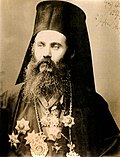 Chrysostomos of SmyrnaHieromartyr · Metropolitan of SmyrnaAug 27
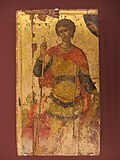 PhanouriosMartyr · the Newly RevealedAug 27
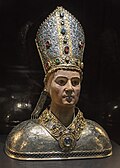 Lycerius of CouseransSaint · Bishop of CouseransAug 27
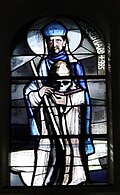 Gebhard of ConstanceSaint · Bishop of ConstanceAug 27
 NarnusSaint · First bishop of BergamoAug 27
 Kuksha of the Kiev CavesHieromartyr · Monk of the Kiev Caves LavraAug 27
 Rufus of CapuaMartyrAug 27
 John SmirnovHieromartyr · Archpriest at ZarayskAug 27