
Venerable
Plato of Sakkoudion
Abbot of Sakkoudion
Byzantine official who became a monk in 759, abbot of Sakkoudion and uncle of Theodore the Studite; died in 814.
- Feast
- April 5old style April 18
- Reposed
- 8149th century
- Place
- Monastery of Stoudios
- Order
- Venerables
Life
The Venerable Plato of Sakkoudion (Plato the Studite) was a minor Byzantine official who became a monk in 759, the first abbot of the monastery of Sakkoudion on Mount Olympus in Bithynia and uncle of Saint Theodore the Studite. He was born around 735 (according to others 740), probably at Constantinople, and died on 4 April 814 (according to some sources 5 April 813) at Constantinople. He is commemorated on 4 or 5 April, as a venerable and confessor.
Youth
He was not yet thirteen when his parents died of plague, and his uncle, the chief treasurer of the empire, took him as assistant, as a scribe. He did his work well. Being of noble birth, with virtues and skill, he was thought a desirable bridegroom, but Plato felt drawn to prayer and solitude. He persuaded his three brothers to give themselves to God and live in celibacy. After giving the poor all his property, he retired to Mount Olympus in Mysia, on the border between Phrygia and Bithynia (now Uludağ), to the Symbola monastery. There he worked at copying books and compiling collections from the writings of the Holy Fathers. After the death of the abbot Theoctistus, in 770, he became abbot. Because he refused the metropolitan see of Nicomedia, offered him by Patriarch Tarasius, or the headship of a monastery in Constantinople, he withdrew into the wilderness with his nephews Theodore the Studite and Joseph, bishop of Thessalonica, and in 783 (according to another source 782) founded the monastery of Sakkoudion, on Mount Olympus in Bithynia, of which he became the first abbot.
Confession
With his nephew Theodore the Studite he became known for his orthodox stance toward the holy icons in the time of Byzantine iconoclasm, and took part in the Seventh Ecumenical Council at Nicaea, in 787. He was also known for his firm opposition to the second marriage of Emperor Constantine VI to his niece Theodote (the Moechian controversy). Because he rebuked the emperor, who married a second time during the life of his first wife, he was imprisoned. After the emperor's death he was released and moved to the Stoudios monastery in Constantinople, of which his nephew Theodore the Studite was then abbot. Under Emperor Nikephoros, in 807, he was persecuted again and exiled. Returning from exile in 811, he fell asleep in 813 or 814.
Commemorated the same day April 5
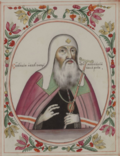 Job of MoscowSaint · First Patriarch of MoscowApr 5
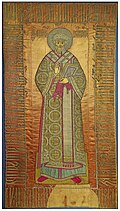 Philip I of MoscowSaint · Metropolitan of MoscowApr 5
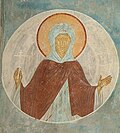 Theodora of ThessalonicaVenerable · Nun of ThessalonicaApr 5
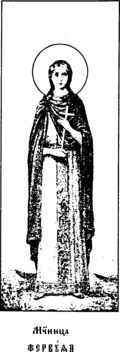 PherbuthaMartyrApr 5
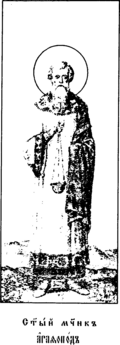 Theodulus and AgathopodesHoly Martyrs · Martyrs of ThessalonicaApr 5
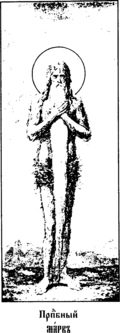 Mark of AthensVenerable · Hermit and fool for ChristApr 5
- Agathopus of ThessalonikiMartyrApr 5
 Argyre of ProusaNew MartyrApr 5
- Nicholas SimoHieromartyr · ArchpriestApr 5
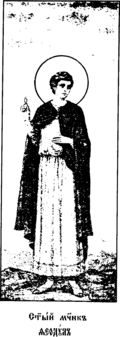 Theodulus of ThessalonikiMartyrApr 5
- AbdiesusSaintApr 5
- Alexis KrotenkovHieromartyrApr 5