Venerable Martyr
Raphaela of Chyhyryn
Nun of Chyhyryn, martyred for the faith of Christ.
Life
Holy Venerable Martyr Raphaela of Chyhyryn (Tertatskaya), abbess, was the last abbess of the Holy Trinity Monastery in Chyhyryn and was killed on a night in August 1926 by anti-religious activists. Her relics were found in 2003, and she was canonized in 2005.
No records of her life have been kept; the diocesan archives perished in the early twenties, and the news comes from the memories of old people and former members of the monastery. According to these tellings, Raisa Vasilievna Tertatskaya was born in 1877 in a pious noble family. From childhood her heart burned with love for the Lord; she withdrew to pray and was moved by church chant. As an adolescent she asked her parents' blessing to enter a monastery. She grew up in the Holy Trinity Monastery under the guidance of old nuns and tried confessors. She fulfilled various obediences with zeal and was skilled: she embroidered and wove carpets, and the towels she made were kept with care for many years. She loved the services most of all; she had a fine voice and keen ear and sang in the choir. She knew the Psalter by heart, and its unceasing reading later became her support. She also loved flowers: with artistic taste she adorned the churches with them and made, in her cell and in the paradise garden of the monastery, real greenhouses, especially of roses. It is not known when she was tonsured; the Lord gave her the name Raphaela, that is, God's healer, and later gave her the gift of healing bodily and spiritual illnesses.
On 29 August 1920 she was named chairwoman of the community, and on 19 December of the same year, on the feast of St Nicholas, abbess of the monastery (after the death of Abbess Parascheva), in the hardest time. She knew that the abbess's staff was the lot of martyrdom. Small in body and weak, she had strong faith and put her hope in the Lord alone. From the first months of the persecution she decided, with the sisters, not to yield to the pressure of the authorities and not to leave the place of her struggle. She did much to keep the order of the monastery and to protect her flock from militant atheists. Knowing that the requisition of the buildings was inevitable, she proposed to the leadership in Chyhyryn that orphan children be lodged in the monastery, helping them through the famine from the monastery's reserves. The authorities were forced to reckon with her deeds, avoided her and hated her in secret.
After the final closure, some of the remaining sisters moved to a private house in Chyhyryn, on Dvoryanska Street no. 69, to a devout family, where they lived strictly in unceasing prayer. The house became a place of services and a shelter for persecuted clergy, among them several priests who would receive the crown of martyrdom. On a night in August 1926 a local fool for Christ, Bartholomew, known for foresight, knocked at the window: Mother Raphaela, run, in half an hour death awaits you. The abbess answered firmly: All is the will of God. I will not leave my sisters. Soon activists of the organization The Godless burst into the house, led by their leader, a Chekist; they seized the abbess, led her outside, tied her to a tree, piled hay around her and set it alight, demanding that she take off her cross and give them the church objects she had hidden. Mother Elpidifora, the former treasurer, took the icon of the Mother of God of the Burning Bush, and the sisters came out into the yard without fear, fell on their knees and prayed. Suddenly thunder boomed, lightning flashed and a heavy rain began, and the fire went out. The tormentors laid her bound on a cart and took her to an old slaughterhouse, where, at forty-nine, she was subjected to cruel torments and beaten. Sister Maria Nagornya, a novice who lived nearby, saw it all, slipped in when the killers left and dug up the mutilated body; the abbess still breathed a little and departed to the Lord in her arms. The nuns buried her in the town cemetery, the Kazan cemetery, placing on the grave a small metal cross, for fear of mockery.
For decades a path of remembrance led to her grave. Sister Maria, who became the nun Margaret, tended it lovingly until her death in 1976 and commanded that she be buried beside it. From 1999 it was cared for by Valentina Kalashnyk, who received a healing there and later became abbess of the restored monastery. In the early twenty-first century the stream of pilgrims to the grave grew. On 10 December 2003 the archpriests Anatoly and Nicholas Prikotenko brought to light the incorrupt relics of the abbess, with her prayer rope, burial cross and kamilavka, and the marks of her torments were evident. In mid-August 2004 the reliquary gave off a strong fragrance for two weeks, which was repeated in later years. On 24 May 2005 Archbishop Sophronius of Cherkasy and Kaniv performed the service of glorification in the Kazan cathedral of Chyhyryn. The relics were placed in the cathedral, under the icon of the Hodegetria, and on 10 December 2008 they were brought to the Holy Trinity Monastery, where they remained for good.
She is commemorated on 24 August, in the new style; on 10 December 2008 her memory was also kept at the monastery.
Commemorated the same day August 11
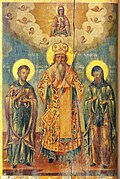 Nephon II of ConstantinopleSaint · Patriarch of ConstantinopleAug 11
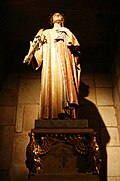 Susanna of RomeVenerable MartyrAug 11
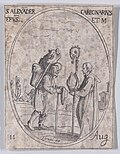 Alexander the Charcoal-burnerHieromartyr · Bishop of Comana in PontusAug 11
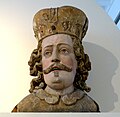 Tiburtius of RomeMartyr · Martyr of RomeAug 11
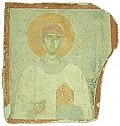 Euplus of CataniaMartyr · Deacon of CataniaAug 11
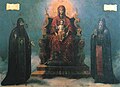 Basil and Theodore of the Kiev CavesHoly Venerable Martyrs · Monks of the Kiev CavesAug 11
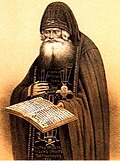 John of SviatohirskVenerable · Recluse of Sviatohirsk MonasteryAug 11
- Maximus of Asia MinorMartyrAug 11
- Alexander of RomeMartyrAug 11
- Anastasios PanerasNew MartyrAug 11
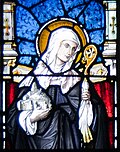 AttractaVenerableAug 11
- BanbhnatVenerableAug 11