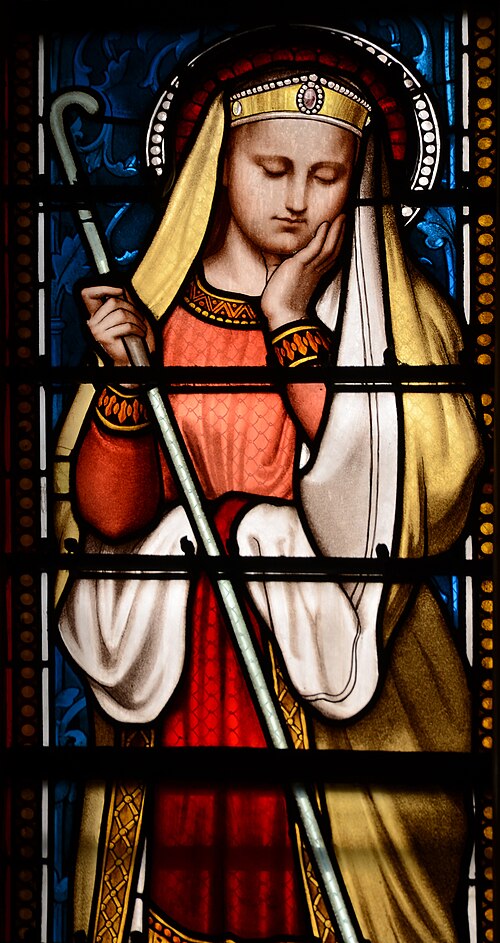
Martyr
Regina of Autun
Virgin martyr of Autun in Gaul in the third century, born to a pagan father.
- Feast
- September 7old style September 20
- Reposed
- 2533rd century
- Place
- Autun
- Order
- Martyrs
Life
Saint Regina (Regnia, Reine) was a virgin martyr of Autun in Gaul, who received the crown of martyrdom in the third century, according to some sources in the persecution of Decius, in 251, according to others under Maximian, in 286.
She was born at Autun, the daughter of a pagan, Clement. Her mother died at her birth, and her father placed her with a Christian nurse, who baptised her. On learning of it, her father disowned her and left her without inheritance. Regina lived in poverty, tending sheep to earn her bread. Alone on the pastures she prayed and recalled the lives of the saints. At fifteen the proconsul (or prefect of Gaul) Olybrius fell in love with her and asked her in marriage, but on condition that she return to paganism. Regina refused and was thrown into prison and cruelly tortured, with red-hot pincers, with scourges and with burning candles. In prison she received spiritual consolation through a vision, a dove or a shining cross. She was finally beheaded at Alesia, in the diocese of Autun, the place that was later named Alise-Sainte-Reine.
Her relics were moved in the ninth century (in 827 or 864, according to sources) to the abbey of Flavigny, where many miracles took place and the tomb became a place of pilgrimage; the story of this translation was written in the ninth century. Each August the village of Alise-Sainte-Reine honours her with a procession from Flavigny to Sainte-Reine, followed by a mystery play, the Mystery of Sainte Reine, a custom dating from 866. At Dijon a procession was once held in her honour. Many places in France bear her name. She is invoked by the destitute, by shepherds and by those who suffer torment. Her feast is on 7 September; in the archdiocese of Paderborn and at Dijon, on 20 July.
Commemorated the same day September 7
 KassiaVenerable · Abbess and HymnographerSep 7
 ClodoaldVenerable · Merovingian prince and hermitSep 7
 Alexander PeresvetVenerable · Warrior monk of the Trinity LavraSep 7
 Gratus of AostaSaint · Bishop of AostaSep 7
 Gauzelin of ToulSaint · Bishop of ToulSep 7
 John of NovgorodSaint · Archbishop of NovgorodSep 7
 ChiaffredoMartyr · Patron of SaluzzoSep 7
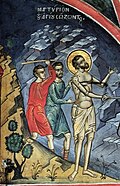 SozonMartyr · Shepherd of CiliciaSep 7
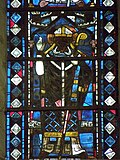 Alpinus of ChâlonsSaint · Bishop of ChâlonsSep 7
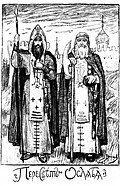 Andrew OslyabyaVenerable · Monk of the Trinity LavraSep 7
- Macarius of OptinaVenerable · Hieroschemamonk of OptinaSep 7
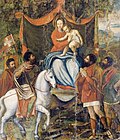 Paragorius of NoliMartyrSep 7