Saint
Rodulf of Bourges
Archbishop of Bourges
Archbishop of Bourges and founder of monasteries, reposed in 866.
Life
Saint Rodulf of Bourges (in French Raoul) was archbishop of Bourges from 840 until his repose on 21 June 866, and a founder of monasteries. He is remembered as a skilful diplomat and a supporter of church reform. His family was prominent in the region of Angoumois, and he himself held lands in the Limousin; he was named after his father, the count of Turenne († 844), and had four brothers and two sisters. He entered the monastery of Solignac as a novice in 823. In the conflict between King Pippin II of Aquitaine and Charles the Bald, he kept good relations with both. In late 840 he was elected archbishop. The capitulation that he signed on his election shows that he was in the vanguard of the Carolingian reform movement.
By 844 he had recognised Charles as king in Aquitaine. He and Bishop Ebroin of Poitiers are said to have played the leading roles in the negotiations to reconcile Charles and Pippin, and in June 845 he hosted at the monastery of Fleury an assembly in which Pippin swore fealty to Charles. He attended the synod of Meaux. His letters of 859 and 860 lament "the presence of evil men" in his diocese, a sign of violent times. With Stodilo, bishop of Limoges, he helped found the monastery of Beaulieu, for which his family provided the land; he consecrated it in 860 under the Benedictine rule, gave the monks the right to elect their abbot and protected it with excommunication. He also helped found the convent at Cahors, where his sister Immena was the first abbess. Under his episcopate the see of Bourges appears for the first time as primate of Aquitaine.
He died at Bourges and was buried in the basilica of Saint Ursinus. A Life of him, the Vita sancti Rodulfi, survives, in the usual style of the time. The community of Beaulieu commemorated him into the twelfth century as "our master of holy memory". He is commemorated on 21 June as a saint of the West before the Great Schism (a saint of the undivided Church), by the New Calendar.
Commemorated the same day June 21
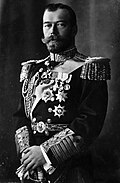 Nicholas IIPassion-Bearer · Emperor of RussiaJun 21
 Julian of TarsusMartyrJun 21
 Luarsab II of KartliMartyr · King of KartliJun 21
 Anastasia of SerbiaVenerable · Wife of Stefan NemanjaJun 21
 Archil of KakhetiMartyr · Georgian prince of KakhetiJun 21
 George LavrovConfessor · Archimandrite of Danilov MonasteryJun 21
 Julian of OrtaSaint · DeaconJun 21
 Fyodor IvanovichRight-Believing · Prince of StarodubJun 21
- Alexander IvanovskyHieromartyr · PriestJun 21
- Vasil DimitrovSaintJun 21
- Abraham of PinegaVenerable · Venerable of PinegaJun 21
- AgofredusVenerableJun 21