Venerable
Theodosius of the Kiev Caves
Abbot of the Kiev Caves
Abbot of the Kiev Caves Lavra, father of communal monastic life in Rus.
- Feast
- August 11old style August 24
- Era
- unknown
- Place
- Kiev Caves
- Order
- Venerables
Life
Saint Theodosius of the Kiev Caves (Prince Theodore of Ostrog) gained fame with the construction of churches and by his defense of Orthodoxy in Volhynia against the encroachment of Papism. He was descended from Saint Vladimir (15 July) through a great-grandson, Svyatopolk-Michael, prince of Turov (1080 to 1093) and later Great Prince of Kiev (died 1113). The first time the name of the holy prince Theodore is mentioned is in 1386, when the Polish king Jagiello and the Lithuanian prince Vitovt affirmed his hereditary possession of the Ostrog district and added the Zaslavsk and Koretsk surroundings. In 1410 he took part in the defeat of the Teutonic Knights at the Battle of Grunwald. In 1422, out of sympathy for the Orthodox in Bohemia, he supported the Hussites in their struggle with the German emperor Sigismund, and introduced the Hussite (Taborite) formation, adopted also by the Ukrainian Cossacks, into Russian military strategy.
In 1432, after winning a series of victories over the Polish forces, he compelled Prince Jagiello to guarantee the freedom of Orthodoxy in Volhynia under the law. Prince Svidrigailo, apprehensive of the strengthening of his ally, locked Theodore in prison, but the people who loved him rose in rebellion and he was freed. He was reconciled with the offender and went to him for help in the struggle against the Lithuanians and the Poles. In 1438 he took part in a battle with the Tatars. In 1440, with the accession to the Polish throne of Casimir, youngest son of Prince Jagiello, Theodore received the rights of administration of the cities of Vladimir, Dubno and Ostrog and extensive holdings in the best regions of Podolia and Volhynia.
Theodore left all this behind, together with princely power and fame. After 1441 he entered the Kiev Caves Monastery, where he received the monastic tonsure with the name Theodosius, and struggled for the salvation of his soul until his blessed repose. The year of his death is unknown, but it is probable that he died in the second half of the fifteenth century at a great old age (S. M. Soloviev in his History of Russia gives 1483). He was buried in the Far Caves of Saint Theodosius. His glorification apparently took place at the end of the sixteenth century, since in 1638 the hieromonk Athanasius Kalnofoysky testified that "Saint Theodore rests in the Theodosiev Cave, where his body was discovered incorrupt." He is commemorated on 11 August (new style; 24 August on the old calendar) and on 28 August, at the Synaxis of the Monastic Fathers of the Far Caves.
Commemorated the same day August 11
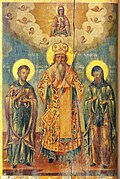 Nephon II of ConstantinopleSaint · Patriarch of ConstantinopleAug 11
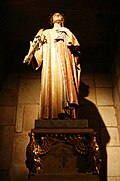 Susanna of RomeVenerable MartyrAug 11
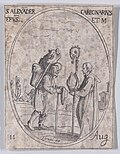 Alexander the Charcoal-burnerHieromartyr · Bishop of Comana in PontusAug 11
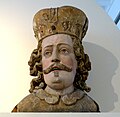 Tiburtius of RomeMartyr · Martyr of RomeAug 11
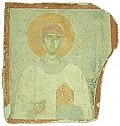 Euplus of CataniaMartyr · Deacon of CataniaAug 11
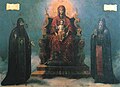 Basil and Theodore of the Kiev CavesHoly Venerable Martyrs · Monks of the Kiev CavesAug 11
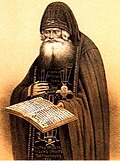 John of SviatohirskVenerable · Recluse of Sviatohirsk MonasteryAug 11
- Maximus of Asia MinorMartyrAug 11
- Alexander of RomeMartyrAug 11
- Anastasios PanerasNew MartyrAug 11
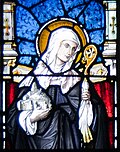 AttractaVenerableAug 11
- BanbhnatVenerableAug 11