Martyr
Urith of Chittlehampton
A virgin martyr honored at Chittlehampton in Devon.
Life
Saint Urith of Chittlehampton (in Latin Hieritha, in Welsh Iwerydd) is honored at Chittlehampton in Devon, England. The sources are uncertain when she lived: the calendars speak of the sixth century, other accounts of the eighth. She was probably a nun slain by pagan English invaders.
The legend says she was born at East Stowford in the parish of Swimbridge, to an Anglo-Saxon father, was won to Christianity by Saint Kea, and withdrew as a hermit to Chittlehampton, where she founded a church. In a time of severe drought, at the urging of a jealous and perhaps pagan stepmother, some haymakers beheaded her with a scythe. Where she fell a spring burst forth, and flowers sprang up from every drop of her blood. She was buried near the place of her martyrdom, and a church was later built over her grave.
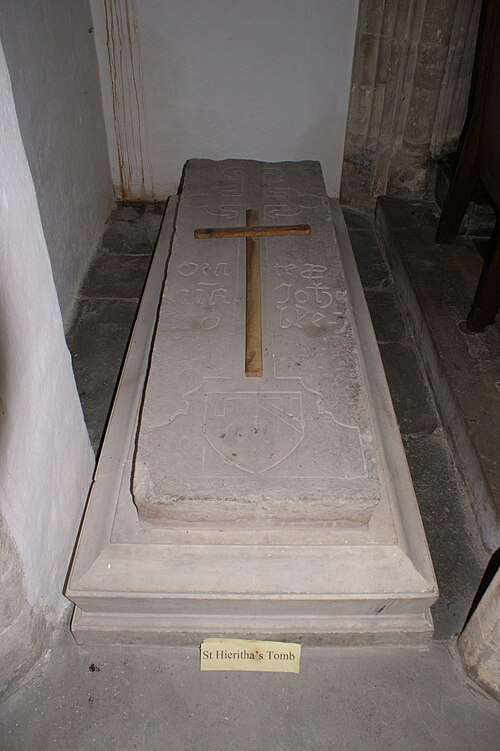
Her holy well, now called Taddy Well or Saint Teara's Well, stands at the eastern end of the village; people with eye diseases came to anoint themselves with its water. Her relics may still lie beneath the floor of the parish church, in the chapel on the north side of the sanctuary. The pilgrimage on her feast, 8 July, lasted until 1539, and the offerings were enough to build the church tower. Her statue was removed in 1540, but the pulpit, carved around 1500, shows her with the martyr's palm. The pilgrimage has been revived, and the villagers now walk in procession to the well. She is commemorated on 8 July as a saint of the undivided Church, by the New Calendar.
Commemorated the same day July 8
 Adrian III of RomeSaint · Bishop of RomeJul 8
 Edgar the PeacefulRight-Believing · King of EnglandJul 8
 Kilian of WürzburgHieromartyr · Bishop of WürzburgJul 8
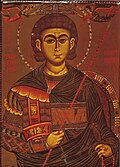 Procopius of ScythopolisGreat Martyr · Reader and exorcist at ScythopolisJul 8
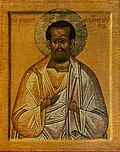 Procopius of UstyugFool-for-Christ · Fool for ChristJul 8
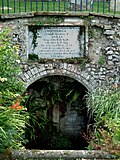 Withburga of DerehamVenerable · Abbess of DerehamJul 8
- Auspicius of ToulSaint · Bishop of ToulJul 8
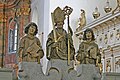 Colman of WürzburgHieromartyr · Irish missionary at WürzburgJul 8
 MorwennaVenerable · Saint of CornwallJul 8
 Procopius of UstiaRighteousJul 8
 Theophilus the Myrrh-streamerVenerable · AthoniteJul 8
- Epictetus and AstionHoly Venerable Martyrs · Martyrs of HalmyrisJul 8