Hieromartyr
Victorinus Dobronravov
Archpriest of Borovichi
Archpriest born at Chișinău in 1889, who died a martyr at Borovichi in 1937; canonized in 2004.
- Feast
- December 15old style December 28
- Reposed
- 193720th century
- Place
- Borovichi
- Order
- Martyrs
Life
Saint Victorinus Dobronravov (Victorin Mikhailovich Dobronravov, 1889 - 28 December 1937), hieromartyr, was an archpriest of the Russian Orthodox Church, born at Chișinău, a parish priest in Petrograd, a prominent man of the "Josephite" movement, and shot at Borovichi. By decision of the Holy Synod of 25 March 2004 his name was entered in the Synaxis of the New Martyrs and Confessors of Russia. He is commemorated on 15 December (the day of sentence) in our calendar.
Family and studies
He was born in the family of a priest, and his father died early. His stepfather was the secretary of the Holy Synod, A. P. Rostovsky. He had a brother, Leonid, and a sister, Zinaida. His wife, Anna Konstantinovna Voronova, came from a merchant family with Old Believer traditions. They had children: Irina (1915-1932, after her father's arrest she could not continue her education, went to work and died soon of tuberculosis), Nicholas (1917-1922), Seraphim (1921-1942, killed at the front) and Zoya (born 1925, who after the Second World War lived in the USA and was a university professor). He graduated from the Saint Petersburg seminary (1910) and then followed the economics department of the Petrograd Polytechnic Institute.
Priest
From 4 October 1915 he was deacon at the church of the Transfiguration (Spaso-Koltovskaya) on the Petersburg side of Petrograd, and from 21 December priest of the same church. In 1916-1918 he was catechist at the local parish school, the city girls' school no. 22 of Petrograd, the four-class city school "Peter I", the mixed primary school of Petrograd, the private gymnasium of Fedorova, the Chernyaev real school and the commercial school on Krestovsky island. In September-October 1918 he was under arrest, then released. To feed his family, besides serving at church he had to work in various institutions as bookkeeper, sector controller, clerk. From 25 February 1919 he was rector of the church of Saint Nicholas at the Home for aged stage artists of the Russian Theatrical Society, on Petrovsky island. In 1922 the authorities tried to close the church, but through the efforts of the rector and parishioners the decision to close it was cancelled. Around the young priest a brotherhood of some twenty people formed, mostly from the intelligentsia, and novices of the closed Ioannovsky convent. The parish was always in the jurisdiction of the patriarchal Church, even when in 1923 nearly all parishes of Petrograd became Renovationist and only about ten recognized the authority of Patriarch Tikhon. From 1924 he was archpriest. He was respected by parishioners as a confessor, organized pilgrimages to Orthodox holy places, held enlightening talks. In 1927 the parishioners, at their general meeting, resolved unanimously to "express sincere gratitude to our dear father, Fr. Rector Victorin Dobronravov, for tireless labor and care for his flock and for skilful upbringing of his spiritual children".
In the "Josephite" movement
In autumn 1927 he became an active participant in the nascent "Josephite" movement, named after Metropolitan Joseph (Petrovykh), which united the clergy and laity who did not recognize the declaration of the locum tenens, Metropolitan Sergius (Stragorodsky), with far-reaching concessions to Soviet power. As representative of the parish clergy he was in the delegation of the Leningrad diocese led by Bishop Demetrius (Lyubimov), which was received on 12 December 1927 by Metropolitan Sergius and tried to persuade him to withdraw the declaration; the meeting ended without result. In spring 1928 Fr. Victorin entered (with five other archpriests) the council that became the collegial governing body of the "Josephites" under Bishop Demetrius (Lyubimov), who administered the Leningrad diocese. The indictment in the case of Bishop Demetrius said among other things: "The church of Saint Nicholas, headed by Archpriest Victorin Dobronravov, a prominent figure of the organization, grouped in its parish mostly the intelligentsia, an anti-Soviet-minded layer of the population. Archbishop Demetrius greatly respected and valued Dobronravov as a good worker, propagandist and organizer of the parish and often consulted him, taking his opinion into account". After the closure of the Nicholas church (26 February 1930) he served briefly at the church of Saint Panteleimon on Piskarevka, then in the homes of his spiritual children.
Arrest, camp, short freedom
On 19 September 1930 he was arrested in the case of the "All-Union organization True Orthodox Church"; he was interrogated seven times between 19 September 1930 and 12 May 1931. He bore himself with dignity, answered briefly and sharply and did not plead guilty. He was sentenced to ten years of camp. He was sent first to Siberia, to the Mariinsk camp, where he was at common labor, then served the sentence in the White Sea-Baltic camp (Karelia), where he first worked on building the White Sea-Baltic Canal, and after finishing paramedic courses was a paramedic. He spent in all six years and three months in confinement and was released early, "by credits", on 7 December 1936. After release he lived at the station of Oksochi, Okulovka district, Borovichi region, Leningrad (now Novgorod) province. He worked as doctor's assistant at the regional boarding school for handicapped children named for Ushinsky, whose chief physician was Ivan Andreevsky, a participant too in the "Josephite" movement.
Last arrest and martyrdom
On 6 August 1937 he was arrested again, interrogated four times, and steadily refused to plead guilty. In the criminal case of a "counter-revolutionary organization", thirty-one people were tried with him: twenty-four pleaded guilty, six (among them Fr. Victorin) did not, one died during the investigation. On 15 December 1937 the troika of the NKVD Directorate for the Leningrad region sentenced twenty-five of the accused (among them Fr. Victorin) to death, and five to ten years of camp. On 28 December the condemned were shot.
Memory
By decision of the Holy Synod of the Russian Orthodox Church of 25 March 2004, the name of Victorinus Dobronravov was entered in the Synaxis of the New Martyrs and Confessors of Russia. The author of a detailed life of the hieromartyr is the doctor of historical sciences Mikhail Shkarovsky.
Commemorated the same day December 15
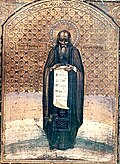 Tryphon of PechengaVenerable · Founder of Pechenga MonasteryDec 15
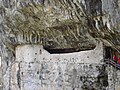 UrbiciusVenerable · Hermit of the Aragon PyreneesDec 15
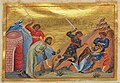 Eleutherius and AnthiaHoly Hieromartyrs · Bishop of Illyricum and his motherDec 15
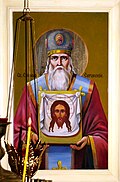 Stephen of SurozhSaint · Archbishop of SugdeaDec 15
- Offa of EssexRight-Believing · King of EssexDec 15
 Susanna the DeaconessVenerable Martyr · Deaconess of PalestineDec 15
 Gury KarpovSaint · Archbishop of Taurida and SimferopolDec 15
- Paul of LatrosVenerableDec 15
 Nectarius of BitolaSaintDec 15
- Pardus the HermitVenerableDec 15
- Gurius of PechengaHieromartyr · Abbot of Pechenga MonasteryDec 15
- DrosisMartyrDec 15