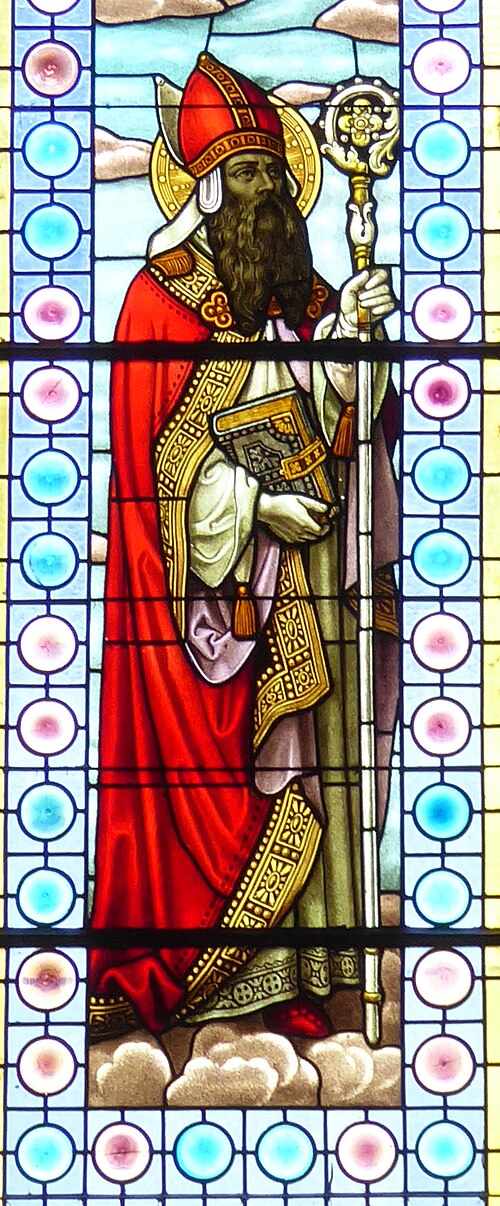
Saint
Vindemialis of Capsa
Bishop of Capsa
Bishop of Capsa (modern Gafsa in Tunisia) in 5th-century North Africa; little is known about him.
Life
Saint Vindemialis (called Vendemial in Russian) was bishop of Capsa (today Gafsa, in Tunisia), in North Africa in the fifth century. He is venerated as a saint in the Catholic Church, and his commemoration is on 2 May. Little is known of him with certainty.
He was bishop, like other North African prelates, in a very difficult time: the region had recently been conquered by the Vandals, Arians, under the despotic king Huneric. Several passions written later recount his life in detail. The young Vindemialis, wise and virtuous, was persuaded to accept ordination, and a few months after it his superiors decided to make him bishop. He was a fervent supporter of the true faith against the spread of Arianism and took part in the council of Carthage (484), where four hundred and fifty-eight African bishops condemned the heresy.
Huneric's reaction was not long in coming, and at once fierce persecutions were unleashed, which brought martyrdom or exile to many bishops. Vindemialis, together with forty-six other prelates, was seized and sent to Corsica, where he was condemned to forced labour, cutting timber for the Vandal fleet. This did not weaken his faith; on the contrary, he continued his apostolic service, converting pagans and heretics. At the end of the exile he returned to Africa and, together with Eugenius, bishop of Carthage, carried on his preaching, working many miracles too. After a time, however, he decided to return to the places of his exile, where he ended his life. He was buried in the present town of Saint-Florent.
According to the Roman Martyrology, however, Vindemialis died a martyr: he was beheaded together with Longinus, bishop of Pomaria. Hagiography says that the two roused the anger of the governor by restoring sight to a blind man, which confounded the Arians. The sources thus do not agree on the manner of his end.
Commemorated the same day May 2
 Boris-Michael of BulgariaEqual-to-the-Apostles · Prince of BulgariaMay 2
 Boris and GlebHoly Passion-Bearers · Passion-bearing princes of Kievan RusMay 2
 Athanasius III of ConstantinopleSaint · Patriarch of ConstantinopleMay 2
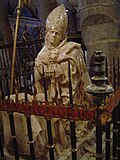 Secundus of ÁvilaHieromartyr · First Bishop of AbulaMay 2
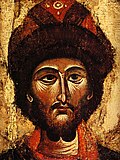 Boris of RostovPassion-Bearer · Prince of RostovMay 2
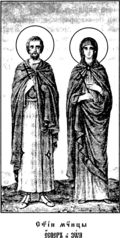 Exuperius, Zoe, Cyriacus and TheodulusHoly Martyrs · Family of martyrs of PamphyliaMay 2
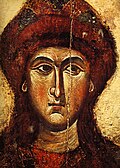 Gleb of MuromPassion-Bearer · Prince of MuromMay 2
 Basil of RyazanFool-for-Christ · Fool for ChristMay 2
- Nikephoros of KalugaVenerable · HegumenMay 2
- Zoe of AttaliaMartyrMay 2
- Athanasius of RadonezhVenerableMay 2
- Athanasius of SvirVenerableMay 2