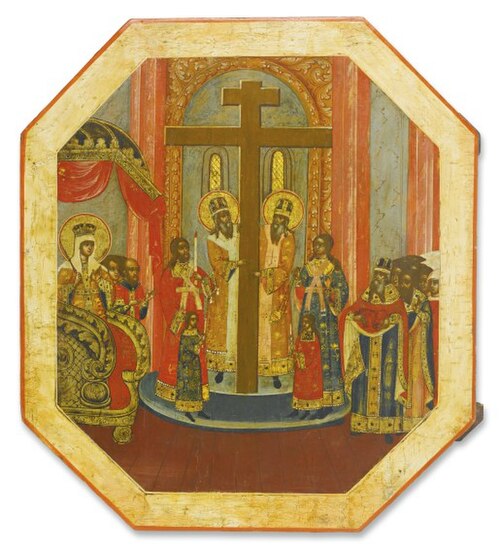
Saint
Zacharias of Jerusalem
Patriarch of Jerusalem
Patriarch of Jerusalem from 609 to 632, who spent most of his patriarchate a prisoner of the Persian king Khosrow II.
- Feast
- February 21old style March 6
- Reposed
- 6327th century
- Order
- Hierarchs
Life
The Holy Hierarch Zacharias of Jerusalem was patriarch of Jerusalem from 609 to 632 (or 633) and spent most of his patriarchate a prisoner of the Persian king Khosrow II. His feast is on 21 February (in the Church of Jerusalem also on 31 January and 28 October).
Beginnings
Nothing is known of his origin and early years. He was elected patriarch in 609, after Isaac. Jerusalem was then part of the Byzantine Empire, ruled by Heraclius (610-641).
The conquest of Jerusalem
In 614 the army of Khosrow II, of the Sasanian dynasty, invaded Byzantine Syria and took Jerusalem. According to the Armenian chronicler Sebeos, the Persians killed thousands of Christians and carried off tens of thousands into captivity; among them was Patriarch Zacharias. They took from Jerusalem to Persia also many treasures and precious objects of the churches, among them the True Cross, the Life-giving Wood. According to a Ukrainian source, in April 614 the city was besieged by Persian armies led by Shahrbaraz and by Jewish rebels; Zacharias, not wishing bloodshed, agreed with the conquerors to hand over the city without a fight, which scandalized the Christian community of Jerusalem. The Persians and Jews entered the city, killed Christians (between 17,000 and 90,000, according to sources) and destroyed the churches. Contrary to the agreement, Zacharias was thrown into prison and tortured, being questioned about where the True Cross and other treasures were. A Serbian source says that the Jews helped the Persians in their evil deeds and that they ransomed from Khosrow ninety thousand Christians and killed them all as their slaves.
The patriarch remained in captivity, according to the Serbian sources, fourteen years. From Persia he sent an important letter to his Church. While he was prisoner, Modestus was chosen locum tenens of the see. It is told that many miracles appeared from the Holy Cross in Persia, so that the Persians said: "The God of the Christians has come to Persia."
Return
Heraclius's war with the Persians lasted long. In 627, after rebuilding his army, the emperor struck into Persia and won a decisive victory at Nineveh; by the peace made, the Persians returned the True Cross and all the surviving captives, among them Patriarch Zacharias. According to one account, the emperor Heraclius himself carried the Cross on his shoulders into the Holy City. The Holy Cross was placed again in the church of the Holy Sepulchre, and according to one source Patriarch Zacharias lifted it up before all on 14 September, the day on which Christians celebrate the Exaltation of the Holy Cross. The dates differ by source (627, 628, 629, 630). Zacharias, who had not lost his dignity in captivity, resumed the patriarchal throne, which he had not officially left.
Repose
He fell asleep in peace at Jerusalem in 632, in other accounts in 631 or 633. He was succeeded by Modestus, who had been locum tenens, and after him by Saint Sophronius.
The plague cross
In the West the Council of Trent (1545-1563) approved a "Plague Cross of Saint Zacharias of Jerusalem," which contains an acrostic of a prayer against plagues. The prayer, attributed to Saint Zacharias, is said to have been helpful against pestilence in the time of the saint, and the inscribed cross is said to have saved from a plague the participants of the Council of Trent. The cross, made of wood or inscribed on paper, cloth, or drawn with blessed chalk, and its blessing are used by Western Christians and have seen a resurgence in times of plague, as in the COVID-19 pandemic of 2020-2022.
Commemorated the same day February 21
 Pepin of LandenRight-Believing · Mayor of the Palace of AustrasiaFeb 21
 Eustathius of AntiochSaint · Patriarch of AntiochFeb 21
- John III ScholasticusSaint · Patriarch of ConstantinopleFeb 21
 Germanus of GranfeldenVenerable Martyr · First abbot of Moutier-GrandvalFeb 21
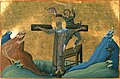 Peter of CapitoliasHieromartyr · Priest of CapitoliasFeb 21
- George of AmastrisSaint · Bishop of AmastrisFeb 21
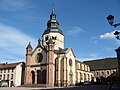 GondelbertVenerable · Founder of Senones AbbeyFeb 21
- Felix of MetzSaint · Bishop of MetzFeb 21
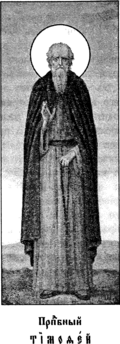 Timothy of SymbolaVenerable · Hermit of BithyniaFeb 21
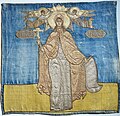 IreneSaintFeb 21
 Avitus II of ClermontSaint · Bishop of ClermontFeb 21
- AndrewSaintFeb 21