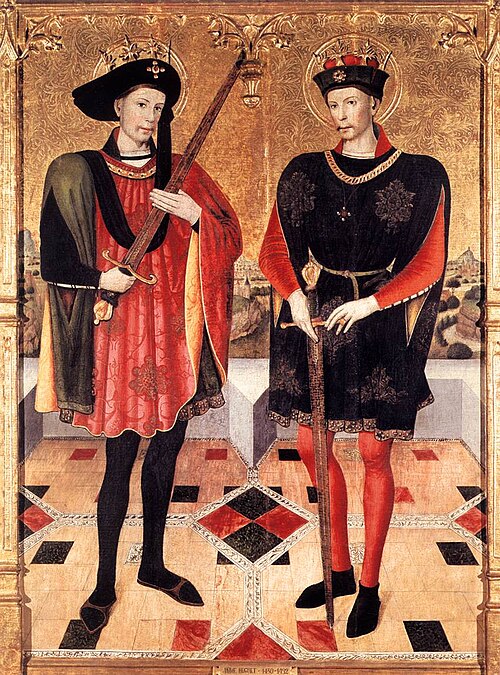
Holy Martyrs
Abdon and Sennen
Two martyrs of the third century, venerated in East and West on 30 July.
Life
The Holy Martyrs Abdon and Sennen, written in the old calendars also Abdo, Abdus, Sennes or Zennen, are two martyrs of the third century, venerated in both East and West. Their feast falls on 30 July. Historically almost nothing is known for certain about them, and their story has come down mainly from their Acts, written for the most part before the ninth century.
Life and passion
According to these Acts, they were Persian nobles, captured during a military campaign in the third century and taken to Rome. There they became slaves, accepted the Christian faith and helped to bury the Christian dead. Other sources say that they were freed slaves, natives of Persia. They came to the notice of the Emperor Decius, who had them brought in chains before the Roman Senate. When they refused to sacrifice to the Roman gods, they were torn apart by gladiators in the Colosseum, about the year 250. The Acts certainly contain fictitious statements about the cause of their coming to Rome and the circumstances and manner of their torments.
Relics and veneration
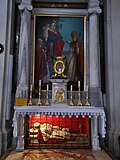
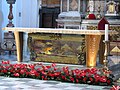
Their bodies were buried by a subdeacon, Quirinus, and later, in the reign of Constantine the Great, moved to the Cemetery of Pontianus on the road to Porto, near the gates of Rome. The Roman Martyrology says that they were buried on 30 July. A fresco on a sixth-century sarcophagus, thought to contain their remains, shows them receiving crowns from Christ, and another source mentions a tomb with a seventh-century fresco. Several cities, among them Florence and Soissons, claim to hold their bodies, and the Benedictine abbey of Sainte-Marie at Arles-sur-Tech in France claims their tomb, but the Acta Sanctorum holds that they rest in the church of San Marco Evangelista al Campidoglio in Rome, where they were brought in 1474. They may also have had a church of their own in Rome, now lost.
Abdon and Sennen are patron saints of Calasparra in Murcia, Spain, where feasts in their honour date from the sixteenth century. In Catalonia and Valencia they are called the saints of hail, because people believe that they protect orchards and fruit trees from hail. Their names were removed in the twentieth century from the General Roman Calendar, but they may be celebrated anywhere on 30 July. The Orthodox Church commemorates them on the same day.
Commemorated the same day July 30
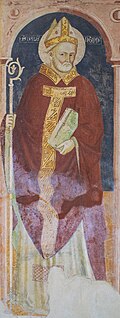 ValentineHieromartyr · of TerniJul 30
 AlexeiPassion-Bearer · Tsarevich of RussiaJul 30
 Peter ChrysologusSaint · Bishop of RavennaJul 30
 Epenetus of CarthageApostle · Bishop of CarthageJul 30
 CrescensApostle · Missionary in GalatiaJul 30
- Silvanus of the SeventyApostle · Bishop of ThessalonicaJul 30
 Herman of SolovkiVenerable · Co-founder of Solovki MonasteryJul 30
 Tsotne DadianiConfessor · Georgian noblemanJul 30
 John the WarriorMartyr · Byzantine soldierJul 30
 SilvanMartyr · Martyr honored at DubrovnikJul 30
 Valentine of InteramnaHieromartyr · Bishop of Interamna (Terni)Jul 30
 Anatoly of OptinaVenerable · Hieroschemamonk of OptinaJul 30