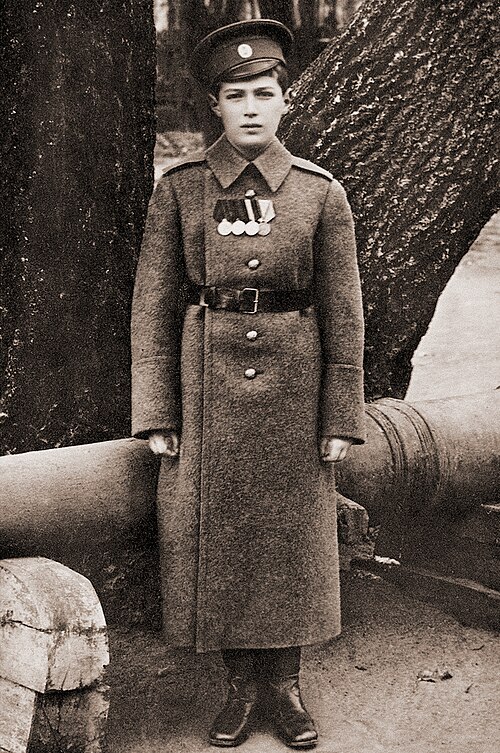
Passion-Bearer
Alexei
Tsarevich of Russia
Youngest child of Tsar Nicholas II and heir to the throne, killed with his family at Yekaterinburg in 1918.
Life
The Holy Passion-Bearer Tsarevich Alexei Nikolaevich was the only son of Tsar Nicholas II and Tsarina Alexandra Feodorovna and the last heir to the throne of Russia. He was killed with his parents and sisters in the cellar of the Ipatiev House at Yekaterinburg, in the night of 16 to 17 July 1918, two weeks before his fourteenth birthday. The Russian Orthodox Church canonized him in the year 2000, together with his family, as a passion-bearer. His commemoration is on 4 July in the old calendar, that is, 17 July in the new style.
The long awaited birth
He was born on 12 August 1904 (30 July in the old style), at Peterhof, after four sisters: Olga, Tatiana, Maria and Anastasia. The birth of a son was welcomed with joy throughout Russia. According to Russian sources, his parents had prayed for an heir at the glorification of Saint Seraphim of Sarov, in 1903. He was named Alexei in honour of Saint Alexis, Metropolitan of Moscow. In the family he was called Baby, and later Alyosha. He was baptized in the church of the palace at Peterhof, and from birth he held the title of tsarevich and grand duke.
His illness
He inherited haemophilia from his mother, who had it through her grandmother Queen Victoria. The disease showed itself in his first months, in a severe bleeding of the navel. Any blow could put the child's life in danger, and the pain in his joints was at times unbearable. From the age of five he was given two sailors, Derevenko and Nagorny, who always accompanied him and, when he could not walk, carried him in their arms.
In the autumn of 1912, at the imperial hunting lodge of Spała in Poland, a blow to the thigh caused a haemorrhage that lasted for days. The child lay between life and death, crying out in pain: Lord, have mercy. He received Holy Communion, and a medical bulletin was published in the Russian papers. The tsarina asked for help from Grigori Rasputin, who sent her a telegram saying that the little one would not die. His condition improved, and the doctors were amazed. His parents regarded it as an answer to prayer, while for many contemporaries and for historians the part played by Rasputin remains a subject of debate.
A child in wartime
In the First World War he often stayed with his father at headquarters in Mogilev. He loved army life, ate the black bread of the soldiers, saying that this is what soldiers eat, and received the rank of lance corporal. A witness tells that in 1916 the tsar sent him to sit with the British general Hanbury-Williams, whose son had died at the front, telling the boy that his father thought the general might feel lonely that evening.
Captivity and martyrdom
After the February Revolution of 1917 the tsar abdicated, and the family was arrested and sent to Tobolsk, in Siberia. There Alexei wrote in his diary that he was bored and asked God for mercy. In a crisis of haemophilia in the spring of 1918 he could not be moved when the Bolsheviks took his parents and his sister Maria to Yekaterinburg, and he came later, with his other sisters. He spent the last weeks of his life in a wheelchair.
In the night of 16 to 17 July 1918 the family was woken and brought down to the cellar on the pretext that they were to be moved. His father carried Alexei in his arms. The tsarina asked for chairs for herself and her son. Then the commander of the detachment, Yakov Yurovsky, read the sentence and the squad fired. After they had killed the tsar, the tsarina and two servants, the killers fired at Alexei, who had stayed in his chair, and tried to stab him with a bayonet, but could not, because beneath his clothes he wore a shirt sewn with precious stones. In the end Yurovsky killed him with two shots to the head. The killers took his body to a forest near Yekaterinburg.
The remains
For decades rumours circulated that Alexei had escaped, and several impostors claimed to be him. The skeletons of the other members of the family were found in 1991 and buried in 1998, on 17 July, in the cathedral of Saints Peter and Paul in Saint Petersburg. On 29 July 2007, near Yekaterinburg, the remains of a boy and a girl were discovered, and the DNA tests of 2008 showed that they were those of Alexei and his sister Maria. According to the sources, as of 2015 his remains had not been laid beside those of his family, because the Russian Orthodox Church had asked for further identification tests.
Canonization and veneration
The imperial family was first canonized in 1981 by the Russian Orthodox Church Outside of Russia, as holy martyrs, then in the year 2000 by the Russian Orthodox Church, as passion-bearers, that is, saints who accepted death with meekness and faith. Saint Alexei is venerated as an innocent child who bore illness and suffering alongside his parents. His commemoration is on 4 July in the old calendar, the day on which the Russian Church honours all the members of the imperial family.
Commemorated the same day July 30
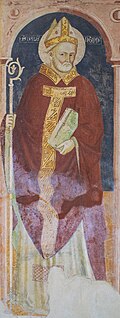 ValentineHieromartyr · of TerniJul 30
 Peter ChrysologusSaint · Bishop of RavennaJul 30
 Epenetus of CarthageApostle · Bishop of CarthageJul 30
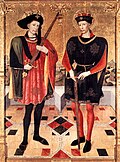 Abdon and SennenHoly MartyrsJul 30
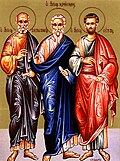 CrescensApostle · Missionary in GalatiaJul 30
- Silvanus of the SeventyApostle · Bishop of ThessalonicaJul 30
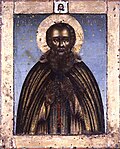 Herman of SolovkiVenerable · Co-founder of Solovki MonasteryJul 30
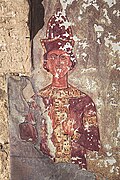 Tsotne DadianiConfessor · Georgian noblemanJul 30
 John the WarriorMartyr · Byzantine soldierJul 30
 SilvanMartyr · Martyr honored at DubrovnikJul 30
 Valentine of InteramnaHieromartyr · Bishop of Interamna (Terni)Jul 30
 Anatoly of OptinaVenerable · Hieroschemamonk of OptinaJul 30