Hieromartyr
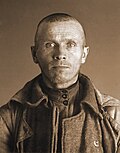
Alexander Sakharov
A Russian priest put to death for his faith in Christ in 1937, during the communist persecution.
- Feast
- November 20old style December 3
- Reposed
- 193720th century
- Order
- Martyrs
Life
Saint Hieromartyr Alexander Sakharov (1875 to 1937) was an archpriest in the village of Petrovskoe, in the Moscow region, and was shot on 3 December 1937, at Butovo. He is commemorated on 3 December, on 29 May with the new martyrs of Butovo, and on 5 September with the saints of Moscow.
He was born on 15 August 1875 in the village of Krivandino, Yegoryevsk district, Ryazan province, into the family of the deacon Nestor Sakharov. In 1890, after the church school at Zaraisk, he entered the Ryazan seminary. In the sixth class, in December 1895, Bishop Justin (Polyansky) tonsured him to the stikharion to preach from the pulpit. In 1896, after the seminary, he was teacher and teacher of religion at the Nizkovo primary school, then, in 1897, at the school in Preobrazhensky Pogost. In 1897, with the blessing of Bishop Meletius (Yakimov), between the villages of Petrovskaya and Levashevo the building of a church in honour of the Kazan Icon of the Mother of God began; the peasants asked the bishop to give them as priest for the church the seminary graduate Alexander Sakharov, and he himself asked for this; the bishop approved. On 13 November 1897 he was ordained deacon, and the next day priest, at the cathedral of the Nativity of Christ in Ryazan. To the cares of building the church was added the obedience of teacher of religion at the school in Petrovskoe. At first, while the church and the clergy houses were being built, the priest and his family lived in want, in peasant houses rented by the parishioners, without salary from the treasury. On 25 May 1900 the church was consecrated.
In October 1907 the clergy of the district elected him member of the deanery council of the second Yegoryevsk district. In 1920 he received a pectoral cross, in 1925 he was raised to archpriest and appointed dean, and in 1931 he received the mitre. In 1930 he was sentenced to six months in prison and five years of exile for allegedly using the labour of a housemaid, but he appealed and the regional court acquitted him. In 1931 the authorities took the family's last cow; the children were grown and lived apart. When Father carried home food received for services and met some child in particular need, he would stop and give it all to the children. At Pascha and on the patronal feast he performed the lesser blessing of water, going round the parishioners' houses.
In the summer of 1937, in the club of the village of Petrovskoe, the local Communists held several meetings at which the closing of the church of the Kazan Icon and its conversion into a school were discussed; at that time its bells were also thrown down. At the end of the summer mass arrests of clergy and laity began. Father Alexander foresaw his imminent arrest; to an acquaintance he said: "They will surely take me soon." In the night of 15 to 16 November 1937 he was arrested and held in the detention cell at Shatura, from which after a few days he was moved to the Yegoryevsk prison. Asked how long he had served as a servant of the cult, he answered: "I have been a priest for forty years, since 1897." Asked about acquaintances he met outside services, he answered that he had none. The investigator told him that he gave shelter to wandering priests and grouped around the church counter-revolutionary monastic elements and holy fools; he answered that he had never had wandering priests and monks, had carried on no anti-Soviet agitation and did not admit guilt. On 27 November 1937 the NKVD troika sentenced him to death; he was brought to Taganka in Moscow, and Archpriest Alexander Sakharov was shot on 3 December 1937 at the Butovo firing range and buried in an unmarked common grave.
Commemorated the same day November 20
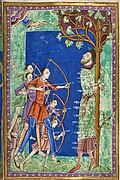 Edmund of East AngliaPassion-Bearer · King of East AngliaNov 20
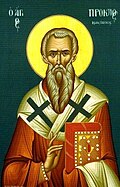 Proclus of ConstantinopleSaint · Archbishop of ConstantinopleNov 20
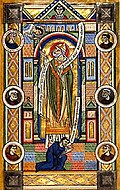 Bernward of HildesheimSaint · Bishop of HildesheimNov 20
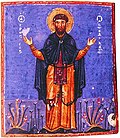 Gregory of DecapolisVenerable · Monk and wonderworkerNov 20
 TheoktistosConfessorNov 20
 Dasius of DurostorumMartyr · Roman soldierNov 20
 Hilarion PisaretsVenerable Martyr · HieromonkNov 20
 Simplicius of VeronaSaint · Bishop of VeronaNov 20
- Anatolius of NicaeaMartyrNov 20
- Diodorus of YuryegorskVenerable · Founder of the Demyan HermitageNov 20
- Joseph of PersiaHieromartyr · Disciple of Bishop NarsesNov 20
 Eutychius KachurVenerable Martyr · HegumenNov 20