Hieromartyr
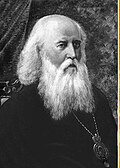
Alexander Vinogradov
A Russian priest put to death for his faith in Christ in 1942, during the communist persecution.
- Feast
- September 9old style September 22
- Reposed
- 194220th century
- Order
- Martyrs
Life
Saint Hieromartyr Alexander Vinogradov (1884 to 1942) was an archpriest in the village of Perkhushkovo, in the Moscow region, and died of pellagra in a camp near the town of Svobodny on 22 September 1942. He is commemorated on 22 September, on 7 February with the synaxis of the new martyrs, and on 5 September with the saints of Moscow. He was numbered among the saints in the year 2000.
He was born on 1 June 1884 in Moscow, into the family of the retired psalm-reader John Mikhailovich Vinogradov, who served as refectorian at the church of the Resurrection at the Vagankovo cemetery. In 1899 he finished the church school on the Don, and in 1905 the Moscow seminary. On 1 October 1909, on the day of the Protection of the Mother of God, he was ordained priest and assigned to the church of the Transfiguration in the village of Lyubertsy, Moscow province. In 1920 he was called up for several months to rear-front military service. In 1929 he was raised to archpriest, and in 1932 received the palitsa. In November 1933 the priest of the village of Perkhushkovo, Zvenigorod district, died, and on 21 November the church authorities appointed Archpriest Alexander Vinogradov to the church of the Protection in that village, where he served until his arrest.
In the summer of 1937, with the mass arrests of believers, the authorities decided to arrest the archpriest as well. On 27 November 1937 he was arrested and held in the detention cell of the Zvenigorod militia section, then, after a few days, at Taganka in Moscow. The first interrogation began the day after the arrest, at twelve at night, and lasted until five in the morning. Asked with whom he kept in contact, he said that personally he kept in touch with the dean and with Ivan Alexeevich Tsvetkov, the priest of the church at Yudino, who was his spiritual father. Asked whether he admitted guilt of counter-revolutionary activity, he answered that he admitted guilt only in that, until the confirmation of the new constitution, in talks with clergy and with some singer-parishioners who visited his dwelling, he had expressed discontent at the rightless position of the clergy, and that of nothing else did he admit guilt. He was questioned a second evening too, almost five hours. He acknowledged having helped exiled clergy. He was sentenced to ten years in the camp. He died of pellagra in the camp near the town of Svobodny on 22 September 1942.
Commemorated the same day September 9
 JoachimRighteous · Father of the TheotokosSep 9
 Ciarán of ClonmacnoiseVenerable · Abbot of ClonmacnoiseSep 9
 Joseph of VolotskVenerable · Abbot of Volokolamsk MonasterySep 9
 Gorgonius of NicomediaMartyr · Martyr of NicomediaSep 9
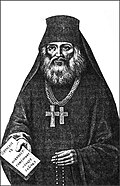 Philaret of GlinskVenerable · Abbot of Glinsk HermitageSep 9
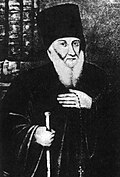 Basil KishkinVenerable · Hieromonk of PloshchanskSep 9
- Zenobius MazhugaSaint · Metropolitan of the Georgian ChurchSep 9
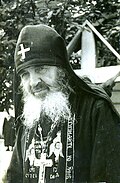 Andronik LukashVenerable · Schema-archimandrite and elderSep 9
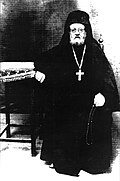 Joanicius of RakotinciVenerableSep 9
 Zacharias LobovHieromartyr · Archbishop of VoronezhSep 9
- Joachim of OpochkaVenerable · Disciple of St. Euphrosynus of PskovSep 9
- Nikita of ConstantinopleFool-for-Christ · Clerk of ConstantinopleSep 9