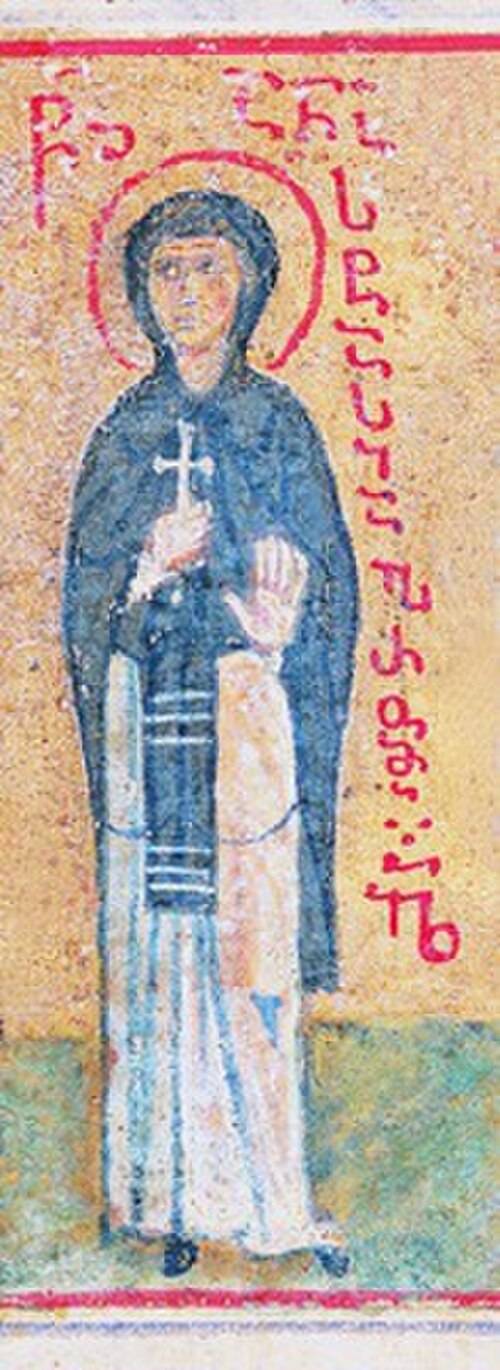
Venerable Martyr
Anastasia the Roman
Nun of Rome
Orphaned at three and raised in a convent, known for her asceticism; put to death in the persecution of Decius.
- Feast
- October 30old style November 12
- Reposed
- 2503rd century
- Place
- Rome
- Order
- Martyrs
Life
Saint Anastasia the Roman, Venerable Martyr, was a virgin of Rome, orphaned young and raised in a convent, who suffered for Christ in the third century. She is remembered on 29 October (11 November on the new calendar), and in some synaxaria of Constantinopolitan origin on 12 October.
According to her life, Anastasia was born of a noble family and was orphaned at three. She was raised in a community of Christian women near Rome, under the guidance of the abbess Sophia. She was beautiful and many patricians wanted her, but she refused them all. In her twenty-first year she was brought before the prefect Probus. There she openly confessed her faith in Jesus Christ and refused the demand that she worship the pagan gods and choose a husband of high birth.
Probus had her stripped before the people, but Anastasia began to rebuke him, and he subjected her to torments. She was stretched face down and bound to four stakes, a fire of sulphur and pitch was lit under her body, and her back was beaten with rods. Her nails were torn out, her hands and feet were cut off and her teeth were knocked out. Despite the torment she did not cease to confess Christ. A Christian named Cyril gave her water to drink and was beheaded for it. At last she was beheaded, and her body was left unburied for the beasts to eat. The abbess Sophia, with the help of some Christians, found the body and buried it.
The sources place her death at different times: in the reign of Diocletian (the longer life written by Symeon Metaphrastes), or of Decius and Valerian, that is, about 250 or 256 (short lives in the Menologion of Basil II and the synaxarion of Constantinople). From early times her story became mixed with that of Saint Anastasia the Deliverer from Potions, kept on 22 December, which makes it hard to tell apart the images, relics and churches dedicated to them.
About half of her relics are in the Monastery of Saint Gregory on Mount Athos. The scenes of her martyrdom are painted in a fresco cycle in a church at Gennadi on the island of Rhodes, and her head is venerated, according to some sources, in the cathedral of Zhytomyr in Ukraine.
Commemorated the same day October 30
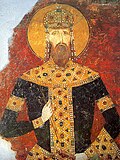 Stefan Uroš II MilutinRight-Believing · King of SerbiaOct 30
 Helen of SerbiaRight-Believing · Queen of SerbiaOct 30
 Justus BarsabbasApostle · Apostle of the SeventyOct 30
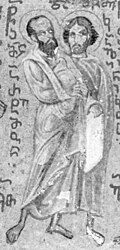 Artemas of LystraApostle · Bishop of LystraOct 30
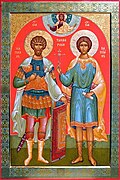 Marcellus of TangierMartyr · Roman centurionOct 30
 Joseph I GalesiotesSaint · Patriarch of ConstantinopleOct 30
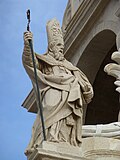 Marcian of SyracuseHieromartyr · First Bishop of SyracuseOct 30
 Germanus of CapuaSaint · Bishop of CapuaOct 30
 TertiusApostle · Apostle of the SeventyOct 30
 Varnava the New ConfessorConfessor · Bishop of HvosnoOct 30
 Felix of Massa MartanaHieromartyrOct 30
- ClopasSaint · New Testament figureOct 30