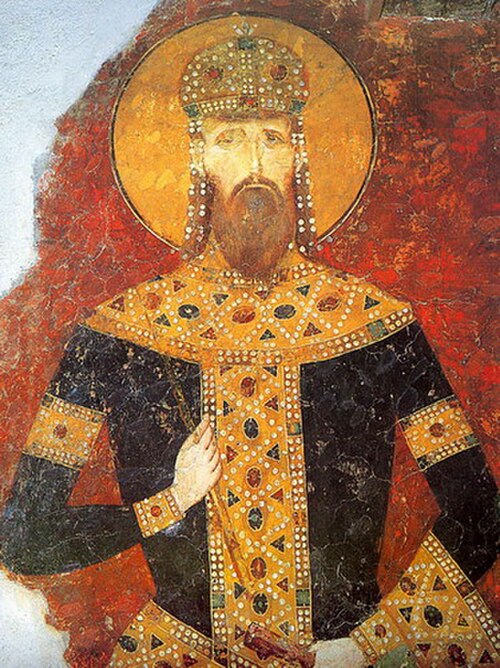
Right-Believing
Stefan Uroš II Milutin
King of Serbia
King of Serbia from 1282 to 1321, builder of churches and monasteries, called the Holy King after his death.
- Feast
- October 30old style November 12
- Reposed
- 132114th century
- Place
- Nerodimlje
Life
Saint King Stefan Uroš II Milutin ruled Serbia from 1282 to 1321 and belonged to the Nemanjić dynasty. He was one of the most powerful rulers of medieval Serbia and a great builder of churches and monasteries. The Serbian Orthodox Church called him “the Holy King” after his death and keeps his feast on 30 October.
Beginnings of his reign
He was born around 1253, a son of King Stefan Uroš I and Queen Helen of Anjou. His elder brother Stefan Dragutin was meant to inherit, but he rebelled against their father and took the crown, and in 1282, after a riding accident that left him lame, he stepped aside. An assembly at Deževo proclaimed Milutin king; he was about 29. Dragutin kept the northern lands bordering Hungary.
From the start Milutin advanced against Byzantine lands in Macedonia. He conquered the north of Macedonia, including Skopje, which became his capital, and pushed on as far as Kavala. In 1284 he took northern Albania and Dyrrachion (Durrës). The war with Byzantium lasted fifteen years, until 1299, when he kept the conquered lands as dowry of Simonis, daughter of Emperor Andronikos II Palaiologos, who became his fourth wife. Even earlier, in 1268, his father had negotiated a marriage with a daughter of Emperor Michael VIII, but the plan fell through. Milutin also resisted Michael VIII’s attempts to impose Roman Catholicism in the Balkans after the Union of Lyons in 1274.
Wars and neighbours
With Dragutin, Milutin defeated the Bulgarian lords Darman and Kudelin of Braničevo in 1291. He then fought Shishman, lord of Vidin and vassal of the Tatar khan Nogai; he devastated Vidin but reached peace through marriages, and later gave his daughter Ana-Neda to Shishman’s son Michael, who became Tsar of Bulgaria. To turn away the Tatar threat, he sent his son Stefan, later Dečanski, to Nogai as a hostage.
After the peace of 1299 a quarrel broke out between Milutin and Dragutin over the succession, lasting with pauses until Dragutin’s death in 1316. Milutin named his son Stefan Dečanski governor of Zeta, as heir to the crown, and to strengthen his position he also sought support from Rome. After 1316 he came into conflict with King Charles Robert of Hungary and lost Mačva and Belgrade, but kept Rudnik, Kučevo and Braničevo. In 1312 he sent troops to help the Byzantine emperor against the Turks at the battle of Gallipoli. Under him the country’s wealth grew, above all through silver mining, and Novo Brdo became an important mining centre.
Builder
Milutin took many features of Byzantine order into Serbia and built or renewed a great number of monasteries and churches: the Mother of God of Ljeviška in Prizren, Gračanica, the King’s Church at Studenica, the Mother of God Trojeručica in Skopje, Staro Nagoričane and Banjska, and, outside his realm, the monastery church of Hilandar on Mount Athos. In his time church architecture took a new form known as the Vardar style. Fortresses and monasteries were strengthened, among them the fortified Hilandar, and the fortress of Belgrade was extended.
Death and veneration
He departed this life on 29 October 1321 at Nerodimlje. For his works as a founder he was canonized two and a half years after his death and called “the Holy King”. He was father of King Stefan Dečanski and grandfather of Emperor Stefan Dušan. His Life was written by Archbishop Danilo II. His relics rest in the church of Saint Nedelya in Sofia.
Commemorated the same day October 30
 Helen of SerbiaRight-Believing · Queen of SerbiaOct 30
 Justus BarsabbasApostle · Apostle of the SeventyOct 30
 Artemas of LystraApostle · Bishop of LystraOct 30
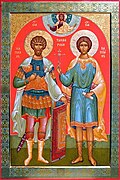 Marcellus of TangierMartyr · Roman centurionOct 30
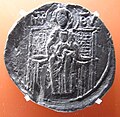 Joseph I GalesiotesSaint · Patriarch of ConstantinopleOct 30
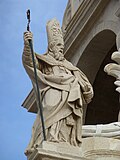 Marcian of SyracuseHieromartyr · First Bishop of SyracuseOct 30
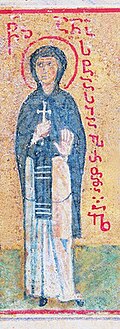 Anastasia the RomanVenerable Martyr · Nun of RomeOct 30
 Germanus of CapuaSaint · Bishop of CapuaOct 30
 TertiusApostle · Apostle of the SeventyOct 30
 Varnava the New ConfessorConfessor · Bishop of HvosnoOct 30
 Felix of Massa MartanaHieromartyrOct 30
- ClopasSaint · New Testament figureOct 30