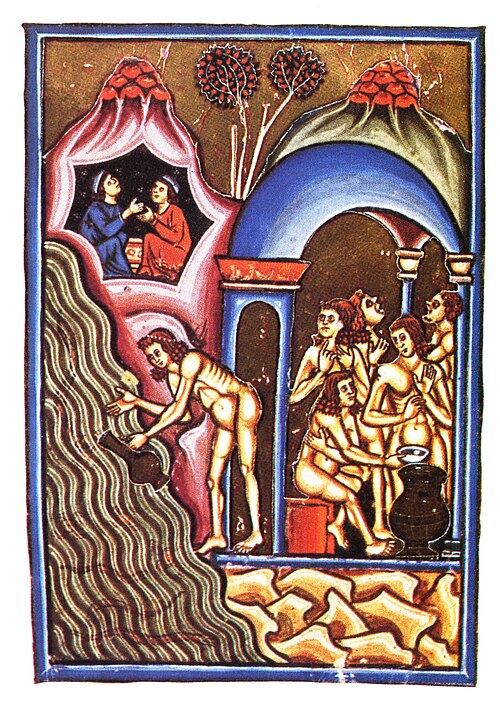
Saint
Germanus of Capua
Bishop of Capua
Bishop of Capua from 519 until his death in 541, with a major role in ending the Acacian schism.
- Feast
- October 30old style November 12
- Reposed
- 5406th century
- Place
- Capua
- Order
- Hierarchs
Life
Saint Germanus was bishop of Capua, in southern Italy, from about 519 (by some sources 516) until his death in 541 (or 540). He is known above all as the leader of the legation sent by Pope Hormisdas to Constantinople, which brought about the end of the Acacian schism, the first great rupture between East and West. Saint Gregory the Great tells in the Dialogues of a vision of Saint Benedict, who saw Germanus's soul carried to heaven. He is commemorated on 30 October.
Beginnings
Nothing certain is known of his life before the episcopate. The only source is a life written in the ninth century, which gives his parents as Amantius and Juliana and has him born at Capua around the 470s, into a wealthy family. After his father's death, with his mother's blessing, he is said to have sold his inheritance and given the money to the poor, in order to devote himself to the ascetic life. After the death of Bishop Alexander the people of Capua elected him bishop, and Germanus at first refused the honour and then accepted when persuaded. These accounts cannot be confirmed by other sources.
The mission to the East, 519 to 520
At his election Capua lay in the Ostrogothic kingdom. Soon afterwards Germanus was named to the legation that Pope Hormisdas sent to the court of Emperor Justin I at Constantinople to negotiate the end of the Acacian schism, which since 482 had divided the Church of the West from that of the East. The ancient Liber Pontificalis calls him "the Capuan bishop" in connection with this legation.
The legation consisted of Germanus, the Alexandrian deacon Dioscorus, a bishop named John, the Roman deacon Felix, the Roman priest Blandus and the notary Peter. They gathered at Rome between January and March 519. In both the Liber Pontificalis and the letters of Hormisdas, Germanus is always named first, a sign that he was the head of the group.
It was the third papal attempt since the beginning of the schism. The one of 496 and 497 also had a bishop named Germanus, and in older scholarship the two were thought to be the same, but it has been shown that the earlier one was Germanus of Pesaro. The two earlier missions had produced no result, but that of 519 took place in favourable circumstances. It had the support of the Ostrogothic king Theoderic and of the new emperor and patriarch at Constantinople, Justin I and John of Cappadocia. In a letter to Justin's nephew, Count Justinian, Hormisdas says he chose the legates for their "quality".
Their route is known from letters. They crossed the Adriatic to Aulon, then went through Lychnidus toward Thessalonica, where Germanus celebrated the liturgy. Justinian met them ten miles outside Constantinople. According to Germanus's letter to Hormisdas of 22 April 519, the people of the city received them with cheers. They met the emperor and, separately, the Senate on the Monday of Holy Week. On Thursday they met the emperor, the Senate and the patriarch together at the palace, to present the "libellus of Hormisdas", the document in which the pope set out the conditions for healing the schism. The conditions were accepted.
Germanus and his companions stayed in the East another year, to secure acceptance of the document outside the capital. On 9 July 520 the emperor wrote to Hormisdas to commend his legates. The Liber Pontificalis credits Germanus with skilful handling of the Theopaschite controversy, of the calculation of the date of Easter and of the reinstatement of bishops deposed by Emperor Anastasius I.
Later episcopate
Little is known of his episcopate after he returned. According to the tenth-century Chronicle of Salerno, Germanus changed the dedication of the Constantinian basilica of Capua from the Holy Apostles to Saints Stephen and Agatha, after depositing there relics of theirs that he had received as a reward from the emperor himself. According to his eighth or ninth-century life, Bishop Sabinus of Canosa was an acquaintance of his. Both went on papal missions to fight Monophysitism in the Eastern Churches, Sabinus in 536. Sabinus was also close to Saint Benedict of Nursia, with whom Germanus is said to have been friends.
In the Dialogues, Saint Gregory the Great relates that Benedict, praying at the top of Monte Cassino, saw Germanus's soul, in the form of a ball of fire, carried to heaven by angels. He later learned that the vision matched the moment of Germanus's death. His death is placed in early 541, according to an inscription that gives the start of the episcopate of his successor, Victor (Saint Victor), in that year. Gregory the Great also mentions him in the Dialogues in another place, asking his intercession for the soul of the deacon Paschasius.
Relics and veneration
Throughout the early Middle Ages Germanus was venerated as a saint in southern Italy. He was buried at Capua, in the church of Holy Wisdom. When Count Lando I moved the city of Capua in 849, the saint's body was moved with it. According to the sources, Emperor Louis II took the greater part of the relics to Cassino, either in 866 or in late 873, after a campaign against the Arabs who were harassing Capua. The settlement at the foot of the hill, ancient Casinum, was called San Germano until 1863. Empress Engelberga took another part of the relics for the monastery of San Sisto at Piacenza, founded by her in 874. The relics at Cassino were lost in the Anglo-American bombing of the abbey of Monte Cassino in 1944. The Life of Saint Germanus does not mention the transfers of 873, so it was probably finished before then. The saint is commemorated on 30 October, in the Roman Martyrology.
Commemorated the same day October 30
 Stefan Uroš II MilutinRight-Believing · King of SerbiaOct 30
 Helen of SerbiaRight-Believing · Queen of SerbiaOct 30
 Justus BarsabbasApostle · Apostle of the SeventyOct 30
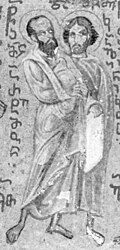 Artemas of LystraApostle · Bishop of LystraOct 30
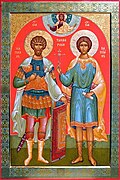 Marcellus of TangierMartyr · Roman centurionOct 30
 Joseph I GalesiotesSaint · Patriarch of ConstantinopleOct 30
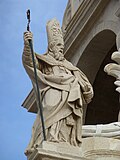 Marcian of SyracuseHieromartyr · First Bishop of SyracuseOct 30
 Anastasia the RomanVenerable Martyr · Nun of RomeOct 30
 TertiusApostle · Apostle of the SeventyOct 30
 Varnava the New ConfessorConfessor · Bishop of HvosnoOct 30
 Felix of Massa MartanaHieromartyrOct 30
- ClopasSaint · New Testament figureOct 30