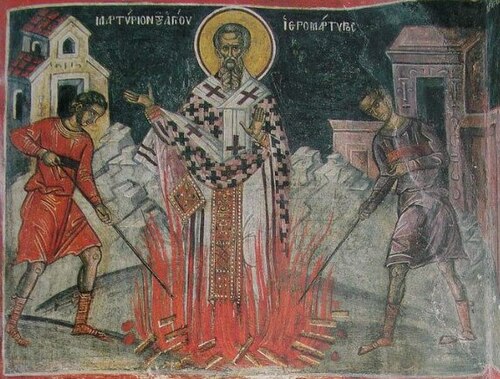
Hieromartyr
Anastasius II of Antioch
Patriarch of Antioch
Patriarch of Antioch from 599, known for suppressing simony with the support of Pope Gregory the Great; died in 609.
Life
Saint Anastasius II of Antioch, Hieromartyr, called the Sinaite, was patriarch of Antioch from 599 to 609. The Orthodox Church remembers him on 20 April, and the Catholic Church on 21 December.
It is held that, like his predecessor Anastasius I, he was a monk of the monastery of Sinai and probably its abbot. The Greek sources say that he was born in Alexandria, into a well-off family, became a monk young and, after travelling through Syria, Egypt and Jerusalem, came to Sinai. He fought against Monophysitism, and so was called Confessor, and his contemporaries called him “a new Moses.” In the year 599 he ascended the patriarchal throne of Antioch. He corresponded with Pope Gregory the Great, whose reply, from the beginning of his patriarchate, survives. With the pope's support he opposed and suppressed simony in his diocese.
He was the author of polemical writings against the Jews. He translated into Greek the pope's treatise “Pastoral Rule,” but the translation has not survived. A work “On Providence,” signed Anastasius of Antioch, is also ascribed to him.
In the year 609, during popular disturbances at Antioch, which according to Theophanes the Confessor were started by the Jews (by another account the conflict was between circus factions), Anastasius was killed; according to some accounts, burned alive. Another writer, Agapius of Manbij, says the patriarch was killed in the year 610 by the Persians, who took Antioch in their war with Byzantium. Because of confusion with his predecessor of the same name, some details remain uncertain. His memory is found in the Typikon of the Great Church, of the tenth century, and in Greek synaxaria, and in 1603 a short life of him was composed on the basis of Byzantine chronicles and printed in a Venice Menaion.
Commemorated the same day April 20
 AnicetusSaint · Bishop of RomeApr 20
 ZacchaeusApostle · Tax Collector of JerichoApr 20
 Anastasius I of AntiochSaint · Patriarch of AntiochApr 20
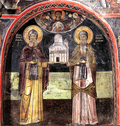 Joasaph of MeteoraVenerable · Former ruler of ThessalyApr 20
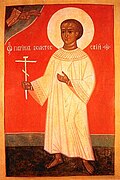 Gabriel of ZabłudówMartyr · Child martyrApr 20
 Beuno of Clynnog FawrVenerable · Abbot of Clynnog FawrApr 20
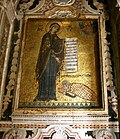 Gregory of AntiochSaint · Patriarch of AntiochApr 20
- Athanasios the MeteoriteVenerable · Founder of the Meteora monasteriesApr 20
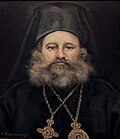 Prokopios of IconiumHieromartyr · Metropolitan of IconiumApr 20
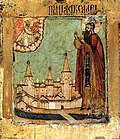 Alexander of OshevenskVenerable · Founder of Oshevensk MonasteryApr 20
- Mar AwginVenerableApr 20
Theodosius GanitskyConfessor · Bishop of KolomnaApr 20