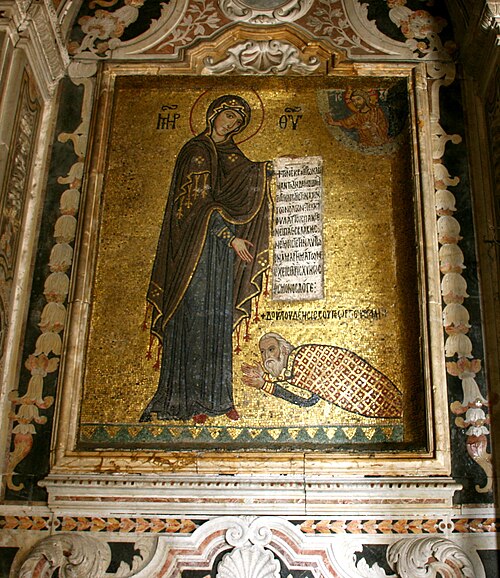
Saint
Gregory of Antioch
Patriarch of Antioch
Monk in Jerusalem, then abbot of Sinai, and Patriarch of Antioch from 571 to 593.
Life
Saint Gregory was Patriarch of Antioch from 571 (other dates give 569-570 or 573) to 593, a monk in Jerusalem and abbot of the Pharan monastery on Sinai before being set on the throne. He is commemorated as a hierarch in the Orthodox Church on 20 April by the old calendar, which is 3 May by the new. In his life, written by Sophronius of Jerusalem, he is praised as a man of holy life, but the historical sources also preserve a grave suspicion against him.
Life
Little is known of his early years. According to Evagrius Scholasticus he began as a monk at the monastery of the Byzantines in Jerusalem. Emperor Justin II moved him to Sinai, where he was abbot when the monastery was attacked by Arabs. John Moschus mentions that he was also abbot of the Pharan monastery in Palestine. The Serbian source says he was Armenian by nationality. The life tells that one day Abbot Gregory visited a hermit in a cave, who received him with honour and washed his feet and, asked why, answered that by divine revelation he saw in him the future patriarch. He reached the see of Antioch after Justin II removed Anastasius I, in 569-573. He was patriarch against his will, according to Sophronius, who writes that such a man is worthy to be numbered among the saints and venerable, and that he led a holy life in Christ. He was marked by almsgiving, especially to sinners.
He was respected not only by his flock but by the Persians. In 591 Khosrau II Parviz sent him as a gift a cross adorned with much gold and precious stones, the one earlier taken from Sergiopolis by Khosrau I. He was sent, with Metropolitan Domitian of Melitene, to meet Khosrau when he fled to the Romans early in his reign. He mediated when the Roman troops at war with the Persians mutinied under Emperor Maurice. Then he made a tour of the border lands to bring the Monophysites to the definitions of Chalcedon. He left five homilies, included in volume 88 of the Patrologia Graeca.
The accusation and his end
The historical sources also know another story: in 578 Anatolius accused Gregory of being a hidden pagan involved in the sacrifice of a boy, but retracted the accusation under torture. According to John of Ephesus, his contemporary, the patriarch was a pagan and attended a sacrifice of a boy by night at Daphne. Learning of it, the crowd sought him and he barricaded himself in the palace and could not celebrate the Chrism service on Holy Thursday. The king and advisers thought that, for the honour of Christianity, the matter must be hushed up, and the riot calmed. Through the intercession of others he gained the favour of the Patriarch of Constantinople, John the Faster, and kept his see, though he had lost the respect of the people. He quarrelled with the Count of the East, was subjected to inquiries and appeared in court at Constantinople before 588, but was acquitted. He died in 593 or 594, from a medicine taken for gout. His predecessor, Anastasius I, became patriarch again.
Commemorated the same day April 20
 AnicetusSaint · Bishop of RomeApr 20
 ZacchaeusApostle · Tax Collector of JerichoApr 20
 Anastasius I of AntiochSaint · Patriarch of AntiochApr 20
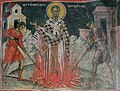 Anastasius II of AntiochHieromartyr · Patriarch of AntiochApr 20
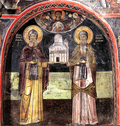 Joasaph of MeteoraVenerable · Former ruler of ThessalyApr 20
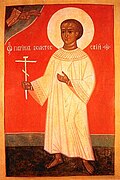 Gabriel of ZabłudówMartyr · Child martyrApr 20
 Beuno of Clynnog FawrVenerable · Abbot of Clynnog FawrApr 20
- Athanasios the MeteoriteVenerable · Founder of the Meteora monasteriesApr 20
 Prokopios of IconiumHieromartyr · Metropolitan of IconiumApr 20
 Alexander of OshevenskVenerable · Founder of Oshevensk MonasteryApr 20
- Mar AwginVenerableApr 20
Theodosius GanitskyConfessor · Bishop of KolomnaApr 20