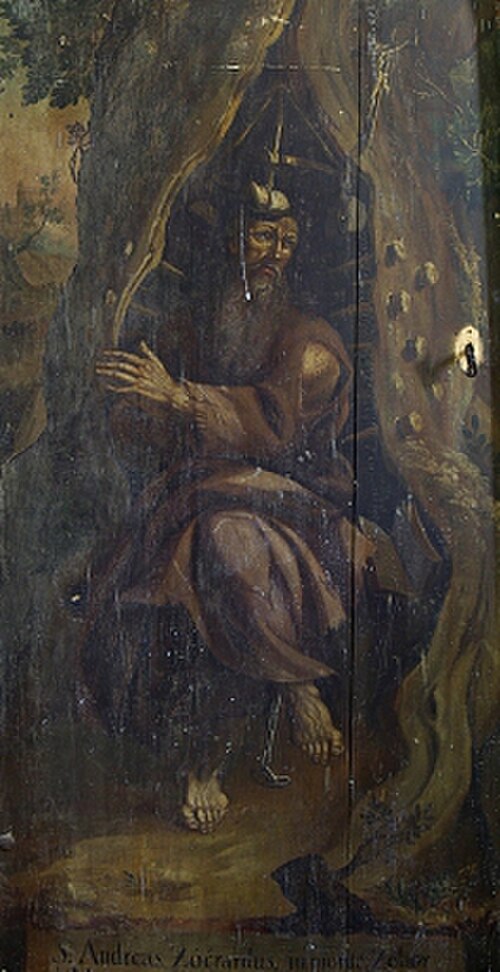
Venerable
Andrew Zorard
Hermit and Benedictine monk
Monk of Polish origin active in the Hungary of his day (now Slovakia), honored in both Western and Eastern churches.
- Feast
- July 17old style July 30
- Reposed
- 100911th century
- Place
- Nitra Region
- Order
- Venerables
Life
Saint Andrew Zorard, called Svorad in Slovak, was a Polish-born hermit and Benedictine monk who lived in what was then the Kingdom of Hungary, now Slovakia, at the beginning of the eleventh century. He is honoured as patron of the city of Nitra and its diocese, and in some calendars he is remembered together with his disciple Saint Benedict on 13 July, or alone on 17 July.
He was born around 980 at Opatowiec, a small village in Poland. A tradition in the village of Tropie says that in his youth he lived nearby as a monk. Around the year 1000, at about twenty, he began to live as a hermit and missionary, preaching in Silesia at Oława, and he also reached northern Hungary. Around 1003 he settled at the monastery of Saint Hippolytus on Mount Zobor near Nitra, where he received the monastic habit from Abbot Philip and the name Andrew. There he became the spiritual guide of Benedict of Skalka.
With the abbot's permission Andrew and Benedict left the monastery and lived as hermits in a cave on the Váh river near Skalka nad Váhom, not far from Trenčín. Other sources say Andrew also lived in a small cave near the monastery, which has since been called Svorad's cave. His austerities were so severe that, according to legend, the iron chain he wore around his waist grew into his body. He fell asleep of natural causes around 1009, or according to other sources around 1030. Benedict remained in the cave for three more years until he was killed by a band of thieves looking for treasure.
The life of the two saints was written in the eleventh century by Maurus, Bishop of Pécs, in the Legend of the hermits Svorad and Benedict. King Géza I of Hungary took the first steps toward canonization as early as 1064. His veneration was officially confirmed in July 1083 by Pope Gregory VII, at the urging of King Ladislaus I. That same year his relics were placed in Saint Emmeram's Cathedral in Nitra, where they remain. He is honoured above all in Slovakia, Hungary and Poland, and also among communities in the United States. A Benedictine abbey in Cleveland, Ohio, bears his name.
Commemorated the same day July 17
 Leo IV of RomeSaint · Bishop of RomeJul 17
 MarinaGreat Martyr · of Antioch in PisidiaJul 17
- Ennodius of PaviaSaint · Bishop of PaviaJul 17
 Ivan KharitonovPassion-Bearer · Head cook of the imperial courtJul 17
 KenelmRight-Believing · Anglo-Saxon king of MerciaJul 17
 Benedict of SkalkaVenerable · Hermit of SkalkaJul 17
 Irinarkh of SolovkiVenerable · Abbot of Solovki MonasteryJul 17
- Lazaros of GalesiosStylite · Stylite of Mount GalesiosJul 17
 Leonid of UstnedumskVenerable · HieromonkJul 17
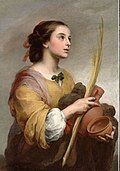 Justa of SevilleMartyrJul 17
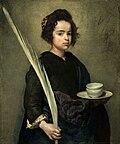 Rufina of SevilleMartyrJul 17
- Aquilinus of ScilliMartyrJul 17