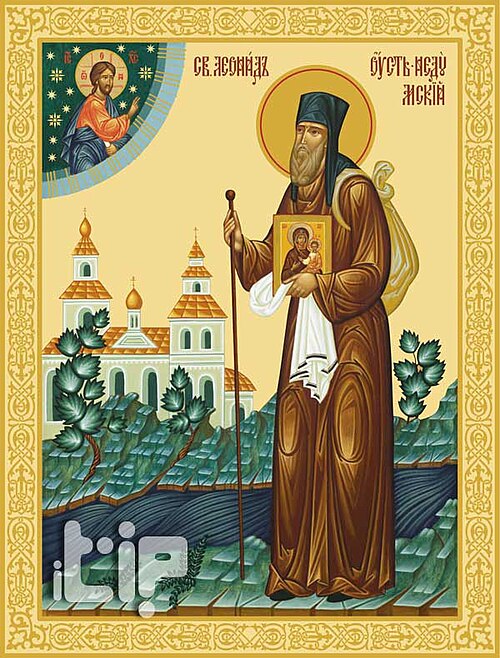
Venerable
Leonid of Ustnedumsk
Hieromonk
Hieromonk born in 1551 in the Poshekhonye region, honored in the Synaxis of the Saints of Vyatka.
- Feast
- July 17old style July 30
- Reposed
- 165417th century
- Order
- Venerables
Life
Venerable Leonid of Ustnedumsk was a Russian hieromonk, born in 1551 and dead, according to one of our sources, on 17 July 1654, at over a hundred years of age. He founded the monastery on the river Luza, in the Ustyug region, where he placed the icon of the Mother of God Hodegetria. He is remembered on 17 July, and on 8 October in the synaxis of the saints of Vyatka. He was canonized for veneration throughout the Russian Church in 2016.
The ploughman called in a dream
Our sources give different places of birth: one says what is now the Yaroslavl region, in the Shekinskaya district of Poshekhonye, another the Novgorod region. His parents, Philip and Catherine, were peasants, brought him up in the Orthodox faith and helped him to learn to read. For the first fifty years of his life he tilled the land.
In 1603 the Mother of God appeared to him in a dream and commanded him to go to the Saint Nicholas hermitage at Morzhevo on the Dvina, take from there her icon Hodegetria, carry it to the Ustyug region, to the river Luza near Turina hill, build a church in her name and live there until death. Leonid thought it was only a dream, but he left his work and went to the Kozheozero monastery, on Lopsky island. He stayed there a year, by some accounts three, with a companion, Nikodim, who had come from Moscow, under the guidance of the elder Serapion.
When the revelation was repeated in a dream, Leonid went by the Onega to Solovki, to venerate the relics of Saints Zosima and Savvaty, and stayed there three more years. When the dream came a third time, he took the abbot's blessing and went to the hermitage at Morzhevo. He laboured there a year, telling no one of the revelation. Then the Mother of God appeared again, this time indicating the exact place from which to take the icon. Leonid told the abbot and brethren what he had seen, received the icon and set out with it for the river Luza and Turina hill.
Founding the monastery
He settled eighty versts from Ustyug, at the mouth of the river Yakushitsa, beside the church of the Resurrection of Christ, and made a small hut. The place was unfit for a church, being too marshy, and soon the local people drove him away. Wandering through the forest on the bank of the Luza, he met a well-off peasant, Nikita Nazarov, who, learning everything that had happened, gave the place where they met for a church. The old man made himself a cell there and gradually won the respect of the pilgrims of the area, who built a chapel for the icon.
Leonid went to Rostov, to Metropolitan Philaret, for a blessing to build a church. Philaret blessed the building, ordained him priest and gave him an antimension for the consecration of the church. The church was raised and consecrated in the name of the Entry of the Mother of God into the Temple, and the Hodegetria icon was moved into it from the chapel. For the building of the monastery, though old, he decided to drain the marshy ground. He suffered greatly from the heat and insect bites and was bitten by a snake, but remained alive. Since the site was flooded every spring by the overflowing Luza, it was decided to raise the monastery nearby, on a cape of the Black Lake.
The new church was consecrated, in the year 7160 from the creation of the world (around 1652), in the name of the Entry of the Mother of God, with a side chapel of the Great Martyr Paraskevi-Friday. The wonderworking icon was carried in procession into the new church. A Serbian source says that the epithet Ustnedumsky comes from the snakebite, which the saint would neither think nor speak of.
Veneration
The saint fell asleep in the Lord, according to one source, on 17 July 1654. On 3 February 2016, by decision of the Council of Bishops of the Russian Orthodox Church, he was canonized for veneration throughout the Church. In February and March 2018, with the blessing of Patriarch Kirill, archaeological work was carried out in the grounds of the church of the Entry at the village of Ozera, Luza district, Kirov region, to find the saint's relics. On 18 June 2019 Patriarch Kirill blessed the veneration of the relics of Venerable Leonid.
Commemorated the same day July 17
 Leo IV of RomeSaint · Bishop of RomeJul 17
 MarinaGreat Martyr · of Antioch in PisidiaJul 17
- Ennodius of PaviaSaint · Bishop of PaviaJul 17
 Andrew ZorardVenerable · Hermit and Benedictine monkJul 17
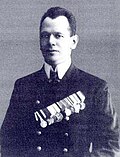 Ivan KharitonovPassion-Bearer · Head cook of the imperial courtJul 17
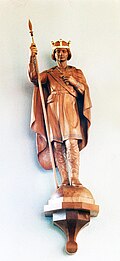 KenelmRight-Believing · Anglo-Saxon king of MerciaJul 17
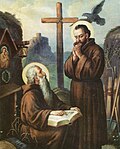 Benedict of SkalkaVenerable · Hermit of SkalkaJul 17
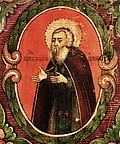 Irinarkh of SolovkiVenerable · Abbot of Solovki MonasteryJul 17
- Lazaros of GalesiosStylite · Stylite of Mount GalesiosJul 17
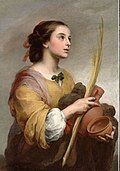 Justa of SevilleMartyrJul 17
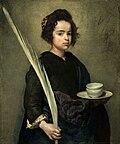 Rufina of SevilleMartyrJul 17
- Aquilinus of ScilliMartyrJul 17