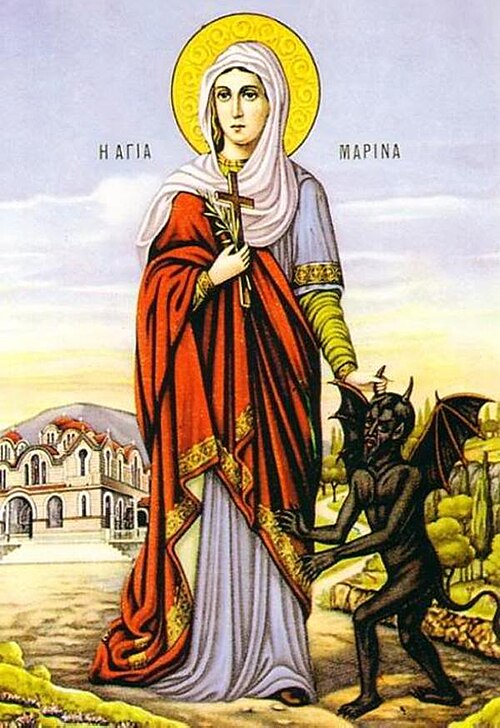
Great Martyr
Marina
of Antioch in Pisidia
Maiden of Antioch in Pisidia, killed for her confession of Christ in the persecution of Diocletian.
- Feast
- July 17old style July 30
- Reposed
- 3044th century
- Place
- Antioch of Pisidia
- Order
- Great Martyrs
Life
The Holy Great Martyr Marina was a virgin of Antioch in Pisidia, in Asia Minor, who received the crown of martyrdom during the persecution of Diocletian, at the beginning of the fourth century. Tradition gives the year 304. The Orthodox Church commemorates her on 17 July (30 July in the Churches that keep the old calendar), and the West, where she is called Margaret, on 20 July. Her passion, with its face to face struggle against the devil, made her one of the best loved saints of Christendom.
Childhood and faith
Marina was born into a pagan family, the daughter of a priest of the idols at Antioch in Pisidia. Her mother died while she was still an infant, and the little girl was raised by a nurse, on a family estate far from the city.
From her nurse, or by other accounts from a man of God who passed that way, she learned at the age of twelve about Christ and His birth of the Virgin. She received holy Baptism, her faith grew strong, and she resolved to remain a virgin, a bride of Christ. When her father learned of it, he cast her off, and Marina stayed with her nurse and tended the sheep.
Before the prefect
At fifteen, while she was shepherding, the prefect Olybrius passed by, and astonished by her beauty he wished to marry her. Marina did not hide her faith and declared that she was a Christian. The prefect put her in the care of a noblewoman, hoping that she would persuade her to deny Christ, and then asked for her hand in public, from the tribunal, but the maiden stood unmoved. Her answer, preserved by Doxologia, is that she remains the faithful servant of her Master, Who suffered willingly for her.
The torments and the struggle with the devil
The torments followed. She was beaten with rods, her body was torn with iron forks, nails were driven into her, and she was burned with fire. By the grace of God her wounds were healed, but her tormentors were not moved by the miracle.
In prison, after the first day of torture, she asked the Lord to let her see the enemy of mankind. The account says that the devil appeared to her in the form of a dragon and swallowed her, but Marina made the sign of the holy Cross, and the dragon burst. Then in a corner of the cell the devil appeared as a dark man with horns. Marina seized a copper hammer and struck him on the head, holding him by the horns and standing on his neck. The heavens opened, and her body was healed again. Because of this struggle, in Greek and Coptic icons Saint Marina is shown with a hammer in her hand, over the devil or the dragon. Doxologia has a whole article on why Saint Marina appears in icons holding a hammer.
On the next day the prefect tried once more to break her. He hung her on a tree and burned her, then plunged her into a barrel of water, which was for her Baptism. At that moment a light shone, the earth shook, her chains fell away, and a white dove descended with a golden crown in its beak. The astonished crowd glorified God and confessed itself Christian.
Martyrdom
The prefect ordered Marina and all who had believed to be put to death. On that day she was beheaded by the sword, at fifteen, and with her, according to tradition, fifteen thousand people. The year was 304.
An eyewitness, Theotimus, is said by tradition to have written of her martyrdom. He anointed the saint's body with fragrant oils and laid it first in the house of a pious senator's wife at Antioch. The relics were then placed in a stone tomb in a house of prayer built for the purpose, where every year on her feast the Divine Liturgy was served. It must be said that Theotimus is named only in the Latin Life, not in the Greek.
Relics and veneration
From the fourth century Marina was honoured as a deliverer from misfortune and from unjust judgment. Her relics were kept at Constantinople until the city was taken by the Crusaders in 1204. Today parts of her holy relics are venerated in several places, among them the Xenophontos Monastery on the Holy Mountain, and a Coptic tradition keeps her right hand in Cairo. An Athonite record of 1701 says that her relics heal the sick, comfort the sorrowful, and bring forgiveness to those fallen into sin.
Her veneration spread throughout the East. The Copts commemorate her on 23 Epip, and the Orthodox Church on 17 July, with a troparion in which the saint, the lamb of Christ, confesses that she dies for Him Who died for her. She is invoked against the enemy, against temptations and evil spirits, by those tormented by them, by the sick, and at the hour of death.
In the West and in the customs of the people
In the West Marina is called Margaret of Antioch. Her veneration came from the East, reached England, France and Germany in the eleventh century, at the time of the Crusades, and in 1222 the council of Oxford added her to the list of feast days. In England more than two hundred and fifty churches were dedicated to her, among them the one at Westminster. The West counted her patroness of women in childbirth and one of the Fourteen Holy Helpers, a tradition belonging to the Roman Catholic Church. Later, a number of historians judged the story of the dragon a legend, and Jacobus de Voragine, the author of the Golden Legend, told it as such.
In Romania the day of 17 July is called Marina of the Fire. The people remember her as a saint of fire, asking her to guard homes and fields from fire and lightning, and on this day people avoid working with fire.
Marina has sometimes been confused with Saint Pelagia, who in some sources bears the name Marina, but they are two different saints.
Commemorated the same day July 17
 Leo IV of RomeSaint · Bishop of RomeJul 17
- Ennodius of PaviaSaint · Bishop of PaviaJul 17
 Andrew ZorardVenerable · Hermit and Benedictine monkJul 17
 Ivan KharitonovPassion-Bearer · Head cook of the imperial courtJul 17
 KenelmRight-Believing · Anglo-Saxon king of MerciaJul 17
 Benedict of SkalkaVenerable · Hermit of SkalkaJul 17
 Irinarkh of SolovkiVenerable · Abbot of Solovki MonasteryJul 17
- Lazaros of GalesiosStylite · Stylite of Mount GalesiosJul 17
 Leonid of UstnedumskVenerable · HieromonkJul 17
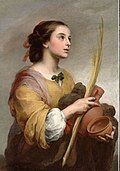 Justa of SevilleMartyrJul 17
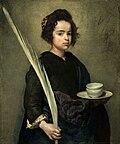 Rufina of SevilleMartyrJul 17
- Aquilinus of ScilliMartyrJul 17