Saint
Ennodius of Pavia
Bishop of Pavia
Bishop of Pavia from 514, Latin rhetorician and poet, who died in 521.
Life
Saint Ennodius of Pavia (Magnus Felix Ennodius), hierarch, was bishop of Pavia from 513 or 514, a Latin rhetorician and poet. He was born in 473 or 474, probably at Arles, and died on 17 July 521. He lived before the separation of the Churches, and his name is commemorated in calendars on 17 July.
Life
He was born into a distinguished but impoverished family. Orphaned early, he was brought up by an aunt at Ticinum, now Pavia, according to some sources at Milan. It is told that he was betrothed to a wealthy and pious young woman; she lost her fortune and withdrew to a convent, and Ennodius chose the service of the Church. He was ordained deacon around 493 by Bishop Epiphanius of Pavia. In 494 he accompanied Epiphanius on a mission to Lyon, to the Burgundian king Gundobad, on commission from Theodoric the Great. He then lived many years at Milan, as deacon to Bishop Laurentius, visited Rome and other places, where he was esteemed as a teacher of rhetoric. During the dispute over the see of Rome, in 498, he took the side of Pope Symmachus, and at the synod of 501 he maintained that no one can judge the pope save God.
In 513 or 514, after the death of Saint Maximus, he was chosen bishop of Pavia. In 515 and 517, sent by Pope Hormisdas, he went to Constantinople, to Emperor Anastasius I, as envoy, to try to reconcile East and West in the division called the Acacian schism. He did not succeed. He died at Pavia on 17 July 521. His epitaph is preserved in the basilica of San Michele Maggiore at Pavia, where his relics lie, according to some sources, in a reliquary in the main altar.
Writings
Ennodius was one of the last great representatives of Latin literary culture in the time of the fall of the Western Roman Empire. Before becoming bishop he wrote about five hundred works. His style is ornate and hard to understand, above all in prose; his poetry reads more easily. 297 letters survive, addressed to great churchmen and officials, among them Boethius, valuable for the religious and political history of the time. Among the historical writings, the Panegyric of Theodoric and the Life of Epiphanius, the bishop who preceded him at Pavia, are known. He also wrote the Life of Anthony of Lérins (506), an autobiography in the form of a prayer, Thanksgiving for My Life (Eucharisticon), a number of speeches, twenty-eight in all, on sacred, scholastic, controversial and ethical subjects, more than a hundred and fifty hymns and epigrams, and a textbook of Latin grammar, the Paraenesis didascalica.
Commemorated the same day July 17
 Leo IV of RomeSaint · Bishop of RomeJul 17
 MarinaGreat Martyr · of Antioch in PisidiaJul 17
 Andrew ZorardVenerable · Hermit and Benedictine monkJul 17
 Ivan KharitonovPassion-Bearer · Head cook of the imperial courtJul 17
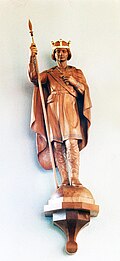 KenelmRight-Believing · Anglo-Saxon king of MerciaJul 17
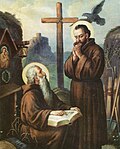 Benedict of SkalkaVenerable · Hermit of SkalkaJul 17
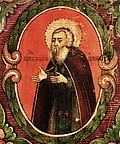 Irinarkh of SolovkiVenerable · Abbot of Solovki MonasteryJul 17
- Lazaros of GalesiosStylite · Stylite of Mount GalesiosJul 17
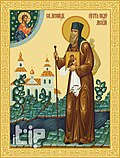 Leonid of UstnedumskVenerable · HieromonkJul 17
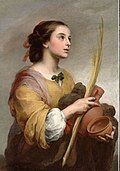 Justa of SevilleMartyrJul 17
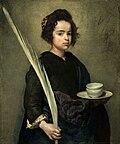 Rufina of SevilleMartyrJul 17
- Aquilinus of ScilliMartyrJul 17