Stylite
Lazaros of Galesios
Stylite of Mount Galesios
Byzantine monk and stylite, founder of a monastic community on Mount Galesios near Ephesus, died in 1053.
Life
Venerable Lazaros of Galesios (in the world Leo) was an eleventh-century Byzantine monk and stylite, founder of a monastic community on Mount Galesios near Ephesus. His biography, written by his disciple Gregory the Cellarer, is a valuable source for monastic life of the time. He is commemorated on 7 November, the day of his repose, and on 17 July, the day of the translation of his relics, by the old calendar.
Life
He was born near Magnesia in Lydia, to a peasant family, with the name Leo, and his parents, Nikitas and Irene, were pious. The year of his birth is not known with certainty: 967, 972 or 981 are given, and a manuscript says he died at seventy-two, whence 981. He died on 7 November 1053 according to most sources (other dates give 1054 or 1055).
After elementary school he left home for Attaleia in order to become a monk. His parents first took him to the Oryvon Monastery, to read holy books. He wanted to go to Jerusalem, to the Lord's Tomb, and on the way was nearly sold as a slave to the Saracens by a monk travelling with him, but a Christian who knew Armenian overheard the bargaining at that very moment and saved him. He reached the celebrated Lavra of Saint Sabbas in Palestine, where he was tonsured, ordained priest and spent ten years in prayer, fasting and obedience. Then he returned to his native region, according to the life set out for Sebasteia and Rome to venerate the Apostles Peter and Paul and, on the way, climbed and descended Mount Argaios in the depth of winter, singing psalms, facing bad weather, a bear and attacking dogs. He withdrew for a time into the wilderness and then settled on Mount Galesios, near Ephesus and Smyrna, where he lived as a stylite. A Ukrainian source says that one night he saw a pillar of fire and heard angels singing, Let God arise and let His enemies be scattered, and that he built there a church of the Resurrection, with help from the emperor Constantine Monomachos. A manuscript says that his body signed, with the help of the monk Cyril, the rule for the monks.
The community and the writing of his life
He founded three monasteries on Mount Galesios. The monks lived in separate cells, not in the common life of most monasteries, and were allowed to earn by handicraft. The Lord gave him the gift of miracles and of prophecy. His life was written by his disciple Gregory the Cellarer and reworked in the thirteenth century by Patriarch Gregory II of Cyprus. As Kazhdan notes, it has few supernatural miracles and many scenes rich in everyday detail, such as thefts, quarrels, journeys and visits, and Constantinople is depicted as a distant city full of dangers. According to one source, he was buried by his disciples in the pillar on which he had struggled.
Commemorated the same day July 17
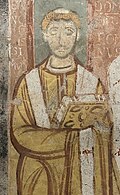 Leo IV of RomeSaint · Bishop of RomeJul 17
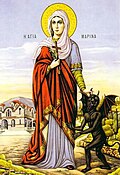 MarinaGreat Martyr · of Antioch in PisidiaJul 17
- Ennodius of PaviaSaint · Bishop of PaviaJul 17
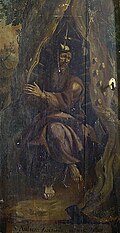 Andrew ZorardVenerable · Hermit and Benedictine monkJul 17
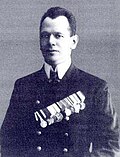 Ivan KharitonovPassion-Bearer · Head cook of the imperial courtJul 17
 KenelmRight-Believing · Anglo-Saxon king of MerciaJul 17
 Benedict of SkalkaVenerable · Hermit of SkalkaJul 17
 Irinarkh of SolovkiVenerable · Abbot of Solovki MonasteryJul 17
 Leonid of UstnedumskVenerable · HieromonkJul 17
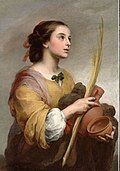 Justa of SevilleMartyrJul 17
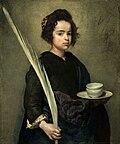 Rufina of SevilleMartyrJul 17
- Aquilinus of ScilliMartyrJul 17