Venerable
Anthimus the Blind of Cephalonia
The Blind of Cephalonia
A blind venerable of Cephalonia, linked to Lixouri and the island of Astypalaia, who reposed in 1782.
- Feast
- September 4old style September 17
- Reposed
- 178218th century
- Place
- Lixouri, Cephalonia; Astypalaia
- Order
- Venerables
Life
Venerable Anthimus the Blind of Cephalonia, also called the blind missionary of the Aegean, was born in 1727 at Lixouri on Cephalonia and reposed in 1782. At baptism he received the name Athanasios. At the age of seven he lost his sight to smallpox, but regained it after a service of forty liturgies requested by his mother, Atzouleta, for his healing.
At twenty he followed the trade of his father, John Kouroukli, an experienced seaman, and sailed with him over many seas. At Constantinople his father died of the plague. In 1750 the captain of the ship, pleased with his work, proposed that Athanasios marry his daughter, and he agreed. On the morning of the wedding he woke up completely blind and said: "Now I understand that I am blinded by God." From then on he kept the byname Theotyphlos.
Understanding that this was the Lord's will, he renounced the world and went to the Holy Mountain, where he was tonsured a monk with the name Anthimus, probably near the Monastery of Iviron. He struggled there and took part in the Kollyvades movement. After his elder died, he went out into the world to preach and to protect the Greek Orthodox under Turkish rule from ignorance and conversion to Islam.
On his first missionary journey he went to Chios, then to Sifnos, Paros and Naxos. On the ship to Paros he calmed a storm by prayer. At Naxos, among his hearers was the young Nicholas Kalivourtsis, the future Saint Nicodemus the Hagiorite. He then went to Ios and to the Holy Land. His second journey took him to Kastellorizo, where he ended a drought by prayer and built a stavropegial monastery (1761), and then to Astypalaia, where he stayed nine years and founded the Monastery of the Mother of God Portaitissa. There, according to tradition, he rid the island of a huge serpent. Slandered by some of the locals, he was proved innocent at a public trial and decided to leave.
At the end of 1768 he reached Lixouri and rebuilt from the foundations the Monastery of Saint Paraskevi at Lepeda, which had been ruined by the earthquakes of 1766 and 1767. He left the community a monastic rule, called the Testament of Saint Anthimus. In 1777 he received a visit from Saint Cosmas of Aetolia. He also preached the Gospel in Kythira, the Peloponnese, Crete and Sfakia, and founded or renewed six monasteries without ever having seen them with his bodily eyes. On a journey to the Mani he received a revelation that his end was near and returned to Lepeda. He fell ill with jaundice and reposed on 4 September 1782.
In 1800 his relics were taken up, found saffron-coloured and giving off a sweet fragrance. Of them only the right forearm survives today, in the Monastery of Portaitissa on Astypalaia, of which he is the patron. He was glorified on 30 July 1974, and his memory is kept on 4 September (new style).
Commemorated the same day September 4
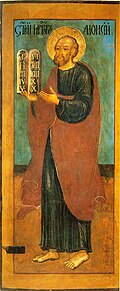 MosesProphet · The LawgiverSep 4
 Joseph the All-ComelyRighteous · Son of JacobSep 4
 Boniface I of RomeSaint · Bishop of RomeSep 4
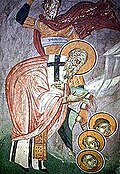 Babylas of AntiochHieromartyr · Patriarch of AntiochSep 4
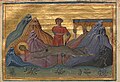 Hermione of EphesusMartyr · Martyr of EphesusSep 4
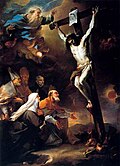 Candida the ElderMartyr · Patron of NaplesSep 4
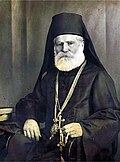 Peter ZimonjićHieromartyr · Metropolitan of Dabar and BosniaSep 4
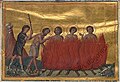 Theodore, Mian, Julian and KionHoly Martyrs · Martyrs of NicomediaSep 4
- Ultan of ArdbraccanSaint · Abbot-bishop of ArdbraccanSep 4
- Babylas of NicomediaMartyrSep 4
 Sergius DruzhininHieromartyr · Bishop of NarvaSep 4
 Stephen of TronošaVenerable · ArchimandriteSep 4