
Venerable
Arsenius of Iqalto
Georgian scholar and calligrapher
A Georgian churchman, theologian and calligrapher of the 11th century, prominent in the life of the Georgian Church.
- Feast
- February 6old style February 19
- Reposed
- 112712th century
- Order
- Venerables
Life
Venerable Arsenius of Iqalto (Arsen Iqaltoeli) was a churchman of the Georgian Church, theologian, calligrapher and religious author of the eleventh and twelfth centuries, who played a significant role in the life of the Georgian Church in the reign of King David IV the Builder (1089 to 1125), with whom he collaborated in founding the Georgian monastic academies. He was born around 1050 and died around 1127. He was canonized by the Georgian Orthodox Church, which commemorates him on 6 (19) February.
Venerable Arsenius came from the Georgian princely family of Vachnadze (Vachesdze). He was born in Kakheti (eastern Georgia), by some sources in the village of Iqalto. Raised by pious parents, he was distinguished from childhood by love of church services and prayer. He was educated at the academy of Constantinople, a centre of Byzantine philosophical activity and classical learning, where he studied thoroughly not only theology but also the natural sciences, and served as a monk on the Black Mountain near Antioch. Here he engaged in theological work and translation, investigating, among other things, the causes of the separation of the non-Chalcedonian Churches from Orthodoxy.
In 1105, probably at the invitation of King David Aghmashenebeli, Arsen completed the work known as the Dzeglis-tsera, the earliest known collection of Georgian canon law, which gives it historical importance. At that time he also became a close associate of the king, who called him his hope and his enlightener. According to the legend, Arsen founded at Iqalto a spiritual academy, which became in the eleventh and twelfth centuries the highest school of Georgia and a centre of Neoplatonic philosophy; according to local tradition, he was buried there and was its first rector. Defending the purity of Orthodoxy, he won in his lifetime the fame of an encyclopedic scholar: theologian, philosopher, philologist, logician, physicist, anatomist, poet.
Together with Ioane Petritsi he brought the Byzantine philosophical tradition to the recently founded academy of Gelati near Kutaisi. In the end he settled in the monastery of Shiomghvime near Mtskheta. He translated in Georgia the work The Government of the Great Law, and to him belongs the translation into Georgian of the Great Nomocanon of Saint Photius, patriarch of Constantinople (857 to 867 and 877 to 886), the Golden Nectar of Saint John of Damascus, and the compilation of a collection of translated works, the Dogmatikon, with commentary directed against various heretical teachings. His great efforts in translating and compiling major doctrinal and polemical works from Greek gave a new impulse to Georgian patristic and philosophical literature. In philosophy he was a follower of scholastic Aristotelianism. Since Arsen mentions the death of King David, in 1125, it may be supposed that he lived to that time, although probably not many years longer.
Commemorated the same day February 6
 Photios the GreatSaint · Patriarch of ConstantinopleFeb 6
 Dorothea of CaesareaMartyrFeb 6
 Barsanuphius the GreatVenerable · Hermit near GazaFeb 6
 Fausta of CyzicusMartyrFeb 6
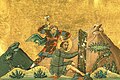 Julian of EmesaMartyr · Physician and martyr of EmesaFeb 6
 Relindis of MaaseikVenerable · Nun of MaaseikFeb 6
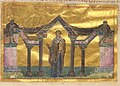 Bucolus of SmyrnaSaint · Bishop of SmyrnaFeb 6
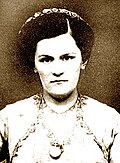 Valentina of MinskFool-for-Christ · Fool for ChristFeb 6
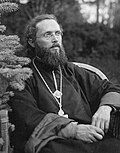 Basil NadezhdinHieromartyr · Priest in MoscowFeb 6
 Amand of MaastrichtSaint · Bishop of MaastrichtFeb 6
- Anatoly RozhdestvenskyMartyrFeb 6
- Andrew of ElnonSaintFeb 6