Martyr
Dorothea of Caesarea
Virgin martyr of Caesarea in Cappadocia, put to death under Diocletian around the year 311.
- Feast
- February 6old style February 19
- Reposed
- 3114th century
- Place
- Kayseri
- Order
- Martyrs
Life
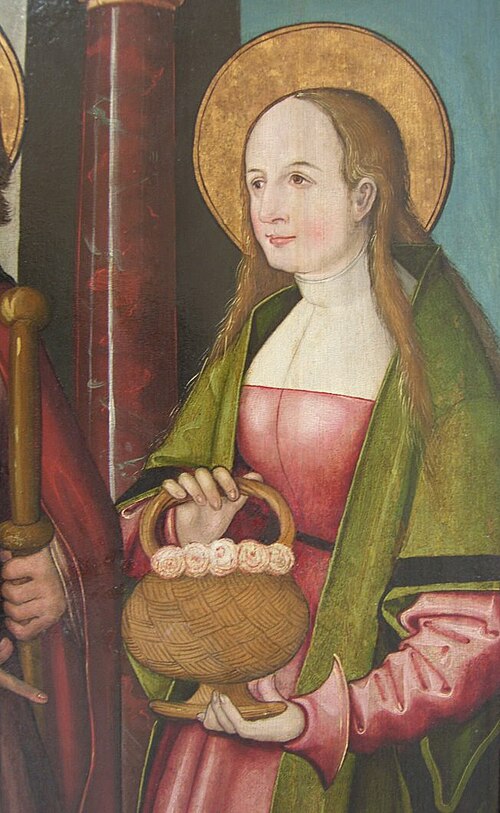
The holy martyr Dorothea of Caesarea was a virgin of Caesarea in Cappadocia, killed in the persecution of Diocletian, around the year 311. She is commemorated on 6 February.
Her life
Tradition shows Dorothea as a devout Christian, gentle, humble, pure and with a wisdom given by God that astonished many. When the persecution began, the governor Sapricius subjected her to torments, but could not break her will. He then gave her into the care of two sisters, Christina and Callista, who had been Christians but had denied the faith for fear of torments and lived in sin; they were to persuade her to sacrifice to the gods. But Dorothea turned them back, showing them that through God’s mercy salvation is granted to all who repent, and the sisters returned to Christ. Sapricius ordered them bound back to back and burned in a barrel of pitch, and they died praying and washing away the sin of denial.
Martyrdom
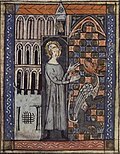
Dorothea was tortured again, endured the torments and received the sentence of death. As she was led to execution, a pagan lawyer, Theophilus, said to her mockingly, “Bride of Christ, send me fruits from your bridegroom’s garden.” She answered that she would. Before she died she prayed, and an angel appeared to her in the form of a six-year-old child of great beauty, holding three apples and three roses, though it was deep winter. The saint asked him to take them to Theophilus and tell him that she would await him in the garden of her Bridegroom, and then she was cut down with the sword. Theophilus, receiving the gift, was amazed, believed in Christ and confessed himself a Christian, was tortured and died a martyr, cut down with the sword.
Veneration
Her relics are kept, according to tradition, at Rome, in the church that bears her name, and her head in the church of the Mother of God in Trastevere. In the West she has been venerated since the seventh century and is regarded as patroness of gardeners. She is shown with a basket of flowers or fruit, or with a wreath of roses, and with the three apples and three roses.
Commemorated the same day February 6
 Photios the GreatSaint · Patriarch of ConstantinopleFeb 6
 Barsanuphius the GreatVenerable · Hermit near GazaFeb 6
 Fausta of CyzicusMartyrFeb 6
 Julian of EmesaMartyr · Physician and martyr of EmesaFeb 6
 Relindis of MaaseikVenerable · Nun of MaaseikFeb 6
 Arsenius of IqaltoVenerable · Georgian scholar and calligrapherFeb 6
 Bucolus of SmyrnaSaint · Bishop of SmyrnaFeb 6
 Valentina of MinskFool-for-Christ · Fool for ChristFeb 6
 Basil NadezhdinHieromartyr · Priest in MoscowFeb 6
 Amand of MaastrichtSaint · Bishop of MaastrichtFeb 6
- Anatoly RozhdestvenskyMartyrFeb 6
- Andrew of ElnonSaintFeb 6