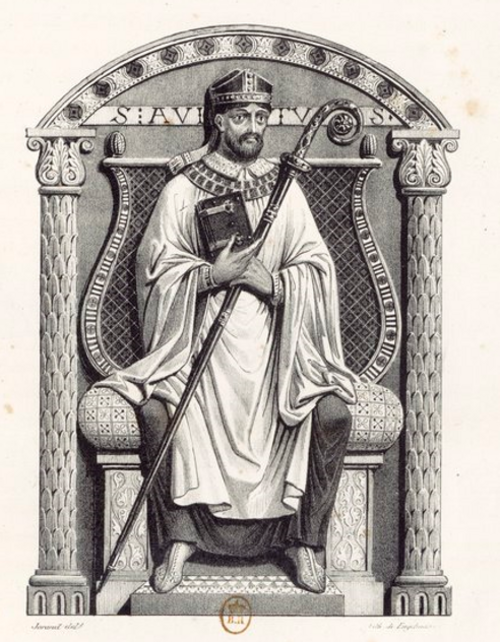
Saint
Avitus of Clermont
Bishop of Clermont
Bishop of Clermont in the 6th century, venerated by the Orthodox and Catholic Churches.
Life
Saint Avitus of Clermont (Avitus I of Clermont) was bishop of Clermont in the sixth century, who died around 594 or 595, according to some sources around 600. The English source says that he is venerated as a saint in the Eastern Orthodox Church and the Roman Catholic Church, with commemoration on 21 August. The record gives no day.
He was born, it seems, around 525, into the Roman family of the Avitii, connected with the emperor Avitus; the Russian source says that from it came also the emperor Avitus, the writer Sidonius Apollinaris and the count of Auvergne, an ancient aristocratic family of the Auvergne. In 571 Bishop Cautinus of Clermont died of plague, and Avitus became bishop; according to the Russian source, he was bishop from 580, the eighteenth of Clermont, and the sources do not agree on this point. In 580 he began the building of the basilica of Notre-Dame du Port in Clermont. Around 590 he may have taken part in a council at Clermont. He was, according to the Russian source, the teacher of Gregory of Tours.
In 576 an event took place between him and the Jewish community of Clermont which was recorded by his contemporary Gregory of Tours. According to Gregory, Avitus had been praying and urging the Jews of Clermont to turn to Christ. One of them listened to the bishop and received baptism at Easter. The convert also joined in the Easter procession through the city. Another Jew poured stinking oil from above on the convert's head. The Christians wanted to stone that man to death, but Avitus forbade them. Later, on the feast of the Ascension, while Avitus was holding another procession through the city, a mob of Christians attacked the synagogue of Clermont and burned it to the ground. Then the bishop sent the Jews of Clermont a messenger, with a message which, according to Gregory, said: I do not compel you by force to confess the Son of God, but nevertheless I preach him and I offer to your hearts the salt of wisdom; I am the shepherd put in charge of the Lord's sheep, and as regards you, the true Shepherd who suffered for us said that he had other sheep which are not in his sheepfold but which should be brought in, so that there may be one flock and one shepherd; and therefore if you are willing to believe as I, be one flock with me as your guardian; but if not, depart from the place. Three days after this message, according to Gregory, 500 Jews accepted baptism rather than being forcibly expelled from the city. The account must be read with care, as the report of a Christian chronicler about a time of violence.
According to local tradition, he once visited Menat, where there were sick children, and while he was there a spring (the fontaine Saint-Avit) came out that miraculously cured the children. The Russian source says that he is venerated in the Auvergne, where he is said to have healed sick children at La Sellette, and that in the Auvergne he is regarded as the patron of children; in the region there is a brotherhood of Saint Avitus.
Commemorated the same day August 21
 Addai of EdessaApostle · Apostle of EdessaAug 21
 Abraham of SmolenskVenerable · Monk of SmolenskAug 21
 LuxoriusMartyr · Roman official of SardiniaAug 21
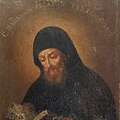 Abraham the LaboriousVenerable · Monk of the Kiev Caves LavraAug 21
- Abraham of PaleostrovVenerable · Abbot of Paleostrov MonasteryAug 21
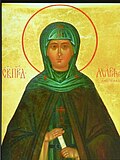 Martha of DiveevoVenerable · Schemanun at DiveevoAug 21
- Euprepius of VeronaSaint · First bishop of VeronaAug 21
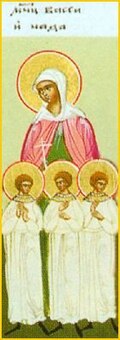 Vassa of EdessaMartyrAug 21
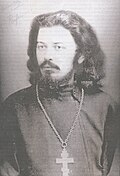 Rafailo MomčilovićHieromartyr · Abbot of Šišatovac MonasteryAug 21
 Anastasius of SalonaMartyrAug 21
- Bassa of CyzicusMartyrAug 21
- Agapius of EdessaMartyrAug 21