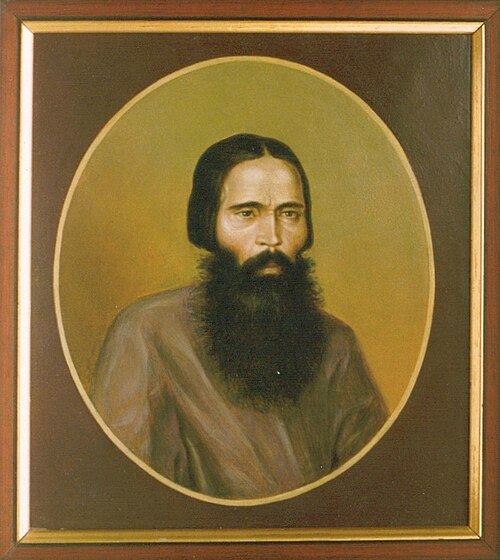
Righteous
Basil of Pavlovsky Posad
Righteous man of Pavlovsky Posad
Russian of Pavlovsky Posad, 1816 to 1869, glorified in 1999 for his righteous life.
- Feast
- March 1old style March 14
- Reposed
- 186919th century
- Place
- Pavlovsky Posad
- Order
- The Righteous
Life
Saint Basil of Pavlovsky Posad (in the world Vasily Ivanovich Gryaznov, 1816-1869) the righteous was a lay ascetic known for the return of many Old Believer schismatics to the Church. He was born on 21 February 1816 and died on 16 February 1869. The Russian Orthodox Church canonized him as righteous in 1999. He is commemorated on 16 February (in some calendars on 1 March).
Childhood and youth
He was born in the village of Evseevo, Bogorodsk district (now the Pavlovsky Posad district of Moscow Oblast), five versts from the village of Vokhna, mentioned already in 1328 in the will of Ivan Kalita. In 1844 Vokhna, with other villages, was made the town of Pavlovsky Posad by Tsar Nicholas I. His father, Ivan Semyonovich, was a peasant, and his mother, Evdokia Zakharovna, took care of the children's upbringing. The boy was educated at home, learning to read from the Horologion and the Psalter, and inherited from his parents a deep faith. Taking work at the factory, the village youth, not yet strengthened spiritually, plunged into the world of vice and passion. Through company with the factory youths he began to drink wine. Vices took hold of his soul and virtues weakened. He saw his fall and wept for his sins, but fell again under the influence of bad company and weakness of will. Repenting, he called himself "dirty" (gryazny), and the nickname stuck: he was called Vasily Gryaznov. The compiler of his Life, Olga Yakovlevna Labzina, describes his state: the enemy found what to tempt him with; company with the depraved factory boys put it in his mind that he could use the money he earned as he pleased, and he began to drink wine, and good judgment left him at times; he wept, but fell again unwillingly, wept again, asked forgiveness of God and of his parents, and then, in a burst of consciousness and grief, he called himself "dirty".
His amendment
Seeing his desire for amendment, the Lord directed him to the way of salvation and brought the straying sheep back into the Church's fold. Once one of his factory companions blasphemed an icon of the Mother of God and died suddenly. Vasily heard a voice that said to him: "If you do not amend, the same death awaits you." From then he intensified his penitential prayers and soon corrected his sinful way of life. One night in prayer he heard a voice commanding him to go to the Saint Nicholas Berlyukovo Hermitage. The abbot of the monastery was Father Benedict, a follower of the disciples of Paisius Velichkovsky. After fasting and communing at the monastery, Vasily received from Father Benedict instruction in spiritual work and began to change radically: he attended church regularly, confessed and received communion often, avoided merry gatherings and spent his free time in the company of pious people.
Gifts and mission
His pious life strengthened his religious feelings and love of neighbour. Soon spiritual gifts appeared in him, knowledge of things unseen. People came to him with their sorrows and troubles, and he comforted them and helped them bear their difficulties. Seeing the sinful weaknesses of others, he wept himself and made them weep. He became a good friend and helper of the poor, a defender of the oppressed, an experienced counsellor in hard matters. In the nineteenth century there lived around Pavlovsky Posad many Old Believers. Vasily's openness and sincerity, his righteous life and love of neighbour drew their attention. He did missionary work among them, and his preaching bore rich fruit: about seven thousand of them joined the Church thanks to the righteous man. For this he had to suffer from influential Old Believer merchants, who spread false rumours of his heresy; but the Lord kept his servant from the attacks. Vasily longed for a quiet contemplative life, but missionary work dispersed his attention; he grieved and wished to give it up. Once, on the way to a village, the hieromartyr Charalampos appeared to him and told him that it pleased the Lord that Vasily go on calling the Old Believers to Orthodoxy and strengthening in faith those already converted.
Meeting Labzin
One day the merchant Yakov Labzin came to him, owner of the famous shawl factory in Pavlovsky Posad, who received help from the righteous man and saw his holy life (in 1840). Then he proposed to Vasily to become his partner in the business, and Vasily accepted. They soon became friends, Labzin marrying Vasily's sister Akilina. After entering the business, Gryaznov continued the life of a holy ascetic. He now had more money and spent it on helping the poor and on works pleasing to God. With Yakov Labzin and his sisters Vasily built schools and almshouses. He dreamed of building a men's monastery at Pavlovsky Posad, but the dream was not fulfilled in his life. He died on 16 February 1869. After his death people continued to pray to the righteous man and receive help. Thanks to Yakov Labzin and his sisters, in 1874 a church was built at Pavlovsky Posad on the burial place of Saint Basil, and in 1894 on the site of the church the Intercession-Vasilievsky monastery was opened.
Canonization and criticism
The canonization before the revolution was interrupted by 1917, and in a trial of 1920, according to Soviet sources, facts of fraud with the relics were established. On that basis I. A. Shpitsberg, founder of the journal "The Atheist", published the pamphlet "Saint Vasily Gryaznov: the Defence of the Sharks of the Moscow Textile Industry", which was the basis of the silent black-and-white anti-religious film "The Elder Vasily Gryaznov" (1924), directed by Czesław Sabiński. These are assertions of the Soviet period, hostile to the Church. In 1999 the Russian Church canonized Vasily Gryaznov as righteous.
Commemorated the same day March 1
 David of WalesSaint · Patron of WalesMar 1
 Eudokia of HeliopolisVenerable MartyrMar 1
 Suitbert of KaiserswerthVenerable · Missionary to GermanyMar 1
 Domnina of SyriaVenerable · Ascetic of CyrrhusMar 1
 Leoluca of CorleoneVenerable · Abbot in CalabriaMar 1
 Antonina of NicaeaMartyr · Martyr of NicaeaMar 1
 Anna MakandinaVenerable Martyr · NunMar 1
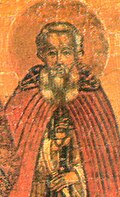 Martyrius of ZelenetsVenerable · Founder of Zelenets MonasteryMar 1
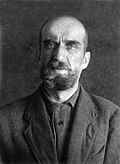 Basil NikitskyHieromartyr · PriestMar 1
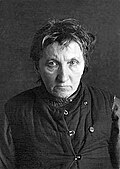 Daria ZaitsevaVenerable Martyr · NunMar 1
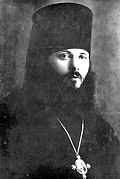 Anthony PankeevHieromartyr · Bishop of BelgorodMar 1
- Benjamin FamintsevHieromartyr · ArchpriestMar 1