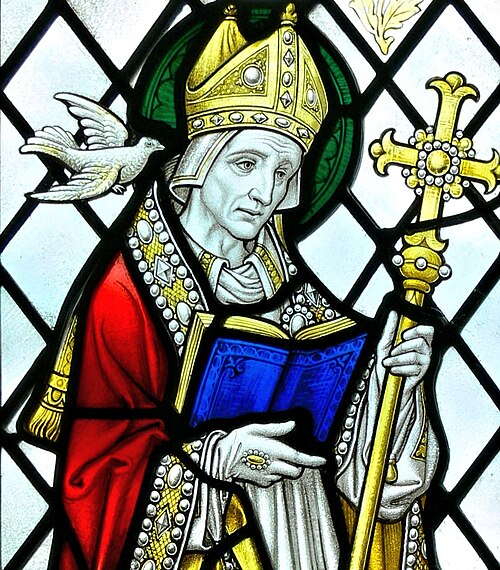
Saint
David of Wales
Patron of Wales
Bishop of Mynyw in the sixth century, patron saint of Wales.
Life
Saint David (Welsh: Dewi Sant) was bishop of Mynyw (Menevia) in the sixth century, a founder of monasteries, a teacher and the patron saint of Wales. Little is known for certain about him, and the fullest account of his life was written only around 1090. He is honoured as a saint of the undivided Church, and the Orthodox Church commemorates him on 1 March.
His life
The fullest account of his life is the Latin Life written by Rhygyfarch around 1090, more than five hundred years after the saint's death. Rhygyfarch had an aim: to show that the Church in Wales was independent of Canterbury, so historians doubt some of his claims, among them a pilgrimage to Jerusalem where David was said to have been anointed archbishop by the patriarch. The year of David's birth is uncertain, with suggestions ranging from 462 to 512.
According to tradition, he was born at Henfynyw in Ceredigion, the son of Sant and of Saint Non, and a grandson of King Ceredig. He became a priest, studied under a disciple of Saint Germanus, and was known as a teacher and preacher.
His work
He founded monasteries and churches in Wales, in Dumnonia and in Brittany. The most important was the monastery in the Glyn Rhosyn valley in Pembrokeshire, where the cathedral of Saint David now stands at St Davids. Tradition says that at the synod of Llanddewi Brefi, around 550, when the crowd could not hear him, the ground beneath his feet rose into a hill, and a white dove settled on his shoulder. The dove remained his sign in icons. The synod condemned the Pelagian heresy, and the assembled monks chose him as leader of the Church in the region. Later he presided at the synod of Caerleon.
The monastic rule
His rule was very strict. His monks worked the land and pulled the plough themselves, without animals, ate only bread with salt and herbs, and drank only water, so they were called the water-drinkers. The evenings were given to prayer, reading and writing. No one owned anything, and even to say "my book" was counted a fault.
His last teaching, given on the Sunday before his death, is known in every Welsh home: to be joyful, to keep the faith, and to do the little things they had seen and heard from him ("Gwnewch y pethau bychain").
Repose and veneration
He departed to the Lord on 1 March, in an uncertain year, usually given as 589 or 601. Tradition says the monastery was filled with angels when Christ received his soul. He was buried at St Davids, where his shrine was a place of pilgrimage throughout the Middle Ages. Pope Callixtus II recognised him in 1120. His relics were removed at the Reformation.
He is patron of Wales, and 1 March is a national feast. The leek is a Welsh emblem, and a ballad of about 1630 says the Welsh wore leeks in their hats in a battle to tell friend from foe. Dozens of churches in south Wales bear his name, and traces of his cult remain in Brittany.
Commemorated the same day March 1
 Eudokia of HeliopolisVenerable MartyrMar 1
 Suitbert of KaiserswerthVenerable · Missionary to GermanyMar 1
 Domnina of SyriaVenerable · Ascetic of CyrrhusMar 1
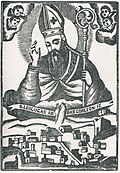 Leoluca of CorleoneVenerable · Abbot in CalabriaMar 1
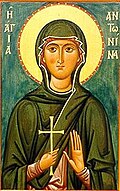 Antonina of NicaeaMartyr · Martyr of NicaeaMar 1
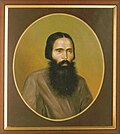 Basil of Pavlovsky PosadRighteous · Righteous man of Pavlovsky PosadMar 1
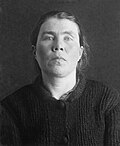 Anna MakandinaVenerable Martyr · NunMar 1
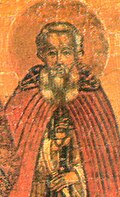 Martyrius of ZelenetsVenerable · Founder of Zelenets MonasteryMar 1
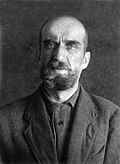 Basil NikitskyHieromartyr · PriestMar 1
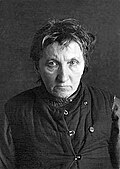 Daria ZaitsevaVenerable Martyr · NunMar 1
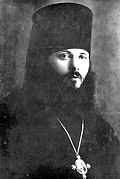 Anthony PankeevHieromartyr · Bishop of BelgorodMar 1
- Benjamin FamintsevHieromartyr · ArchpriestMar 1