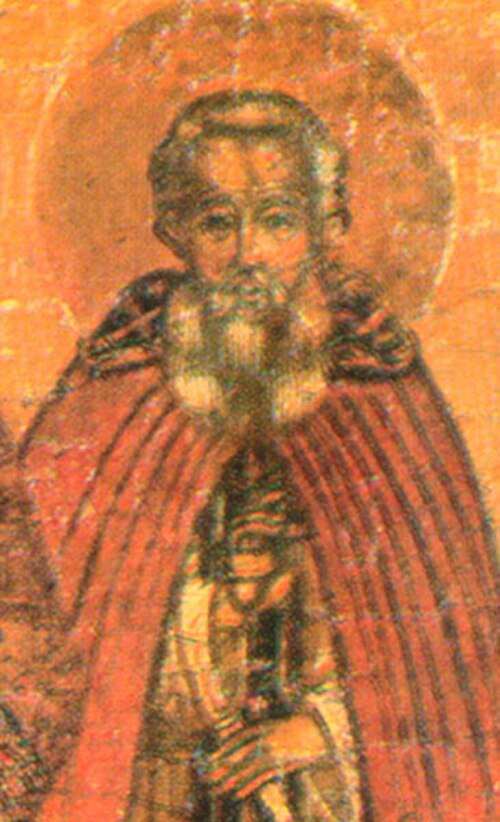
Venerable
Martyrius of Zelenets
Founder of Zelenets Monastery
Born at Velikie Luki, founder of Holy Trinity Monastery at Zelenets; died in 1603.
- Feast
- March 1old style March 14
- Reposed
- 160317th century
- Place
- Zelenetsky-Troitsky Monastery
- Order
- Venerables
Life
Venerable Martyrius of Zelenets (or of Velikiye Luki, in the world Mina) was the founder of the monastery of the Holy Trinity at Zelenets, in the Novgorod land, in the sixteenth century. Born at Velikiye Luki, orphaned young, he became a monk, then a hermit in a dugout hut and finally abbot over a community of ascetics. He left an account of the founding of the monastery, regarded as the first autobiography in Russian literature. He fell asleep on 1 (11) March 1603. He is commemorated on 1 March and on 11 November.
Childhood and calling
Venerable Martyrius, in the world Mina, was born at Velikiye Luki. At ten he was left without parents, who were named Cosmas and Stepanida. By then the boy already knew the Psalter. The orphan was cared for by the priest of the church of the Annunciation, named Bogolep, and Mina came to love the church services. A few years later the priest, widowed, was tonsured in the monastery of the Unmercenaries. Mina visited him there too, and then when Bogolep was placed head of the Saint Sergius monastery at Velikiye Luki. In this monastery Mina, distributing all his property, received tonsure from his teacher and was named Martyrius. A resident of Velikiye Luki, Athanasius, tonsured with the name Abraham, was placed under Martyrius's guidance and took his place in the work at the church.
The hermitage
After seven years at the side of his teacher Bogolep, Martyrius wished to live in solitude in a deserted place, sixty versts from Luki. In his tale the venerable one writes that beside a stream, on the bank, in the earth, in clay, they dug themselves a dugout covered with fir branches. He lived in the wilderness and ate from the work of his hands, plaiting bast sandals and sending them, by the peasant who visited him, to the villagers, who sent him by the same man all he needed, and he, the sinner, received with thanks what they brought. But his teacher sent him counsel to return to the community, where he could be useful to others too. In perplexity he went to venerate the Smolensk icon of the Mother of God and the wonderworker Abraham. At Smolensk he received the answer: "You must live in the wilderness, where the Lord and His Most Pure Mother will show". At the Tikhvin monastery he rejoiced to see his disciple Abraham, who, sick, had been healed by the Mother of God and remained at Tikhvin.
Martyrius asked the Lord to show him a secluded place for his struggles. Such a place was shown at night to Martyrius's disciple, by a sign, a cross-shaped dawn, on an island long called Green (Zelenets). A pious villager, Joseph, brought him food at times, and at times, troubled by thoughts and bustle, left him long without it. In time the hermit of the Green island became known. Though there were then many monasteries in the Novgorod land, in the wilds where Martyrius had settled there were none, so that, learning of Martyrius, sincere ascetics hastened with special fervour to his wilderness.
The monastery
Martyrius built a chapel and cells with a fence. The pious Novgorod boyar Fyodor Syrkov also learned of the venerable one, by whose zeal the church of the Annunciation was built in Martyrius's hermitage, and the brothers begged the elder to accept the rank of priesthood and the leadership over them, with the title of hegumen. This was no later than 1570. But blessed Martyrius had long to struggle with want and poverty in his wilderness. In the cadastral book of the Obonezhskaya Pyatina of 1583 it is written that in the hamlet of Mikhailovsky, at the foot of the Ladoga, a monastery called the Green Hermitage is being newly built on an island in a black forest. In the monastery are the church of the Life-giving Trinity and another, of the Annunciation, with refectory, both of wood, Hegumen Martyrius and twelve elders, a wooden fence round, a cattle yard and stable behind the monastery and no ploughland.
Of the heavenly consolation that visited him the venerable one tells that he slept in his cell, in a storeroom, and saw in a dream the Most Pure Mother of God in the form of a maiden, so beautiful that he had not seen among men so beautiful a girl. She wore on her head a golden crown adorned with stones of many colours and looked at him. Her eyes were full of tears, about to fall on her most pure face. In the last years of his life he became famous for the gift of healings. In 1595, on his way to Moscow, he stopped at Tver. Tsar Simeon Bekbulatovich, who then lived at Tver, had a very sick son and, learning of Martyrius, asked him to come to pray for his dying son. The venerable one laid the Tikhvin icon of the Mother of God on John's chest and the sick boy was healed. After that the grateful tsar was the most zealous benefactor of Martyrius's monastery. In 1595 Tsar Feodor Ioannovich gave the monastery a charter, confirming the monastery founded by the venerable one.
His repose
A year and a half before his death the holy elder devoted himself to silence and prayer. Digging a grave with his own hands and placing a coffin in it, he came there to weep and pray. He fell asleep in peace on 1 (11) March 1603. The relics of Venerable Martyrius rest in a tomb made by Metropolitan Cornelius of Novgorod, who had earlier been abbot at Zelenets and who, honouring this servant of God, wrote his life and composed his service.
His image and his tale
On icons Venerable Martyrius is traditionally shown in full monastic dress, with cassock, belt, mantle, analavos on the chest, schema on the shoulders and in boots, with his right hand blessing and a scroll in his left. In 1893 there entered the Imperial Public Library (today the Russian National Library), in the collection of F. I. Buslaev, a volume containing the only surviving copy of a unique work of Old Russian literature, "The Tale of Martyrius of Zelenets on the Founding of the Holy Trinity Monastery of Zelenets". The tale can be considered the first autobiography in Russian literature, before the known autobiographical lives of the Old Believer writers, the monk Epiphanius and the archpriest Avvakum. The author's manuscript has not survived. The only copy, from the 1640s and 1650s, was made some decades after the author's death. At the end of the text a note by a clerk of the "Green Hermitage" is read, which shows the manuscript belongs to the manuscript tradition of the monastery. In the second half of the seventeenth century the tale served as the factual basis for the composition of the Life of Martyrius of Zelenets.
The Velikiye Luki offensive operation (November 1942 to January 1943) began on 24 November, on the day of the commemoration of Venerable Martyrius, abbot of Zelenets (by the Gregorian calendar), the only saint born in the city of Velikiye Luki.
Commemorated the same day March 1
 David of WalesSaint · Patron of WalesMar 1
 Eudokia of HeliopolisVenerable MartyrMar 1
 Suitbert of KaiserswerthVenerable · Missionary to GermanyMar 1
 Domnina of SyriaVenerable · Ascetic of CyrrhusMar 1
 Leoluca of CorleoneVenerable · Abbot in CalabriaMar 1
 Antonina of NicaeaMartyr · Martyr of NicaeaMar 1
 Basil of Pavlovsky PosadRighteous · Righteous man of Pavlovsky PosadMar 1
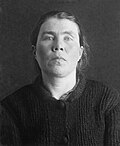 Anna MakandinaVenerable Martyr · NunMar 1
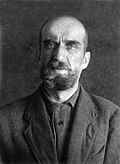 Basil NikitskyHieromartyr · PriestMar 1
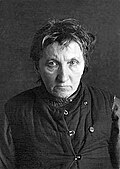 Daria ZaitsevaVenerable Martyr · NunMar 1
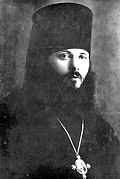 Anthony PankeevHieromartyr · Bishop of BelgorodMar 1
- Benjamin FamintsevHieromartyr · ArchpriestMar 1