Hieromartyr
Constantine Snyatinovsky
A hieromartyr of the Russian Church, commemorated in the Orthodox calendar.
Life
Holy Hieromartyr Constantine Snyatinovsky, a priest, was born in 1865 in the family of Peter Snyatinovsky, deacon of the church of the Kazan Icon of the Mother of God in the Boris and Gleb churchyard, Baglachevo volost, Vladimir district (now the village of Borisogleb, Sudogda district). In 1881 he graduated from the theological school in Vladimir, and in 1887 from the theological seminary in Vladimir in the second category. In 1888 he was ordained priest for the church of Saint Peter, metropolitan of Moscow, in Pereslavl-Zalessky, where he served until his death. From 1892 he was a member-collaborator of the society for aiding the needy of the Pereslavl theological school, and in 1899 he received the epigonation as an award. His social and church service was highly valued and he had great authority in the diocese.
He married an orphan, the teacher Nadezhda Antonovna. The young priest had difficulty choosing where to build his house, which had to be near the church. The church of Metropolitan Peter stood in the very centre of the city, which was densely built; wealthy merchants lived in the centre, and free plots were far away. Only one place remained, on Troitskaya Street, in a hollow where every spring the meltwater gathered, on which nobody dared build. Father Constantine had no other choice and took it. With all diligence and labour he levelled it with stones and sand and built a house on a stone foundation. Later he bought the adjoining empty plot and made it a garden: apple trees of many kinds, raspberries, currants, gooseberries, two great oaks at the far end with lilies of the valley beneath, lilac, bird cherry, rowan, vegetable beds and a flower bed, a glassed pavilion with beekeeping equipment and three hives. It was the family's custom that as soon as the raspberries ripened Nadezhda Antonovna baked a raspberry pie, and in the evening they carried the table out beside the bench and all drank tea together. In that house Father Constantine lived with his family thirty years; there his daughter Alexandra and son Alexei were born.
On 17 December 1913 he was elected delegate to the diocesan-wide congress for the Pereslavl district, and on 10 August 1914 delegate to the congress of the clergy of the Vladimir diocese. His parishioners were the patients of the city hospital and the residents of the dormitory of the cotton-spinning mill. He was known as one of the outstanding preachers and benefactors of the city, regularly supporting several needy families with his own money.
After the Bolshevik coup, power in the city was taken by the commissar Sokolov, a graduate of the Vladimir seminary, who said at a rally that the new power "would turn even stones into bread". In February 1918 the city ran out of food. Workers of the "Krasnoe Echo" factory, stones in hand, came to the building of the soviet and demanded that Sokolov keep his promise. Seeing the angry crowd, Sokolov jumped out of the window and fled, and the authorities called a punitive detachment.
That very night Father Constantine was arrested. The punishers came to his house as he was reading the rule before the service and demanded that he go with them at once. His daughter begged the guards in tears to spare her innocent father, but one of them flung her aside and threatened to shoot her too. "Why shoot her?" said Father Constantine, and he followed the punishers humbly, forgiving them their sins. He was taken to the soviet, where he had a short interrogation, then to the place of execution. At night the killers brought the body and threw it before the hospital; several bayonet wounds were found on it. Father Constantine was buried a few days later behind the altar of the church of Metropolitan Peter.
On 31 March 1918 Holy Patriarch Tikhon served a requiem Liturgy and memorial service in the Protection church of the Moscow Theological Academy, for "the repose of the servants of God slain for the faith and the Orthodox Church"; in the list of new martyrs commemorated then was the name of Father Constantine Snyatinovsky. By the example of his life he showed gospel values: service to God, to neighbour and the needy, and forgiveness of enemies. Father Constantine of Pereslavl (Snyatinovsky) was canonized in 2001. He is commemorated on 5 April, on 5 June, with the Synaxis of the Saints of Rostov and Yaroslavl, and on 7 February, with the Synaxis of the New Martyrs and Confessors of Russia, in the new style.
Commemorated the same day March 23
 PhiletusMartyr · Martyr of IllyriaMar 23
 Nikon of the Kiev CavesVenerable · Abbot of the Kiev CavesMar 23
 Sergius SrebrianskyConfessor · ArchimandriteMar 23
 Basil of MangazeyaMartyrMar 23
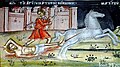 Nikon of SicilyHieromartyrMar 23
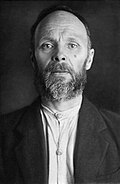 Alexei SkorobogatovMartyrMar 23
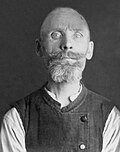 Basil KoklinHieromartyr · PriestMar 23
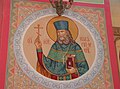 Macarius of OrenburgHieromartyr · Archpriest of OrenburgMar 23
- Aethelwold of FarneVenerableMar 23
- Amphilochius of IllyriaMartyrMar 23
- Anastasia BobkovaVenerable MartyrMar 23
- Barbara KonkinaVenerable MartyrMar 23