Venerable Martyr
Cosmas Magda
A monastic martyr of the Russian Church, commemorated in the Orthodox calendar.
- Feast
- December 2old style December 15
- Reposed
- 193720th century
- Order
- Martyrs
Life
Holy Venerable Martyr Cosmas Magda, a hieromonk, was born on 14 January 1904 in the village of Shushvalovka, Kremenchug district, Poltava province, in the family of the peasant Stepan Magda, and at Baptism was given the name Paul. In 1907 the family moved to Irkutsk, where from 1912 Stepan Magda worked as an excise official. Paul entered the industrial school in Irkutsk, which he finished in 1918, and in 1919 he worked as a teacher at Batareinaya station. In the same year the family returned to Shushvalovka, where Paul was a teacher; in 1920 he went to Moscow and worked as a clerk in a transport office. In 1921 he entered the Moscow Pedagogical Institute, where he studied until 1924, when he made his decisive choice and entered the Vysoko-Petrovsky monastery in Moscow as a novice. In 1926 he was called into the army, served in a cavalry regiment in Tambov, and after a year returned to the monastery. His spiritual father was Archimandrite Agathon (Lebedev), and his close friend the hierodeacon Theodore (Bogoyavlensky). In this monastery Paul received monastic tonsure with the name Cosmas and was ordained hierodeacon.
In the summer of 1929 the monastery's churches were closed, and the brethren moved to serve at the church of Saint Sergius on Bolshaya Dmitrovka, where Father Cosmas served with the hierodeacon Theodore. He was arrested on 28 December 1930, in a new wave of persecution, among three hundred priests and monks arrested then in Moscow. At the interrogation he answered with restraint and briefly: "I never sympathised with any political current. My attitude to Soviet power rests on my Orthodox Christian monastic conviction that every authority is given by God and resisting it is sin. Therefore I never and nowhere spoke ill of Soviet power. I never engaged in anti-Soviet agitation". He was sentenced to three years of exile in the Northern Region. Returning from exile, he was ordained hieromonk and in April 1934 was sent to serve at the Protection of the Mother of God church in the village of Milyatino, Mozhaisk district.
His service there was short, for the godless power hates zealous pastors and saw in every true pastor only an enemy. The hieromonk Cosmas was arrested on 11 April 1935 together with his spiritual father, Archimandrite Agathon (Lebedev), and other spiritual children of Father Agathon, and all were put in Butyrka prison. Asked by the investigator who had advised him to stay in Mozhaisk after serving his sentence, he answered that the Holy Synod had sent him to Milyatino and that he knew there only two old nuns. He did not admit guilt: he told parishioners who asked about the collective farm that they should join it, and even restrained peasants from leaving it; he never spoke against collectives, and spoke nothing of the antichrist, though he has the Church's view of him; he met young people only at funeral meals, where they were present as participants in burials. The witnesses, inhabitants of Milyatino, said that Father Cosmas had great authority among believers and that since he served the number of believers had grown, peasants of other villages had come to the church, and young people and schoolchildren had begun to go to church, though before they hardly went at all. The dean, the priest Theodore Kazansky, who collaborated with the NKVD, said that the hieromonk, like Agathon Lebedev, behaved as a fool for Christ in order to win authority. Another priest said that the hieromonk drew young people to church with various tasks, cleaning and singing rehearsals, told them sacred history and lives of saints, and taught religion to minors.
When the investigation was complete, the hieromonk Cosmas was charged with "carrying on anti-Soviet agitation among believers and spreading false rumours of supposed persecutions of religion and believers by Soviet power". On 8 June 1935 the Special Council of the NKVD sentenced him to three years in a labour camp. He was sent to Bamlag, where he found himself with many imprisoned priests, among them Bishop Hermann (Kokel). The persecution continued in the camp. On 10 February the authorised officer of the third section of the 12th department of Bamlag, at Obluchye station, decided to open an agent file under the name "Obscurantists" on Bishop Hermann, the hieromonk Cosmas and other imprisoned priests. Father Cosmas wrote to the head of the 12th department that, working as economist of the 22nd column, he had been detained on an unauthorised absence and lost credit of working days for a quarter, which deprived him of the chance of seeing his sick elderly father again, and asked that the decision be cancelled. On 27 April 1936 his barracks was searched and twelve pages of correspondence, a letter addressed to the prosecutor, three envelopes, a prayer rope and a small icon were taken. On 11 April 1937 an informer nicknamed "Smirnov" reported that the hieromonk, despite his young age, was devoted to religion to the point of fanaticism, was serving a second term for religious counter-revolutionary propaganda, had a firm will, stubbornness and an anti-Soviet disposition, and had a close connection with Kokel. At the end of summer 1937 the NKVD officers received orders to intensify repression, and on 4 September they searched Father Cosmas's barracks: they found a notebook with a troparion, two skufias, a black cassock, a paraman with a cross and one without. After the search he was put in the camp's investigation isolator. On 12 September the leadership of the 31st column gave him a characterisation, writing that he carried on a demoralising propaganda among the prisoners, claiming that there was persecution of the servants of the Church. False witnesses were questioned, but the hieromonk Cosmas himself was not called to interrogation; on the basis of the false witnesses and informers a note was drawn up for the NKVD troika, in which the proof of guilt was the fact that the hieromonk, "being in the camp, continued to carry on counter-revolutionary church agitation among those around and illegally kept a cassock, church books and other church items".
On 26 November 1937 the NKVD troika sentenced him to death. The hieromonk Cosmas (Magda) was shot on 15 December 1937 and buried in an unknown mass grave. He is commemorated on 15 December, the day of his death, on 13 July, with the Synaxis of the Saints of the Birobidzhan diocese, on 5 September, with the Synaxis of the Saints of Moscow, and on 7 February, with the Synaxis of the New Martyrs and Confessors of Russia, in the new style.
Commemorated the same day December 2
 HabakkukProphet · The ProphetDec 2
 Stefan Uroš VRight-Believing · Tsar of the SerbsDec 2
 Chromatius of AquileiaSaint · Bishop of AquileiaDec 2
 BibianaMartyrDec 2
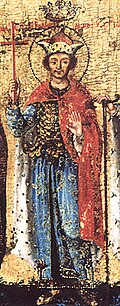 Jovan BrankovićRight-Believing · Despot of SerbiaDec 2
 NonnusSaint · Bishop of EdessaDec 2
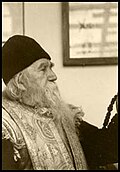 Cleopa of SihăstriaVenerable · Archimandrite and abbot of SihăstriaDec 2
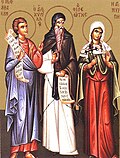 Mirope of ChiosMartyrDec 2
 Ise of TsilkaniVenerable · One of the Syrian FathersDec 2
 Danact KalashnikovVenerable Martyr · HieromonkDec 2
- Avitianus of RouenSaint · Bishop of RouenDec 2
- Tadec of LandevennecHieromartyr · Hieromonk of LandevennecDec 2