Confessor
Cosmas the Hermit
A hermit of Crete, honored as a confessor of the faith.
- Feast
- September 2old style September 15
- Reposed
- 6587th century
- Place
- Crete
- Order
- Confessors
Life
Venerable Cosmas the Hermit and Confessor was a great ascetic figure of Crete in the seventh century. He is honoured especially at the Koudouma Monastery, in a cave church (Abbakospilio), on 2 September.
He was born in the second half of the sixth century in Crete, in an unknown region. In his youth he received enough schooling to be able to deal with doctrine and to oppose the heresy of the Monothelites. At first he must have lived in a monastic community. His opposition to Monothelitism probably took place at that time, and the pressure and reactions of Monothelite bishops led him to leave his monastery and flee into the desert. The caves of southern Crete became for him an arena of great ascetic struggles. There, "alone with the one God", he began a spiritual ascent against the demonic powers. By superhuman fasting and struggle he escaped the snares of the evil one and was adorned with virtues. He lived quietly, not because he did nothing worth remembering, but because the life of the saints is inward, a personal daily conversation with God.
His battles in the desert with the elements, with himself and with demons made him truly bodiless. Barefoot and naked, covered with the hair of his own body, like a tree laden with fruit, he fell asleep on 9 September 658. His body remained for a time in the cave, until the faithful noticed it and began to honour it. Since people could not easily reach the remote place, they moved the holy body from the cave to a large church, perhaps at Gortyna. Then a great drought struck the region: for a long time it did not rain, and the fruit trees and crops were ruined under the strong sun. The people, bewildered, prayed to God for rain. The saint appeared to one of them and sternly asked that all the costly ornaments be removed from his body and that it be returned to his cave. The frightened people took the holy relics and brought them back to the cave. They partitioned a small space at the back of the cave and, after placing them there, walled it up from the outside. From that moment the heavens opened; it rained so much that water stood for days on the scorched ground.
Four hundred years passed and many had forgotten him; only the ascetics of the region went to his cave to venerate him, until in the year 1058 Venetian merchants broke into the saint's hiding place and stole the relics, which remained as on the day of his repose, incorrupt and fragrant. They took them to Venice and placed them in the Monastery of San Giorgio Maggiore, where they are kept to this day, in the chapel of Saint Benedict. He is commemorated on 2 September, in the calendar of the Church of Greece (new style).
Commemorated the same day September 2
 Mammes of CaesareaMartyrSep 2
 NonnosusVenerable · Prior of Monte SoratteSep 2
 Agricola of AvignonSaint · Bishop of AvignonSep 2
 Antoninus of PamiersMartyr · Apostle of the RouergueSep 2
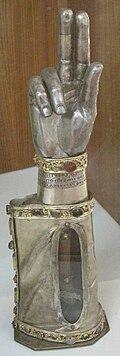 Justus of LyonSaint · Bishop of LyonSep 2
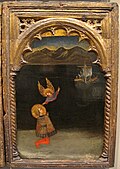 Elpidius the CappadocianVenerable · Abbot of CappadociaSep 2
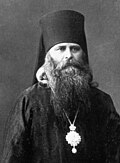 Barsanuphius LebedevHieromartyr · Bishop of KirillovSep 2
- Maxima of RomeMartyrSep 2
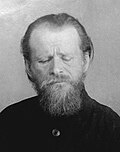 Vladimir MorinskyHieromartyr · PriestSep 2
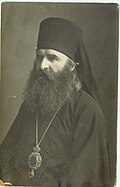 Damascene TsedrikHieromartyr · Bishop of GlukhovSep 2
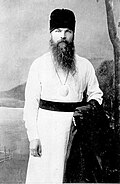 German RyashentsevHieromartyr · Bishop of VyaznikiSep 2
- Hieu of TadcasterVenerable · Abbess of TadcasterSep 2