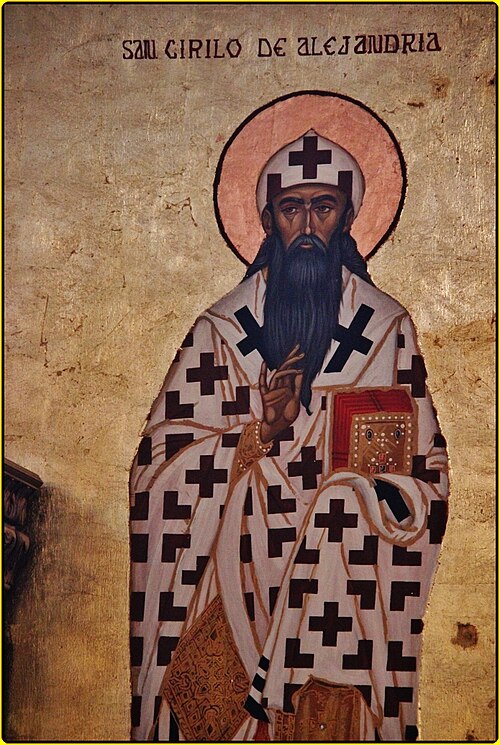
Saint
Cyril of Alexandria
Patriarch of Alexandria
Patriarch of Alexandria from 412 to 444, defender of the title Theotokos at the Third Ecumenical Council.
- Feast
- January 18old style January 31
- Reposed
- 4445th century
- Place
- Alexandria
- Order
- Hierarchs
Life
Saint Cyril of Alexandria was patriarch of Alexandria from 412 to 444, a great father and teacher of the Church and a defender of the right teaching on the Incarnation of the Son of God. He presided over the Third Ecumenical Council at Ephesus in 431, which confessed the union of the divine and human natures in Christ and named the Virgin Mary Theotokos. The Church calls him the pillar of the faith and the seal of the Fathers.
Youth
He was born around 376 in the town of Didouseya in Egypt, near present-day El-Mahalla el-Kubra, into a distinguished family. A few years later his maternal uncle Theophilus became patriarch of Alexandria, and under his guidance Cyril received a fine education: grammar at twelve, rhetoric and the humanities between fifteen and twenty, then theology and the study of Scripture. His writings show that he knew Eusebius, Origen, Didymus the Blind and the writers of the Church of Alexandria. In 403 he accompanied his uncle to the Synod of the Oak at Constantinople, which deposed Saint John Chrysostom.
Patriarch of Alexandria
Theophilus died on 15 October 412, and Cyril was installed as patriarch on 18 October, after a riot between his supporters and those of the archdeacon Timotheus. He inherited a position of great power in a restless city in which pagans, Jews and Christians were often in conflict. He closed the churches of the Novatianists and fell into dispute with the prefect Orestes, and relations with the Jewish community of Alexandria ended in its expulsion from the city. In 415 the philosopher Hypatia was killed by a Christian mob; historians disagree about Cyril's guilt, some counting him among the culpable, others holding that responsibility cannot be proven.
The struggle against Nestorius
From 428, when Nestorius was patriarch of Constantinople, Cyril opposed his teaching, according to which Christ was born a man and only afterward united with God the Word. Cyril wrote many works against Nestorius, in which he defended the indivisible and unmixed union of the divine and human natures in Christ, using the term hypostatic union. His formula, one incarnate nature of God the Word, was later received also by the Monophysites, though at the Council of Chalcedon it was clarified and its Orthodox meaning recognized. His twelve anathemas were later referred to even by the Fifth Ecumenical Council.
Emperor Theodosius II convened the Council of Ephesus in 431, and Cyril presided. The council deposed Nestorius and decided that the Holy Virgin is Theotokos. For several months disputes between the two camps continued, and in 433 Cyril was reconciled with the Antiochene bishops through the formula of union with John of Antioch.
Writings and repose
Saint Cyril left a vast body of work: commentaries on Holy Scripture, dogmatic writings, letters, homilies and works defending the faith. He fell asleep on 27 June 444, at Alexandria. The Orthodox Church commemorates him on 18 January, together with Saint Athanasius the Great, and on 9 June, his own day, while the Church of Rome, which named him Doctor of the Incarnation in 1883, keeps 27 June.
Commemorated the same day January 18
 Athanasius the GreatSaint · Patriarch of AlexandriaJan 18
 Prisca of RomeMartyrJan 18
 Maximus BrankovićSaint · Archbishop of SerbiaJan 18
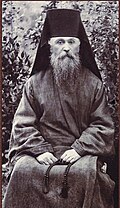 Aleksi ShushaniaVenerable · Georgian archimandriteJan 18
 Marcian the MonkVenerable · Hermit of SyriaJan 18
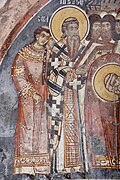 Joachim I of BulgariaSaint · Patriarch of BulgariaJan 18
 Christopher PapoulakosVenerable · Monk and itinerant preacherJan 18
 Alexander RusinovHieromartyr · ArchpriestJan 18
 Ephrem the LesserVenerable · Georgian monk at AntiochJan 18
- Michael KargopolovHieromartyr · PriestJan 18
- Nicholas KrasovskyHieromartyr · PriestJan 18
- Athanasius of SyandemaVenerable · Abbot, founder of Syandema HermitageJan 18