Hieromartyr
Demetrius Troitsky
A Russian deacon put to death for his faith in Christ in 1937, during the communist persecution.
- Feast
- September 9old style September 22
- Reposed
- 193720th century
- Order
- Martyrs
Life
Holy Hieromartyr Demetrius Troitsky, a deacon (1884-1937), was born in the village of Maksheevo, in the Kolomna district of the Moscow province, in the family of the deacon Vasily Troitsky, and received the crown of martyrdom by shooting on 21 September 1937, at Butovo, near Moscow. He is commemorated on 22 September, on 29 May, in the Synaxis of the New Martyrs of Butovo, and on 5 September, in the Synaxis of the Saints of Moscow.
After graduating in 1901 from the clerical school in Kolomna he served as psalm-reader at the Transfiguration church in the village of Pochinki, in the Yegoryevsk district of the Ryazan province. In 1924 he was ordained deacon at the Transfiguration church in this village, which had then entered the Moscow region. In 1930, for not delivering grain, he was sentenced to a year and a half of exile outside the region; arriving at the place of exile, he served as deacon. Returned in 1932, after the end of the sentence, to Pochinki, he served again as deacon. In January 1933 the authorities arrested the priest of the church, the deacon Demetrius and the most active parishioners. Asked whether he had relations with the priest and the people of interest to the investigation, whether they gathered in homes and what they talked about, the deacon Demetrius said that he knew those people and had relations with them and they had gathered together, but because of poor memory he did not remember the conversations and their themes, and that in any case he tried to detach himself from them, and that of the priest's political mood toward Soviet power he could say nothing. The witnesses called to the investigation said that the deacon had complained that Soviet power had ruined him, taken his house and garden, and that the Communists tormented the Orthodox people, pushed them by force into the collective farm and crushed them with taxes, but what exactly the deacon had said against Soviet power the witness could not recall. From the questioning of the witnesses, the full innocence of the deacon became clear to the OGPU investigators and they had to write in the indictment that the accused did not admit guilt of agitation, not denying that he had a connection with the priest, at whose home they gathered. This was all the deacon's guilt. On 19 May 1933 the OGPU troika sentenced him to three years of exile in Kazakhstan and he was sent to Alma-Ata.
The last years
In 1936 he returned from exile to the village of Pochinki. The family's house had been taken, his wife lived in the church watchman's hut, working as a watchwoman at the church, and the deacon settled there too. His health had been undermined by prison and exile, he left the clergy and went to church to pray as a parishioner. In 1937 the persecution began again; on 5 September a witness, the watchman of the collective farm garden, was questioned, and a day later the NKVD drew up the arrest note of the deacon Demetrius: in the agent file Belorizniki figures the deacon Troitsky, who lives in the village of Pochinki; being counter-revolutionary, he keeps ties with the reactionary clergy and systematically conducts counter-revolutionary agitation among the inhabitants; he was said to have said that he had suffered much in exile, that he had lost much health because of Soviet power, that many innocent people suffered there on denunciations, that the whole people suffered and that the life of the collective-farm peasant was hard. On 6 September 1937 the deacon Demetrius was arrested, imprisoned at Yegoryevsk and questioned on the same day. The investigator told him that he had again shown himself an enemy of Soviet power, and he answered that he had said nothing against the authorities. At a confrontation with the witness whose testimony had entered the arrest note, he said that he did not confirm the testimony. After these interrogations he was moved to a prison in Moscow, where on 17 September the investigator questioned him again. He answered that he had been a deacon, but lately, because of health, he did not work and lived without steady occupation, and that he did not admit guilt of anti-Soviet agitation. On 19 September the NKVD troika sentenced him to death. The deacon Demetrius Troitsky was shot on 21 September 1937 and buried in an unknown common grave at the Butovo firing range.
Commemorated the same day September 9
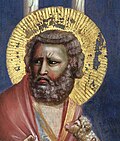 JoachimRighteous · Father of the TheotokosSep 9
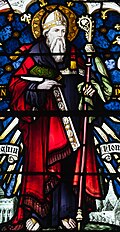 Ciarán of ClonmacnoiseVenerable · Abbot of ClonmacnoiseSep 9
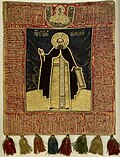 Joseph of VolotskVenerable · Abbot of Volokolamsk MonasterySep 9
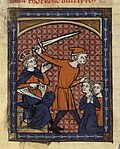 Gorgonius of NicomediaMartyr · Martyr of NicomediaSep 9
 Philaret of GlinskVenerable · Abbot of Glinsk HermitageSep 9
 Basil KishkinVenerable · Hieromonk of PloshchanskSep 9
- Zenobius MazhugaSaint · Metropolitan of the Georgian ChurchSep 9
 Andronik LukashVenerable · Schema-archimandrite and elderSep 9
 Joanicius of RakotinciVenerableSep 9
 Zacharias LobovHieromartyr · Archbishop of VoronezhSep 9
- Joachim of OpochkaVenerable · Disciple of St. Euphrosynus of PskovSep 9
- Nikita of ConstantinopleFool-for-Christ · Clerk of ConstantinopleSep 9