Venerable
Dositheus Kolchenkov of Glinsk
A venerable monk of Glinsk, commemorated in the calendar of the Orthodox Church.
- Feast
- September 9old style September 22
- Reposed
- 187419th century
- Order
- Venerables
Life
Holy Venerable Dositheus Kolchenkov of Glinsk, in the world Dimitry, was born in 1811 in the village of Snagost in the Kursk province, of devout parents, and reposed on 5 November 1874, in the sixty-fourth year of his life. He was numbered among the saints of the Russian Church by decision of the Council of Bishops in 2017 and is commemorated on 22 September (new style).
Beginnings in the monastery
He appears in the lists of the brotherhood of the Glinsk Hermitage from the year 1840. At first he bound books and served as cell attendant, first to the spiritual father Hieromonk Porphyry, then to Abbot Eustratius. In 1843 he was officially enrolled among the novices, with the best possible report: good conduct, diligent at church, full of love for monasticism, zealous and without objection in obedience. In 1849 he was tonsured into the mantle with the name Dositheus and given the obedience of sacristan.
After two years, for his humility and obedience, he was proposed for ordination as deacon, but, not wishing for this rank, he pretended to be poorly educated and was left alone. For this the enemy raised a hard struggle against him. First he put into his heart regret at having refused the rank, then showed him the charms of the world, and at last stirred up fleshly desire.
A five-year struggle followed, with exhaustion of soul and unrest. The Father was ready to return to the world; only the faint voice of conscience still held him within the monastery. He had grown pale, thin and sullen. The brethren and the father abbot comforted and strengthened him, advising him to overcome the enemy by patience, and had a prayer said in church for him. The Lord heard. Peace settled in his heart and he stayed in the monastery resolutely.
Ascetic labour
From that time he led a severe ascetic life. He answered questions by signs or with a few words. He no longer put value on the cleanliness of his cell, which had once been dear to him, but which could become an idol for him. The single window of his cell he had whitewashed so that none could see inside, and he let no one enter, not even the abbot.
He wore old clothes and did not change his linen until it fell apart, saying that he was born naked and would die naked. He did not go to the brotherhood's refectory, but put food of several simple dishes into one wooden bowl, where borscht, fish soup and porridge were mixed together. To those who wondered he said that he was sick and would cook everything again in his cell.
In his last years he ate once a day, in the evening, in very small quantity. The remnants he threw on the floor, where mice and rats ate them. Sometimes he took ashes from the kitchen and, like the psalmist David, ate his bread with ashes and mingled his drink with tears.
He carried the obedience of sacristan for twenty-six years, until his death, with zeal, reverence and the fear of God. For his long service in the churches dedicated to the Mother of God, he was granted to see the Most Holy Theotokos in the altar. He also heard angelic singing at the death of the elder Theodotus. The enemy raised against him a storm of thoughts, and sometimes set the boys of the neighbouring villages to mock him. Only the elder's perfect humility could bear this without harm to his soul.
Those close to him noticed in him the gift of foresight and of healing. A hieromonk from his own village told that, going once together to the river, Dositheus told him that two novices were wrestling and one had thrown the other into the water, nearly drowning him; when they arrived, they saw exactly that. Another elder told that once, overcome by the fumes of the stove, he could not rise from his cell, when Dositheus came and told him to go to the church, where an obedience awaited him; the fumes passed at once, and the fever he had had never came back.
His repose
He reposed on 5 November 1874. On the fortieth day after his death he appeared in a dream to the brotherhood's cook, who asked him whether he had received mercy from God. He answered, By the mercy of the Mother of God I have received it, and became invisible.
Commemorated the same day September 9
 JoachimRighteous · Father of the TheotokosSep 9
 Ciarán of ClonmacnoiseVenerable · Abbot of ClonmacnoiseSep 9
 Joseph of VolotskVenerable · Abbot of Volokolamsk MonasterySep 9
 Gorgonius of NicomediaMartyr · Martyr of NicomediaSep 9
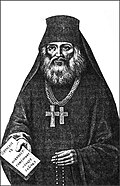 Philaret of GlinskVenerable · Abbot of Glinsk HermitageSep 9
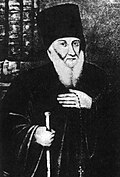 Basil KishkinVenerable · Hieromonk of PloshchanskSep 9
- Zenobius MazhugaSaint · Metropolitan of the Georgian ChurchSep 9
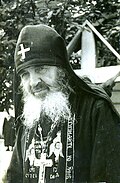 Andronik LukashVenerable · Schema-archimandrite and elderSep 9
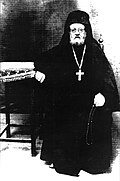 Joanicius of RakotinciVenerableSep 9
 Zacharias LobovHieromartyr · Archbishop of VoronezhSep 9
- Joachim of OpochkaVenerable · Disciple of St. Euphrosynus of PskovSep 9
- Nikita of ConstantinopleFool-for-Christ · Clerk of ConstantinopleSep 9