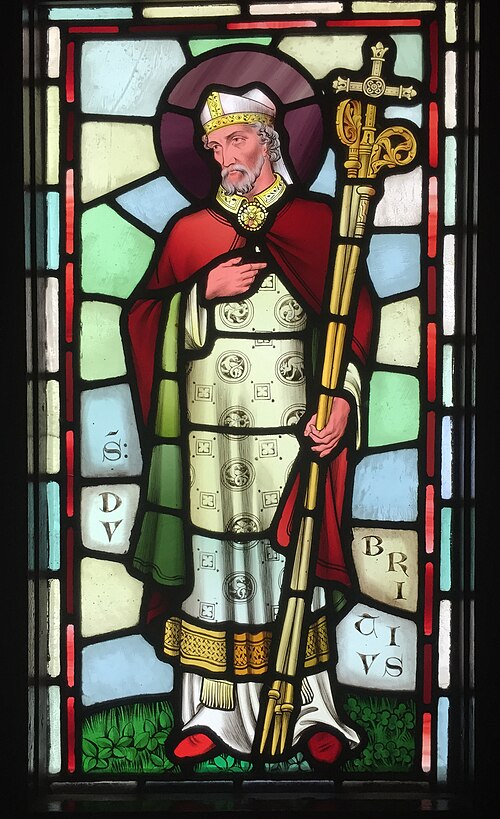
Saint
Dubricius
Welsh bishop
British cleric of the sixth century, evangelist of Ergyng and much of south-east Wales.
- Feast
- November 14old style November 27
- Reposed
- 5506th century
- Place
- Bardsey Island
- Order
- Hierarchs
Life
Saint Dyfrig (Dubricius) was a British cleric of the sixth century, evangelist of Ergyng (later Archenfield, in Herefordshire) and of much of south-east Wales. He is venerated as a saint in the Catholic, the Anglican and the Orthodox Church and is remembered on 14 November.
Dyfrig was the illegitimate son of Efrddyl, daughter of King Peibio Clafrog of Ergyng. His grandfather threw his mother into the River Wye when he discovered she was pregnant, but failed to drown her. Dyfrig was born at Madley in Herefordshire. He and his mother were reconciled with Peibio when the child Dyfrig touched him and cured him of his leprosy. Noted for his precocious intellect, by the time he attained manhood he was already known as a scholar throughout Britain. He founded a monastery at Hentland and then one at Moccas. He became the teacher of many well-known Welsh saints, including Teilo and Samson, and healed the sick of various disorders through the laying on of hands. Dedications at Porlock and near Luccombe on the Exmoor coast of Somerset may indicate that he also travelled in that area.
Later he became bishop of Ergyng, possibly with his seat at Weston under Penyard, and probably held sway over all of Glamorgan and Gwent, an area later known as the diocese of Llandaff. However, he may have been a bishop merely for the purpose of ordaining priests, not as administrative head of the church over a geographical area. He was good friends with Saints Illtud and Samson and attended the Synod of Llanddewi Brefi in 545, where he is said to have resigned his see in favour of Saint David. He retired to Bardsey Island, where he was eventually buried, before his body was moved to Llandaff Cathedral in 1120.
According to legend, Dyfrig was made archbishop of Llandaff by Saint Germanus of Auxerre and later crowned King Arthur. He appears as a character in Geoffrey of Monmouth's History of the Kings of Britain and in Wace's Roman de Brut, based on it, and much later Alfred, Lord Tennyson featured him in his Idylls of the King. Churches dedicated to him include those at Ballingham, Whitchurch, Hentland and Hamnish in Herefordshire, at Porlock in Somerset, at Gwenddwr in Breconshire and at Llanvaches near Newport, and the Catholic church at Treforest is also dedicated to him. In the 2004 Roman Martyrology he is listed on 14 November with the Latin name Dubricius, as a bishop and abbot who died on Bardsey Island. In the Russian Church his memory is kept on the third Sunday after Pentecost, in the Synaxis of the saints of Britain and Ireland. He is usually shown holding two crosiers, to signify his jurisdiction over the sees of Caerleon and Llandaff.
Commemorated the same day November 14
 Justinian the GreatRight-Believing · Byzantine EmperorNov 14
 PhilipApostle · The ApostleNov 14
 TheodoraRight-Believing · Byzantine EmpressNov 14
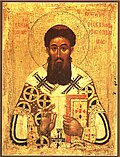 Gregory PalamasSaint · Archbishop of ThessalonicaNov 14
- Alberic of UtrechtSaint · Bishop of UtrechtNov 14
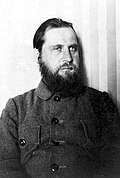 Dimitry BenevolenskyHieromartyr · ArchpriestNov 14
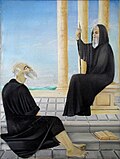 Fantinus the YoungerVenerableNov 14
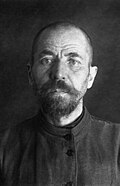 Alexander BykovHieromartyr · PriestNov 14
- Anna ZertsalovaMartyr · Spiritual writerNov 14
 George IzvekovHieromartyr · Archpriest and composerNov 14
 Prokopy TitovHieromartyr · Archbishop of Kherson and NikolaevNov 14
- Aristarchus Zaglodin-KokorevVenerable Martyr · HieromonkNov 14