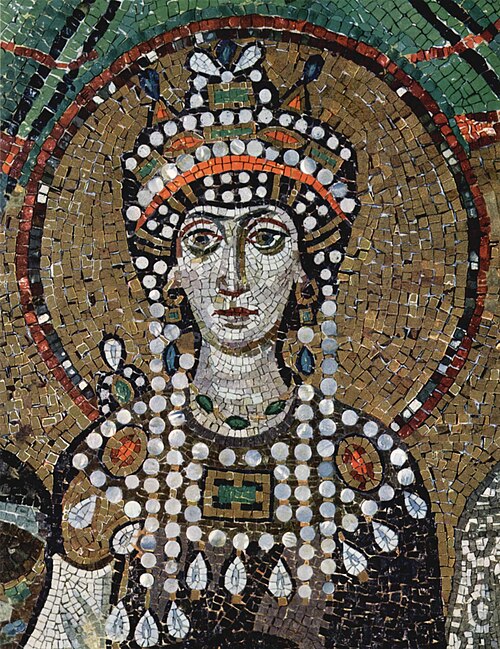
Right-Believing
Theodora
Byzantine Empress
Wife of Emperor Justinian and empress from 527 to 548, one of her husband's chief advisers.
- Feast
- November 14old style November 27
- Reposed
- 5486th century
- Place
- Constantinople
Life
The Holy Right-Believing Empress Theodora was the wife of the emperor Justinian I and Byzantine empress from 527 until her death in 548, one of her husband's most important advisers. She is commemorated as a saint in the Orthodox Church and in the Oriental Orthodox Churches, on 14 November, together with Justinian. Her life is known chiefly from Procopius of Caesarea, whose writings present her in very different guises.
Early life
Much of her youth, including the date and place of her birth, is uncertain. Later sources place her birth in Syria, Cyprus, Paphlagonia or Alexandria, but the most widely held view today is that she was born around 495 to 500 and raised in Constantinople. Her father, Acacius, was a bear keeper for the Green faction at the Hippodrome, and her mother, whose name is not known, was a dancer and an actress. She had two sisters, Comito, the elder, and Anastasia, the younger. After her father's death the family was left without support, and the girls began to earn a living in the world of the circus and the theatre.
For this period, the main source is Procopius's Secret History, written after her death, a pamphlet aimed against Justinian and Theodora, which most scholars today regard as often unreliable and slanderous. In On Buildings, by contrast, Procopius writes in praise of the two as a pious couple. Historians disagree about how accurate his portraits are.
Empress
Theodora met Justinian probably before 524, and the two married afterward. When Justinian became emperor in 527 she was crowned empress. Although she was never named co-regent, she had great influence in affairs of state. She played a decisive role in suppressing the Nika riots of 532: it is said that when advisers urged Justinian to flee the capital she urged him to stay. With Justinian she ordered many great works, among them Hagia Sophia. She banned the trade in young girls, and, according to Procopius, gathered more than five hundred women from brothels and sent them to repentance, while in another writing he says they banished the very name of keepers of such houses and freed the women.
She was also involved in court intrigues, such as the exile of John the Cappadocian or the removal and death of Pope Silverius and the elevation of Pope Vigilius. She and her husband supported different sides in the dispute between Monophysites and Chalcedonians: Justinian was a Chalcedonian, and Theodora supported the Monophysites, which sometimes made the emperor gentle toward them.
Repose
Theodora died on 28 June 548, of cancer, at about forty-eight years of age, and was buried in the church of the Holy Apostles in Constantinople. She has long remained a subject of interest for art, theatre, opera and novels. The Orthodox Church commemorates her on 14 November.
Commemorated the same day November 14
 Justinian the GreatRight-Believing · Byzantine EmperorNov 14
 PhilipApostle · The ApostleNov 14
 Gregory PalamasSaint · Archbishop of ThessalonicaNov 14
 DubriciusSaint · Welsh bishopNov 14
- Alberic of UtrechtSaint · Bishop of UtrechtNov 14
 Dimitry BenevolenskyHieromartyr · ArchpriestNov 14
 Fantinus the YoungerVenerableNov 14
 Alexander BykovHieromartyr · PriestNov 14
- Anna ZertsalovaMartyr · Spiritual writerNov 14
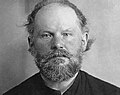 George IzvekovHieromartyr · Archpriest and composerNov 14
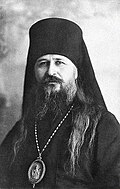 Prokopy TitovHieromartyr · Archbishop of Kherson and NikolaevNov 14
- Aristarchus Zaglodin-KokorevVenerable Martyr · HieromonkNov 14