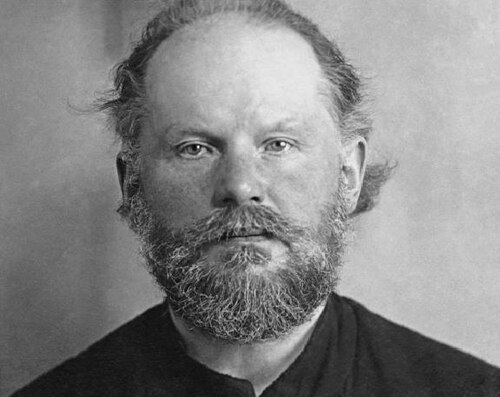
Hieromartyr
George Izvekov
Archpriest and composer
Archpriest, collector of Russian folk songs and church composer, shot at the Butovo firing range in 1937.
- Feast
- November 14old style November 27
- Reposed
- 193720th century
- Place
- Butovo firing range
- Order
- Martyrs
Life
Saint George Izvekov the Hieromartyr (1874 to 1937) was an archpriest, a connoisseur and collector of Russian folk songs and a composer of church music. He served at Prague, The Hague, Saint Petersburg, Berlin and, after the revolution, at Perlovka near Moscow. Arrested twice, he was shot on 27 November 1937 at the Butovo firing range. The Russian Church numbered him among the hieromartyrs in December 2004.
Family and studies
He was born at Kaluga, into the family of the priest Yakov Fyodorovich Izvekov, candidate in theology, a graduate of the Moscow Theological Academy. He was a distant relative of Patriarch Pimen. In 1894 he graduated from the Kaluga Theological Seminary and was the only graduate sent to continue theological studies at the Kyiv Theological Academy, which he finished in 1898 with the degree of candidate in theology.
Service before the revolution
From 1898 he was an official in the expedition of the chancery of the Synod and in the chancery of the School Council attached to it. From 1899 he was a reader in the church of Saint Nicholas in Prague, and in March 1905 he was sent as reader to the church of the Russian mission at The Hague. After ordination as priest, in February 1906, he was appointed rector of the church of Saint Alexander Nevsky and teacher of religion at the Alexander Institute for girls in Saint Petersburg. At the same time he was teacher of religion at the girls' gymnasium of Princess of Oldenburg and, from 1910, choir director at the School of Choir Directors founded by the conductor and musicologist S. V. Smolensky. On the expeditions of the Russian Geographical Society he collected and arranged ritual songs ("Wedding Songs of the Kaluga Province").
From 1913 he was key-keeper (kliuchar) of the embassy church in Berlin. At the start of the World War he was priest of a hospital train, until 1917. In 1917 to 1918 he was clerk of the First Section of the Local Council. In 1918 he took a job in the Moscow regional union of cooperative associations.
After the revolution
From 1921 he was rector of the church of the Don Icon of the Mother of God in Perlovka (now a district of the town of Mytishchi, Moscow region). In 1922 he drew up a detailed description of the church's property, kept in his personal file, and a "list of 12 objects handed to the Gokhran representative Petukhov in aid of the starving", kept in the CGAMO archive. In 1926 Sergei Alexandrovich Vvedensky became rector, and Father George remained a member of the church community. From 1926 to 1930 he was a member of the section of choral composers of the Society of Dramatic and Musical Writers (Dramsoyuz), in which church choir directors and composers who had lost their work could receive financial support. From 1930 he worked in the All-Union Directorate for the Protection of Copyright.
The first arrest
He was first arrested on 14 April 1931 in Moscow among many clergy, following the denunciation of a certain V. Sergeev, chairman of the local "League of the Godless" at the club "Proletarii" in the village of Taininskoe. The agitation had begun at the meeting of the Perlovka settlement soviet (minutes of 20 January 1930), then continued at pedagogical councils, parents' meetings and meetings of pupils of school no. 5. It was demanded that the church be closed, the priest, the deacon, the chairman of the church community Afanasiev and other "malicious churchmen" be expelled from the Mytishchi district, and prayers of all religious associations be banned. The church was to be given to a sports or children's club or a literacy school.
Imprisoned in Butyrka, Father George declared at the investigation: "I expected my arrest and even wished it. As a priest it seemed to me wrong that others suffer for faith in Christ and go into exile for Him while I endure no hardship; therefore I am ready to suffer and even die for the name of Christ. Regarding the charge of agitation against Soviet power (expecting an overthrow, wishing to destroy the Jews, etc.), I refuse to give testimony". Under the interrogation protocol he wrote: "I do not admit guilt". He was tried on 30 April by the Special Conference of the OGPU Collegium for "systematic anti-Soviet agitation, active anti-Soviet activity, consisting in organizing illegal 'sisterhoods' and 'brotherhoods' and helping the exiled clergy", under article 58-10, and sentenced to three years of exile in the Northern Region. From May 1931 he served his exile in the town of Kotlas, Arkhangelsk region, then, until 1933, in Veliky Ustyug (Vologda region) and Ust-Sysolsk (Komi ASSR). After release he returned to Perlovka.
The second arrest and martyr's death
On 22 July 1937 Archpriest Alexander Lebedev, under arrest, gave testimony against Izvekov. As secretary of Metropolitan Sergius, he knew well all who visited the metropolitan. George was arrested again on 2 November 1937 and imprisoned in the Taganka prison in Moscow. On 15 November a "duty" witness, Toluzakov, a cleric of the Sign church near the Krestovskaya gate, testified against him, accusing him of anti-Soviet agitation and of spreading in various churches rumors of mass arrests in the USSR. At the only interrogation in the file, on 16 November, in reply to the investigator's remark: "You are telling untruths, the investigation knows for certain that you spread slanders against the measures of Soviet power", Father George declared: "…Yes, among those around me I said that in the USSR there is oppression of believers, churches are closed, priests are arrested and exiled, we have to endure all kinds of hardship, all this is sent to us as punishment for our sins…".
On 17 November 1937 the deputy head of the NKVD Directorate of the Moscow region, State Security Major Yakubovich, approved the indictment: Izvekov, a "priest", systematically carried on counter-revolutionary agitation among those around him and spread invented counter-revolutionary rumors; he had been connected with the "priest-terrorist" Lebedev, shot in 1937, with whom he had met several times; he had expressed sympathy for the Spanish rebels, saying: "In Spain the same is being done as in Abyssinia. The rebels will triumph, they will crush the Spanish Bolsheviks, then they will take up ours"; he had declared that one should not go to vote for the candidates put forward for the Supreme Soviet. On this basis he was accused of being "an instigator of anti-Soviet elements to practical counter-revolutionary activity" and of spreading rumors of mass arrests and persecution of believers and clergy, under art. 58, point 10. On 19 November 1937 the decision to shoot him was issued, and on 23 November 1937 the Troika of the NKVD Directorate of the Moscow region sentenced him for "counter-revolutionary fascist agitation" to death. The sentence was carried out on 27 November 1937 at the Butovo range.
Musical works
He left 20 folk songs (1900) and collections of church melodies, including chants of znamenny, Kyivan, Greek and Bulgarian tone, in his arrangement and systematization (Prague, 1907), for example "Bless the Lord, O my soul", "It is truly meet", "O Gladsome Light", the Cherubic Hymn and canons. Chants for the Liturgy and for Pascha also appeared: a paschal concerto, festal irmoi and the canon of the Nativity of Christ, choruses for mixed choir (1915 to 1917). His chants were reprinted in 1999 to 2005.
Canonization and rehabilitation
The Council of Bishops of the Russian Orthodox Church of 13 to 16 August 2000 took a preliminary decision on the canonization of the priest. By decision of 24 December 2004 the Holy Synod numbered Archpriest George Izvekov among the hieromartyrs, on the proposal of the Moscow diocese. He was rehabilitated in the first case, of 1931, on 11 November 1991 by the Procuracy of the USSR, and in the second, of 1937, for which he was shot, on 27 June 1989 by the Prosecutor of the Moscow region. In 1917 he had received the kamilavka and the pectoral cross by decision of the Holy Synod.
Family
In 1902 he married Sofia Andreevna Belyaeva, eldest daughter of the rector of the Bethany Theological Seminary, Archpriest Andrei Belyaev. On 4 February 1903 their daughter Xenia was born, about 1905 a son Rostislav, and in 1908 (or 1909) a son Igor, who died in the war.
Commemorated the same day November 14
 Justinian the GreatRight-Believing · Byzantine EmperorNov 14
 PhilipApostle · The ApostleNov 14
 TheodoraRight-Believing · Byzantine EmpressNov 14
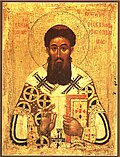 Gregory PalamasSaint · Archbishop of ThessalonicaNov 14
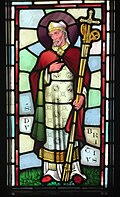 DubriciusSaint · Welsh bishopNov 14
- Alberic of UtrechtSaint · Bishop of UtrechtNov 14
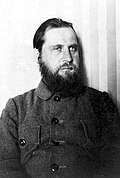 Dimitry BenevolenskyHieromartyr · ArchpriestNov 14
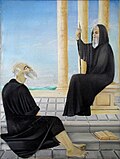 Fantinus the YoungerVenerableNov 14
 Alexander BykovHieromartyr · PriestNov 14
- Anna ZertsalovaMartyr · Spiritual writerNov 14
 Prokopy TitovHieromartyr · Archbishop of Kherson and NikolaevNov 14
- Aristarchus Zaglodin-KokorevVenerable Martyr · HieromonkNov 14