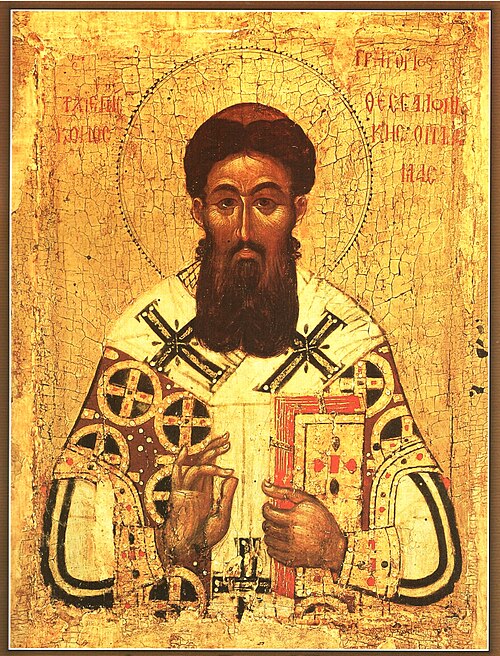
Saint
Gregory Palamas
Archbishop of Thessalonica
Athonite monk and archbishop of Thessalonica, defender of hesychast prayer and the divine light.
- Feast
- November 14old style November 27
- Reposed
- 135914th century
- Place
- Thessaloniki
- Order
- Hierarchs
Life
Saint Gregory Palamas was a monk of Mount Athos and archbishop of Thessalonica, one of the great theologians of Orthodoxy. He defended hesychast prayer, the teaching on the uncreated light of Tabor, and the distinction between God's essence, which remains unshared, and His uncreated energies, by which God gives Himself to people. He was born in 1296 at Constantinople and fell asleep in the Lord on 14 November 1359 at Thessalonica. The Church commemorates him on 14 November and on the second Sunday of Great Lent.
Childhood and calling
Gregory was born at Constantinople, in a distinguished family that had come from Asia Minor. His father, Constantine, was a high dignitary at the court of the Emperor Andronikos II Palaiologos and died soon after. The emperor himself took part in the raising and education of the orphaned boy. Gifted and diligent, Gregory mastered the whole course of higher learning of the time, including the philosophy of Aristotle.
The emperor hoped to see him in the service of the state. But Gregory, barely twenty, left in 1316 for Mount Athos (other sources say 1318) and became a novice at Vatopedi monastery under the Elder Nicodemus of Vatopedi. According to tradition, a year later the holy Apostle and Evangelist John appeared to him in a vision and promised him his spiritual protection. His mother and sisters likewise took the monastic habit. The whole family was proclaimed saints by the Ecumenical Patriarchate in 2009: his mother Kalloni, his brothers Theodosios and Makarios, his sisters Epicharis and Theodota.
Life of stillness
After the death of Nicodemus, Gregory spent eight years of struggle under the guidance of the Elder Nikephoros. Then he moved to the Great Lavra of Saint Athanasius the Athonite, where he served in the refectory and sang in the church. After three years he entered the skete of Glossia, seeking a higher perfection, and there he learned the unceasing prayer of the mind and heart, which monks had cultivated since the great desert ascetics of the fourth century, Evagrius of Pontus and Macarius of Egypt, and which Symeon the New Theologian had described. It asks for stillness and solitude, whence the name hesychia, and those who follow it are called hesychasts.
In 1326, threatened by Turkish raids, he went down with the brethren to Thessalonica, where he was ordained a priest. He joined priestly service to a hermit's life: five days of the week he spent in silence and prayer, and on Saturday and Sunday he came out among the people, served the Liturgy and preached. His words brought the listeners tenderness and tears.
Near Thessalonica, in the region of Veria, he gathered a small community of hermits and guided it for five years. In 1331 he went back to Athos, to the skete of Saint Sava near the Lavra. In 1333 he was appointed abbot of Esphigmenou monastery, but soon laid down the burden, because some brethren found his rule too severe. From 1336 he devoted himself at the skete of Saint Sava to theological writing to the end of his life.
The struggle with Barlaam
About 1330 there came to Constantinople from Calabria the learned monk Barlaam, an author of treatises on logic and astronomy and a skilled orator. He received a chair in the capital and began to expound the writings of Saint Dionysius the Areopagite. Going then to Athos, he came to know the way of life of the hesychasts. Starting from the fact that the essence of God cannot be known, he called mental prayer a heretical error and tried to show that the light of Tabor was created and material.
At the request of the Athonite monks Gregory first answered by word of mouth, and when that proved not enough, in writing. So came the Triads in Defence of the Holy Hesychasts, in three series of three treatises, begun in the second half of the 1330s. Around 1340 and 1341, with his help, the Athonite monks drew up the Hagioritic Tome, an exposition of the teaching which became the foundation of Byzantine mystical theology. The council held at Constantinople in 1341 in Hagia Sophia accepted Gregory's teaching, that God, unapproachable in His essence, reveals Himself through His energies, which are neither material nor created. Barlaam was condemned and fled to Calabria.
Trials
The struggle did not end. Barlaam's follower, the monk Gregory Akindynos, took his place, writing against the hesychasts, and Gregory answered with treatises of refutation. Patriarch John Kalekas took the side of Akindynos. A council in 1344 excommunicated Gregory, and he was imprisoned for almost four years, until 1347.
When Kantakouzenos prevailed in 1347 and Isidore became patriarch, Gregory was freed and consecrated archbishop of Thessalonica. The people of the city, unsettled by revolt, did not receive him at once, so the hierarch had to live for a time elsewhere. In 1351 the council at Blachernae decided that his teaching was the teaching of the Church, condemned his opponents and pronounced acclamations in praise of Gregory. The philosopher Nikephoros Gregoras, who refused to submit, was kept in a monastery.
Captivity among the Turks
In 1354, travelling toward Constantinople, his ship fell into the hands of the Turks. Taken captive, Saint Gregory preached the Gospel even in bondage, both to his fellow prisoners and to his Muslim captors, who were astonished by the wisdom of his words. Some of them, unable to bear it, beat him and would have killed him had they not expected a large ransom. After a year he was ransomed and returned to Thessalonica.
Writings and teaching
His most important dogmatic work is the Confession of the Orthodox Faith, presented to the council of 1351. Besides the Triads and the Hagioritic Tome he wrote treatises against Akindynos and Nikephoros Gregoras, a work on the procession of the Holy Spirit against the Latins, the Decalogue of the New Testament and many homilies. Some of his writings are included in the Philokalia.
His teaching speaks of the knowledge of God as a spiritual experience, received by all Christians in Baptism and fulfilled through the Eucharist, prayer and love. God is beyond reach in His essence but gives Himself through His energies, which are not emanations but the divine life itself, in which man shares.
Repose and veneration
In the three years before his death Saint Gregory worked many miracles, healing the sick. On the eve of his repose Saint John Chrysostom appeared to him, crying: To the heights, to the heights. He fell asleep in the Lord on 14 November 1359. Veneration began at once, because of the miracles at his tomb in Thessalonica, and spread in parallel on Athos.
In 1368 Patriarch Philotheos Kokkinos placed him among the saints through a council at Constantinople and composed his life and service. On the second Sunday of Great Lent, after the Sunday of Orthodoxy, the Church honours him as a pillar of the confession of faith. His relics are kept at Thessalonica, in the metropolitan cathedral that bears his name, and part of them have been brought on pilgrimage to Romania as well, to Galați in 2009 and to Iași in 2025.
Commemorated the same day November 14
 Justinian the GreatRight-Believing · Byzantine EmperorNov 14
 PhilipApostle · The ApostleNov 14
 TheodoraRight-Believing · Byzantine EmpressNov 14
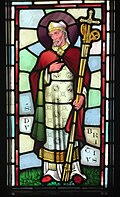 DubriciusSaint · Welsh bishopNov 14
- Alberic of UtrechtSaint · Bishop of UtrechtNov 14
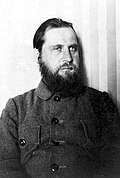 Dimitry BenevolenskyHieromartyr · ArchpriestNov 14
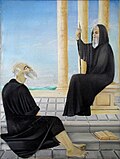 Fantinus the YoungerVenerableNov 14
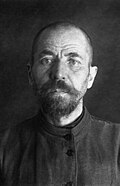 Alexander BykovHieromartyr · PriestNov 14
- Anna ZertsalovaMartyr · Spiritual writerNov 14
 George IzvekovHieromartyr · Archpriest and composerNov 14
 Prokopy TitovHieromartyr · Archbishop of Kherson and NikolaevNov 14
- Aristarchus Zaglodin-KokorevVenerable Martyr · HieromonkNov 14