Saint
Ecgbert of York
Archbishop of York
Archbishop of York in England, who reposed in 766.
Uncertain source. We are looking to verify this information as soon as we can.
- Feast
- November 19old style December 2
- Reposed
- 7668th century
- Place
- York
- Order
- Hierarchs
Life
Ecgbert of York (Egbert) was archbishop of York in the 8th century and reposed on 19 November 766. A German source says he is venerated as a saint; the other sources at hand do not mention a cult, so his status as a saint remains uncertain.
He was the son of Eata, of the line of the kings of Bernicia, and the brother of Eadberht, king of Northumbria from 737 to 758. He went to Rome with another brother, Ecgred, who died on the journey, and there he was ordained deacon. Alcuin calls him a student of the Venerable Bede, but this may be meant in a broad sense, as a student of Bede's writings; Bede visited him at York in 733. Ecgbert was named bishop of York around 732 (other sources give 734) by his cousin King Ceolwulf, and Pope Gregory III gave him the pallium in 735, so that he established the archdiocese of York. The two brothers, he and the king, worked together on church matters and were forbidden by Rome to transfer church lands to secular control. In his letter of 734 Bede urged him to read the Pastoral Care of Gregory the Great, to divide his large diocese and to reform the monasteries, but Ecgbert did not divide the diocese. Saint Boniface wrote to him asking for support against Æthelbald of Mercia and for books of Bede.
He founded at York a school which, according to the historian Peter Hunter Blair, equalled or surpassed the monasteries of Wearmouth and Jarrow, and a library without equal in the West of its day. Among the pupils of the school was Alcuin, and Liudger, first bishop of Münster, and Aluberht also studied there. He wrote the Dialogus ecclesiasticae institutionis, a legal code for the clergy. Other works ascribed to him in the Middle Ages (a collection of canons, a penitential, a pontifical) are not regarded by modern scholars as authentic. He was buried in his cathedral at York.
Commemorated the same day November 19
 ObadiahProphet · The ProphetNov 19
 Eucherius of LyonSaint · Bishop of LyonNov 19
 Philaret of MoscowSaint · Metropolitan of MoscowNov 19
 Nerses the GreatSaint · Catholicos of ArmeniaNov 19
 Hilarion the GeorgianVenerable · Georgian monk and wonderworkerNov 19
 Barlaam of the Kyiv CavesVenerable · First Abbot of the Caves LavraNov 19
 Porphyrios the KavsokalyviteVenerable · Athonite hieromonkNov 19
 Adrian of PoshekhonyeVenerable Martyr · Abbot of the Dormition MonasteryNov 19
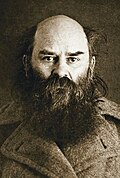 Joasaph UdalovHieromartyr · Bishop of ChistopolNov 19
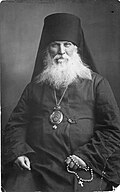 Porphyry GulevichHieromartyr · Bishop of SimferopolNov 19
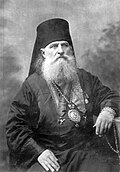 Alexis BelkovskyHieromartyr · Archbishop of Velikiy UstyugNov 19
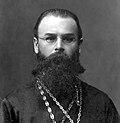 Macarius KarmazinHieromartyr · Bishop of YekaterinoslavNov 19