
Fool-for-Christ
Euphrosyne of Kolyupanovo
Fool for Christ and hermit
Lady-in-waiting to Catherine the Great who became a hermit and fool for Christ, 1758 to 1855.
- Feast
- July 3old style July 16
- Reposed
- 185519th century
- Order
- Fools-for-Christ
Life
Saint Euphrosyne of Kolyupanovo, the blessed fool for Christ, known in the world as Princess Evdokia Grigorievna Vyazemskaya, was a lady-in-waiting at the court of Empress Catherine II who secretly left the court to give herself to God. For nearly fifty years she followed the path of foolishness for Christ, first beside the Vladychny convent in Serpukhov and then in the village of Kolyupanovo in the Tula province, where she reposed in 1855.
She was glorified in 1988 as a locally venerated saint of the diocese of Tula, among the blessed. She is commemorated on 3 July, the day of her repose, and on 22 September, in the Synaxis of the Saints of Tula (Julian calendar).
Life at court
Very little is known of her life in the world. She was born around 1758 into the family of Prince Grigory Ivanovich Vyazemsky, of a younger branch of the ancient house of the Vyazemsky princes. In 1776 she graduated in the first class of the Educational Society for Noble Maidens at the Smolny convent in Saint Petersburg, later the Smolny Institute, and was appointed a lady-in-waiting at the empress's court.
Through her birth and rank she knew many leading figures of the age, among them the general Alexander Suvorov and Prince Yury Dolgorukov, later governor of Moscow. She herself later recalled that, together with the chamberlain Alexander Naryshkin, afterwards director of the imperial theatres, she used to amuse the empress when she was bored.
Flight from the palace
How long she lived at court is not known. Once, while the court was at Tsarskoye Selo, Evdokia and two other ladies-in-waiting, M. Ya. Sonina and a girl named Salomia, staged their own deaths: they left their dresses on the bank of a pond, dressed as peasant women and fled, beginning a life of wandering. The circumstances remain obscure, but her later confessor said that she fled out of a desire to give herself to God.
He also preserved another tradition, without the staged drowning. According to it, Evdokia simply vanished from the palace, and orders were sent along the roads to stop her. As she made her way toward Moscow in peasant clothes, she was recognised by a district police officer at a river crossing and brought back to the capital. The empress received her kindly and, convinced of her firm resolve to serve God, allowed her to enter a monastery and, on parting, gave her a monastic habit of shining cloth.
Years of wandering
After leaving the world, Evdokia wandered for more than ten years among monasteries and churches. She used to say that for a time she worked in the cattle yard of the Spaso-Sumorin monastery in Totma, where the relics of Saint Theodosius of Totma rest. When her strength gave out she went to Moscow, where in 1806 she met Metropolitan Platon. After hearing her story, he blessed her for the struggle of foolishness for Christ and sent her with a letter to the Vladychny Convent of the Entry of the Theotokos in Serpukhov, under the assumed name of Euphrosyne the fool.
At the Serpukhov convent
Abbess Dionysia received her kindly. At first she lived in the sisters' house, then in a small hut near the convent. According to Vitalia, then a novice and later a nun of the convent, Metropolitan Platon had told the abbess of Euphrosyne's origins in his letter, and some of the other nuns knew of it.
She wore a shirt of coarse cloth with a threadbare robe over it, and in winter a man's sheepskin coat; on feast days she put on a caftan of grey homespun, and in this dress she allowed her portrait to be painted. Under her clothes she secretly wore iron chains and, at her neck, a large copper cross. When a landowner, E. A. Dubrovina, discovered them by chance, Euphrosyne told her that this was her secret and forbade her to reveal it. She kept her hair cut short, sometimes wrapped in a rag or covered with a cap, and always went barefoot, even in winter.
In her hut she kept two cats, three dogs, hens and turkeys, and she slept on the floor with her dogs. Asked why, she answered that she was worse than the dogs. She never cleaned her dwelling, the floor was littered with the animals' scraps, and the air was hard to bear. When Abbess Evgenia Ozerova asked her why she kept the animals, she laughed and said that the smell took the place of the perfumes she had used so freely at court. In the summer heat she lit her stove, while in winter her hut stood cold.
At night she walked around the convent singing psalms, and by day she gathered mushrooms, herbs and flowers in the convent woods, giving the herbs to the sick who came to her. She prayed in a chapel near the convent and came to the cathedral for the Liturgy. She confessed to the convent's confessor and received Communion only once a year, on Great Thursday. At Theophany she went with the procession to the blessing of the waters on the river Nara, plunged into the water in her hair shirt and called the others to come, joking that a hot bath awaited them.
During these years she often met Saint Philaret, Metropolitan of Moscow and Kolomna, who revered her as an ascetic. When the metropolitan came to the convent, she went outside the gate to meet him and receive his blessing and kissed his hand, and he in turn kissed hers; when he left she accompanied him beyond the gates.
Removal to Kolyupanovo
After a new abbess, Ilaria, came to the convent, Euphrosyne began to be persecuted. Some lives speak only of envy and malice; others say that, on the new abbess's orders, her three dogs were killed before her eyes. In 1845 she left the convent and moved to the village of Kolyupanovo in the Tula province, on the right bank of the Oka, at the invitation of one of her devotees, the landowner Natalia Alekseevna Protopopova. There she spent the last ten years of her life.
From the convent she took only an icon of Christ with the Mother of God and Saint Nicholas standing before Him. Natalia Alekseevna built her a small house beside the manor, but the blessed one drove a cow into it and settled herself in a little room among the household servants. As at the convent, she lived with her animals, sending them out of the room only on the days she received Communion.
Her confessor became Father Pavel Prosperov, priest of the village church of the Kazan Icon of the Mother of God. She often left the village to visit those who revered her, sometimes staying with them for long periods. She travelled mostly on foot, more rarely in a covered cart, taking a cat and a dog with her. She was most attached to Alexei Tsemsh, manager of the Myshega iron foundry, whom she called her son. He built her a cell in his garden, where she sometimes lived for months; it held no furniture but a coffin, in which she lay down to rest.
For solitary prayer she chose a ravine on the bank of the Oka near the village. Beside the stream at its bottom she dug a well, and she told the sick who came to her to take water from her well and they would be healed.
Her gifts
Many stories of her gift of healing come from the Kolyupanovo years. It was told that the landowner Protopopova, who suffered in her legs and was coughing blood, recovered after being bathed, at the blessed one's direction, in a specially prepared bathhouse; that her nephew, the landowner A. P. Poloskov, who fell gravely ill on the eve of his wedding, recovered after a bath of herbs Euphrosyne had gathered; and that another landowner, N. Korelova, who had laboured for three days in childbirth, was safely delivered at the first stroke of the bell, as the blessed one had promised after rubbing her with oil.
Those close to her also ascribed to her the gift of foresight. It was told in particular that she foretold to a novice of the Sezenovo convent that she would become abbess, and foretold the appointment of Bishop Dimitry (Muretov) to the see of Tula and Belyov. People called her Mother Euphrosyne, although it is not known whether or when she received monastic tonsure. Her fame was such that Bishop Dimitry, on his first journey through the diocese, stopped at Kolyupanovo to meet her.
Repose
Three weeks before her death she told the woman who looked after her that two angels in white garments had come out of the church and were calling her to them. The news spread quickly, and people from the surrounding area came to take leave of her and receive her blessing. To many she gave a keepsake, from small crosses and icons to herbs and clothing. Natalia Protopopova wrote to Bishop Dimitry asking permission to bury her inside the Kolyupanovo church, and the bishop granted it the day after her death.
Euphrosyne reposed peacefully on 3 July 1855: she received Communion and, at three in the afternoon, folded her hands on her breast and gave up her soul. Crowds from the neighbouring villages gathered for her burial. At her wish she was buried in full monastic habit. Memorial services were held every day beside her coffin, surrounded by candles, and on 7 July three priests served the Liturgy for the departed and six priests performed her funeral, all led by her confessor, Father Pavel Prosperov. She was laid beneath the floor of the refectory of the wooden church. At Father Pavel's initiative and at Alexei Tsemsh's expense, a wooden tomb with a cast-iron slab was placed over her grave, its inscription made with the blessing of Saint Philaret of Moscow.
Veneration
The veneration that began in her lifetime continued after her death. From 1884 a memorial service for her was held in the village church before every Liturgy, and people began to speak of healings and help received through her prayers. From 1909, by order of the Tula spiritual consistory, a book was kept in the church to record these accounts; her full life, published in 1911, gathers fifty-five of them. Every year, on the day of her death and on her name day, many pilgrims came to Kolyupanovo. In 1910 Bishop Evdokim (Meshchersky) of Kashira, vicar of the Tula diocese, made a pilgrimage to her tomb, and in 1914 a gilded wooden canopy was raised over it.
The spring she had dug was also venerated: in 1885 a roof on pillars was built over it, and in 1909 a wooden chapel with a covered bathing place beside it. Every year on Trinity Sunday a procession went from the church to the spring. In 1931 the church burned down, and her grave and spring fell into neglect.
In 1988, at the initiative of Archbishop Maxim (Krokha) of Tula and Belyov, Euphrosyne was numbered among the saints of Tula, among the blessed, and a service, an akathist, a troparion and a kontakion were composed for her. In 1993 work began on a stone church on the site of the burned one, and in 1995, with the blessing of Metropolitan Serapion of Tula and by decree of Patriarch Alexy II, the Convent of the Kazan Icon of the Mother of God was founded there, with Abbess Euphrosyne (Kushnir). The church was completed in 1996; over the blessed one's grave a marble shrine with a carved wooden canopy was set up, and the walls are painted with frescoes of her life. In 2005 the convent marked the 150th anniversary of her repose with the Liturgy and a procession to her spring, which pilgrims still visit in great numbers.
Commemorated the same day July 3
 Leo II of RomeSaint · Bishop of RomeJul 3
 Anatolius of ConstantinopleSaint · Patriarch of ConstantinopleJul 3
- Anatolius of LaodiceaSaint · Bishop of LaodiceaJul 3
 Hyacinth of CaesareaMartyr · Martyr of CaesareaJul 3
 Heliodorus of AltinoSaint · First bishop of AltinumJul 3
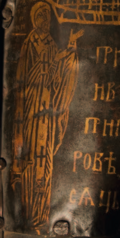 Basil KalikaSaint · Archbishop of NovgorodJul 3
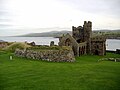 Germanus of ManSaint · First bishop of the Isle of ManJul 3
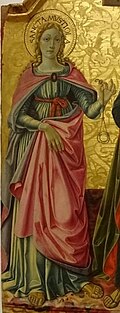 MustiolaMartyr · Martyr of ChiusiJul 3
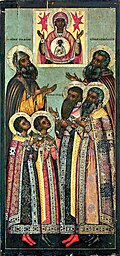 Basil Vsevolodovich of YaroslavlRight-Believing · Prince of YaroslavlJul 3
 Anatolius the RecluseVenerable · Recluse of the Kiev CavesJul 3
 John of YarenskVenerableJul 3
 Longinus of YarenskVenerableJul 3