Saint
Flavian of Antioch
Patriarch of Antioch
Patriarch of Antioch from 381 until his death in 404, who put his wealth and talents at the service of the Church.
- Feast
- September 27old style October 10
- Reposed
- 4045th century
- Place
- Antioch
- Order
- Hierarchs
Life
Saint Flavian I of Antioch was bishop, or patriarch, of Antioch from 381 until his death in February 404. He was a contemporary of Saint John Chrysostom, and the Church honours him as a hierarch and remembers him on 27 September and on 16 February.
He was born around the year 320, most probably at Antioch. He inherited great wealth but resolved to devote his talent and riches to the service of the Church. Together with Diodorus, later bishop of Tarsus, he defended the Orthodox faith against the Arian heretic Leontius, who had succeeded Eustathius in the see of Antioch. The two friends gathered the faithful outside the city walls for services, and according to Theodoret it was in these gatherings that antiphonal singing was introduced in the services of the Church. Meletius, appointed bishop of Antioch, ordained Flavian priest, and at Meletius' death, in 381, during the Second Ecumenical Council, Flavian was proposed in his place by Diodorus of Tarsus, then very powerful, although Saint Gregory the Theologian had preferred Paulinus, and he was chosen.
The schism between the two parties was far from healed. The bishop of Rome and the patriarch of Alexandria refused to recognize him, and Paulinus II, elected by the Eustathians, continued to hold a part of the Church. In 386 Flavian ordained Saint John Chrysostom priest. At Paulinus' death in 388, Evagrius succeeded him, and after Evagrius' death (in 392 or 393) Flavian managed to prevent the election of another successor, although the Eustathians continued to hold separate gatherings. Through the intervention of John Chrysostom, soon after his elevation to the see of Constantinople in 398, and through the influence of the emperor Theodosius, Flavian was recognized in 399 as the sole legitimate bishop of Antioch. The Eustathian schism was healed only in 415, through the efforts of Alexander.
In the uprising of 387, when the people of Antioch angered the emperor by pulling down the statues of him and of his wife Flacilla, Flavian obtained their pardon from Theodosius by the gentle power of persuasion. He also struggled against the Apollinarist and Messalian heretics, for whom he convened a synod in 390. In all his pastoral work his greatest support was John Chrysostom. He does not seem to have written systematically, being absorbed in pastoral duties; his sermons, often given, were not taken down by stenographers, so few survive: a work on not anathematizing the living or the dead, eight fragments preserved by Theodoret and by Leontius of Byzantium, and three fragments in a Syriac translation. His death was peaceful and painless.
Commemorated the same day September 27
 Anthim the IberianHieromartyr · Metropolitan of Ungro-WallachiaSep 27
 John MarkApostle · Companion of Paul and BarnabasSep 27
 Sigebert of East AngliaRight-Believing · King of East AngliaSep 27
 Sabbatius of SolovkiVenerable · Co-founder of Solovki MonasterySep 27
 Zenas the LawyerApostle · Apostle of the SeventySep 27
 Caius of MilanSaint · Bishop of MilanSep 27
 Peter of KrutitsyHieromartyr · Metropolitan of KrutitsySep 27
 Callistratus of CarthageMartyrSep 27
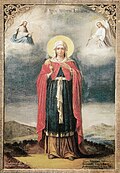 Aquilina of ZagliveriNew MartyrSep 27
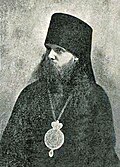 Herman KosolapovHieromartyr · Bishop of VolskSep 27
- AdheritusSaintSep 27
- Adheritus of RavennaSaintSep 27