
New Martyr
George the New of Sofia
Silversmith of Kratovo
Silversmith from Kratovo, burned alive by the Ottoman Turks at Sofia in 1515 for refusing to renounce the Christian faith.
- Feast
- February 11old style February 24
- Reposed
- 151516th century
- Place
- Sofia
- Order
- Martyrs
Life
Saint George the New Martyr was a silversmith from Kratovo, burned alive by the Turks at Sofia on 11 February 1515 because he refused to renounce the Christian faith. He is one of the nine saints of Sofia and is honoured in Bulgaria, Serbia, North Macedonia and Russia. His life was written by his spiritual father, the priest Peyo, who witnessed the events.
Childhood and craft
He was born around 1497 at Kratovo, in present-day Macedonia, to Orthodox Christian parents, Demetrius and Sara. Some sources call the family poor and others well off, but he soon lost his father. At six years old his parents sent him to the church school, and after learning to read he took up silversmithing and quickly mastered it. Serbian, Bulgarian and Macedonian sources each claim him as their own, and the Serbian Church tradition calls him George the Serb of Kratovo.
In those days, every five years the sultan's agents went through Christian lands choosing boys for the Turkish army, and his mother urged him to leave for Sofia. Between 1509 and 1512 he moved there and found lodging in the house of the priest Peyo, who taught him Holy Scripture. He went on with his craft and became known for his humility, wisdom and piety.
Confession and martyrdom
The young man's beauty and intelligence drew the notice of the Muslims. In 1515, when he was eighteen, an educated Turk who pretended to be a customer came to Peyo's house and demanded that George join the Turkish army, accept Islam and marry a Muslim woman. The Tale of George the New says the Turk tried to put a cap on his head, but the young man tore it off and refused to renounce his faith. He even spoke words of abuse against Muhammad.
He was tried for blasphemy and thrown into prison. There he was long tormented, pleaded with and threatened, and even offered bribes, and some Christians who saw his sufferings urged him to give way. He remained faithful to Orthodoxy and, in some sources, won the arguments held with him. The priest Peyo visited him in prison and strengthened him in the faith.
On 11 February 1515 the Turks, seeing they could not shake him, burned him alive on a pyre in the city square, in the reign of Sultan Selim I. In one version of the story he did not die in the fire but was killed with a club by one of the Turks.
Relics and veneration
According to Peyo's Life, the martyr's body remained whole. The Muslims would not give it to the Christians, but the Christians took it secretly by night and buried it in the church of Saint Marina, and in the morning they presented the matter to the judge as a miracle. According to another account, the Turks threw animal carcasses on the pyre to mix up the bones, but then took fright and fled. A priest gave the remains that survived to Jeremiah, Metropolitan of Sofia, who buried them in the church of Saint George. Over time the relics were partly lost, and a portion is kept at the Dragalevtsi monastery and another at Rila.
He was canonized in 1549, in the time of Macarius, Metropolitan of Moscow, and in Russia he was honoured as a symbol of Christian resistance to oppression. Under Ottoman rule his veneration was kept quiet and was preserved mostly through service books and menaia. His earliest known icon, from 1536, is on Mount Athos. His cult grew stronger in 1855, when Nikola Karastoyanov printed his service and life, and in 1865 the only Bulgarian church dedicated to him was built at Botevgrad; at Kratovo a new church was consecrated to him in 1929. The Orthodox Church commemorates him on 11 February, and in some places also on 26 May by the old calendar.
Commemorated the same day February 11
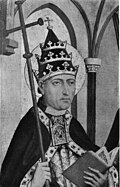 Gregory II of RomeSaint · Bishop of RomeFeb 11
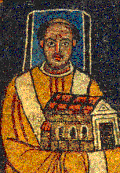 Paschal I of RomeSaint · Bishop of RomeFeb 11
 Blaise of SebasteHieromartyr · Bishop of SebasteFeb 11
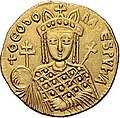 TheodoraRight-Believing · Byzantine EmpressFeb 11
 CaedmonVenerable · Monk and poet at WhitbyFeb 11
 Vsevolod of PskovRight-Believing · Prince of PskovFeb 11
 GobnaitVenerable · Saint of BallyvourneyFeb 11
 Demetrius of PrilutskVenerable · Founder of the Saviour MonasteryFeb 11
 Castrensis of SessaSaint · Bishop of SessaFeb 11
 ArdanVenerableFeb 11
 Berthevin of ParignyMartyrFeb 11
- Cassian the BarefootVenerable · Venerable of VolokolamskFeb 11