Venerable
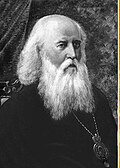
Heliodorus of Glinsk
Venerable of Glinsk Hermitage
A venerable father of Glinsk Hermitage, who died in 1879.
- Feast
- September 9old style September 22
- Reposed
- 187919th century
- Order
- Venerables
Life
Holy Venerable Heliodorus of Glinsk, a schema-archimandrite, was born in 1795 in the village of Staroselye in the Cherkasy district of the Kiev province, in the family of the priest Theodore Golovanitsky and Evdokia. At Holy Baptism he received the name John. He lived many years in monastic labour at the Glinsk hermitage and attained high spiritual gifts, by which he shone far beyond the monastery. He fell asleep in the night between 27 and 28 June 1879.
Youth and calling
His parents raised him in the fear of God. From 1806 to 1813 he studied at the Kiev theological academy. In 1813 he joined the Nizhny Novgorod militia and worked in the chancery of the army sent on the campaign abroad against Napoleon's retreating army. In 1815 he left the army and entered as a novice at the Kiev Caves Lavra, then moved to the Sophronius hermitage, and from there to Glinsk, under the guidance of Venerable Philaret (Danilevsky). Instructed by fathers with the gift of discernment, he understood that a monk is asked for more than bodily labours, for inner work in the garden of the heart as well. Philaret called him to Glinsk, where he received an obedience in the bakery and at the choir. He thirsted for spiritual wisdom and read without ceasing the Holy Scriptures and the works of the Holy Fathers. After two years he was tonsured a rassophore, with the name Joel.
Before his tonsure into the mantle, the monk Joel had to travel to Saint Petersburg to give explanations about the reason for his early leaving of the army. On the road, seeing that the crossing on the ice of a river had been stopped, he stayed the night at an inn by the bank. He was woken by a stranger who led him across the river bed over an imagined embankment and then became invisible. After his return from Petersburg, when he set out on a pilgrimage to the Ploshchansk hermitage, which he loved, robbers twice meant to attack him, but each time at the decisive moment soldiers happened to pass and saved him. It was learned later that no one else had seen soldiers on that stretch of road: angels had protected him.
Trials
On 9 March 1823, the day of the commemoration of the forty martyrs, Joel was tonsured into the mantle by Abbot Philaret and received the name Joannicius. After the tonsure, as the rule requires, he stayed several days in the church. Worn out by the vigil, he sat down in the middle of the church and closed his eyes, not knowing whether he slept. Then he saw the south door of the altar open, and from within came a beautiful young man in a white sticharion, girded crosswise with the orarion, who said to him: "Joannicius, keep watch. You are a monk and therefore must keep watch unceasingly.", and then went into the altar through the north door.
As he advanced, the temptations grew. The devil raised against him slander, a powerful weapon in his hands, and the father was driven out of the monastery. After some wandering and wavering he decided to return to Glinsk and was received, at his earnest prayers to the Mother of God. For two months he worked in the kitchen, bearing an undeserved penance. At last the abbot became convinced of his innocence and soon proposed him for ordination as hierodeacon. On 12 November 1824 Joannicius was ordained hierodeacon by Bishop Vladimir of Kursk and Belgorod. When the bishop laid his hand on his head, he felt a sweet warmth flow through his head into his heart and through his whole body, and his heart was filled with unspeakable joy, so that his face was changed. At communion he had a wonderful vision.
In 1826, so as not to take part in a quarrel stirred up among the brethren by a newly arrived novice, he moved to the Rykhlov monastery. For three years he bore the obedience of treasurer, to the monastery's benefit, and then fell into disgrace. He later told of an incident that made his position worse: entering the holy altar, he saw on the holy table a stout landowner to whom the monastery sacristan was showing various sacred objects. He prayed in his mind: "Lord, help me. If it is Your will that I suffer, Your will be done.", then drew near and, putting his elbow behind the landowner's back, pushed him off. In 1828 and 1829 the abbot obtained his transfer to the Domnitsa monastery, under strict watch and forbidden to serve. Reaching Chernigov, he asked the bishop to let him go to Athos or Solovki, but was answered that he would not be let go, for fear that he would complain in Petersburg. In 1831 the bishop was changed: at their last meeting the former bishop unexpectedly asked his forgiveness, and the new one, in 1832, ordained him hieromonk and appointed him abbot of Rykhlov.
Abbot and hermit
In 1835 he was raised to hegumen, and in 1840 to archimandrite and moved as abbot to the monastery of Saints Peter and Paul at Glukhov. In 1845, at his own request, he was released to rest at the Glinsk hermitage. In the autumn of 1850 and in 1851 he made a pilgrimage to Palestine and Athos. At Jerusalem he often walked the places sanctified by the life and sufferings of the Saviour: the Tomb of the Lord, Golgotha, the Way of the Cross, Gethsemane, the Mount of Olives. On the way back he stopped at the Holy Mountain, thinking to remain there for good. Stepping onto the shore of Athos, he bowed, took earth and sprinkled it on his head, saying: "This is my rest; here will I dwell." Soon word of him spread, many came for counsel and asked him to stay. A cell was even set aside for him, which the monastery gave him free of charge. At first he agreed, but after a short time he said that it was not the Lord's will for him to stay on Athos, and he returned to Russia at the beginning of July 1851, to the sorrow of the Athonite fathers.
On 24 December 1858, on the eve of the Nativity of the Lord, he received the holy schema with the name Heliodorus. In his humility he had come to consider himself lower than any creature, and all his life he did not allow a portrait to be made of him. He kept strictly the rule of the skete: in all the fasts he ate without oil, and likewise on Mondays, Wednesdays and Fridays, and on days of relaxation he followed the rule of the Church, not for the pleasure of taste but to follow the Church's dispensation. He made no departure from the rule even in grave illnesses. In 1863 he withdrew to a hermit's cell built by himself three kilometres east of the monastery, where the Far Skete was later founded, and took up still higher labours of abstinence and prayer.
The guide
Having obtained the gifts of discernment and foresight, Venerable Heliodorus was a guide to many of the elders of Glinsk. His teachings coincide in sense, at times almost word for word, with those of the elders of Optina, the venerable Ambrose, Moses and Anthony, and the fact that his letters were gathered in the library of the Optina Skete says much. To a monk who asked how to act in circumstances so as not to err before God, he answered: "Child, if you want your actions not to be mistaken, see that they are always grounded on Holy Scripture, on the truths of the Gospel, on the teaching of the holy apostles and on the words of the holy ascetic fathers. In this holy treasury you will find a foundation for all you will need, in every case, for your whole life."
In the last year of his life he lay almost constantly, exhausted in strength, and rose with more and more difficulty. He melted away like the wax of a candle burning down. On 25 June he communed once more of the Holy Mysteries and quietly awaited his end, not as a death but as a removal to another world. On Wednesday, 27 June, he was asked whether he wished for Holy Unction and Holy Communion, and said with effort: "I wish it very much." Hegumen Innocent served Holy Unction, then communed him for the last time. He reposed peacefully in the Lord at exactly one o'clock after midnight, between 27 and 28 June 1879, in the eighty-fourth year of his life full of trials. He was buried at Glinsk.
Venerable Heliodorus was entered in the calendar of the Russian Church by decision of the Council of Bishops in 2017. He is commemorated on 22 September, in the new style.
Commemorated the same day September 9
 JoachimRighteous · Father of the TheotokosSep 9
 Ciarán of ClonmacnoiseVenerable · Abbot of ClonmacnoiseSep 9
 Joseph of VolotskVenerable · Abbot of Volokolamsk MonasterySep 9
 Gorgonius of NicomediaMartyr · Martyr of NicomediaSep 9
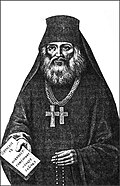 Philaret of GlinskVenerable · Abbot of Glinsk HermitageSep 9
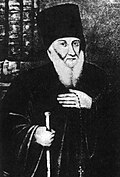 Basil KishkinVenerable · Hieromonk of PloshchanskSep 9
- Zenobius MazhugaSaint · Metropolitan of the Georgian ChurchSep 9
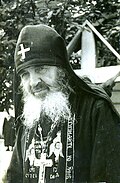 Andronik LukashVenerable · Schema-archimandrite and elderSep 9
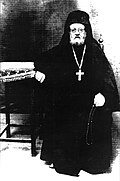 Joanicius of RakotinciVenerableSep 9
 Zacharias LobovHieromartyr · Archbishop of VoronezhSep 9
- Joachim of OpochkaVenerable · Disciple of St. Euphrosynus of PskovSep 9
- Nikita of ConstantinopleFool-for-Christ · Clerk of ConstantinopleSep 9