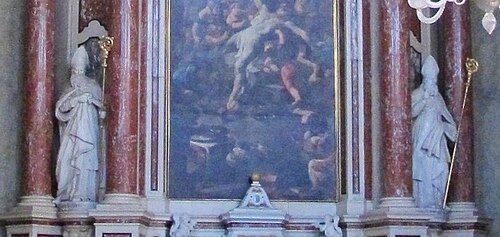
Saint
Ingenuin of Säben
Bishop of Sabiona
Second historically attested bishop of Sabiona (Säben) in Tyrol; died about 605.
- Feast
- February 5old style February 18
- Reposed
- 6057th century
- Place
- Säben Abbey
- Order
- Hierarchs
Life
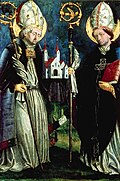
Saint Ingenuin (Ingenuinus, in German Jenewein) was the second historically attested bishop of Sabiona (Säben), in Tyrol, who died around 605. He is venerated as a saint in the Catholic Church of South Tyrol; our sources show no Orthodox glorification. He is commemorated on 5 February.
Little is known of his life. He was probably bishop of Sabiona from 577 until his death around 605, and of Roman descent. His bishopric covered much of the former province of Raetia Secunda, which was at that time disputed between the Lombards and the Franks. The name Ingenuinus probably means the little kneeling one, and in the Middle Ages it was Germanised into Jenewein.
From 588 to 590 he took part in the Synod of Marano near Aquileia. In 590 the Franks invaded the valley of the Adige through the Reschen Pass and destroyed several Lombard-Roman strongholds. During the siege of the fortress of Verucca near Trento, Ingenuin communicated with Bishop Agnellus of Trento. In 591, together with other bishops, he signed a document to the emperor Maurice in which he opposed Pope Gregory the Great in the Three Chapters controversy.
Because he suffered from the attacks of the Arian Lombards, the pagan Baiuvarii and the Slavs, he was venerated as a martyr between the middle of the tenth century and the beginning of the twelfth; in modern times he is venerated as a confessor. He died at Säben and was probably first buried there. Later, around 990, his relics were moved to the cathedral of Brixen. In 1982 a bishop's grave contemporary with him was discovered at Säben. He is called patron of the people of the mountain and, together with Saints Cassian and Albuin, the third patron of the diocese of Bozen-Brixen.
Commemorated the same day February 5
 AgathaMartyr · of CataniaFeb 5
 Avitus of VienneSaint · Archbishop of VienneFeb 5
 Polyeuctus of ConstantinopleSaint · Patriarch of ConstantinopleFeb 5
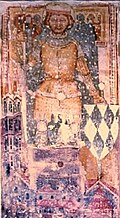 Domitian of CarantaniaRight-Believing · Slavic nobleman of CarantaniaFeb 5
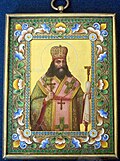 Theodosius of ChernigovSaint · Archbishop of ChernigovFeb 5
 Theodula of AnazarbusMartyrFeb 5
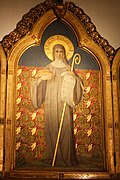 Adelaide of VilichVenerable · Abbess of VilichFeb 5
- Agatha HildegardRight-BelievingFeb 5
- Agricola of TongresSaint · Bishop of TongresFeb 5
 AlbuinSaint · Bishop of Säben and BrixenFeb 5
- Alexandra KasparovaVenerable MartyrFeb 5
- Alfred the AthelingMartyrFeb 5