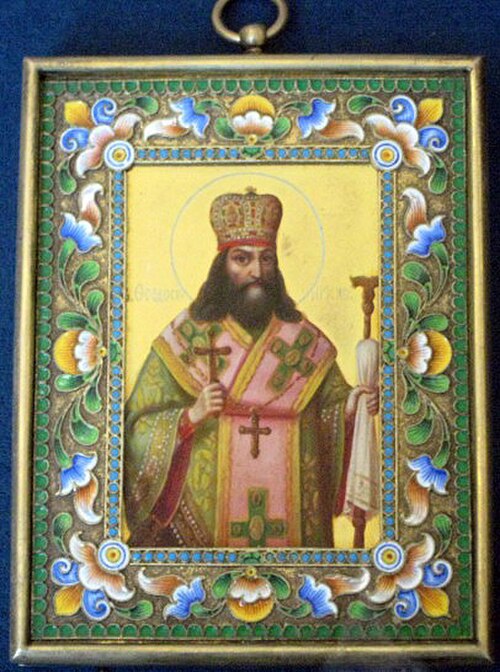
Saint
Theodosius of Chernigov
Archbishop of Chernigov
Archbishop of Chernigov in the later 17th century, died in 1696 and venerated as a saint.
- Feast
- February 5old style February 18
- Reposed
- 169617th century
- Place
- Chernihiv
- Order
- Hierarchs
Life
Saint Theodosius (Uglitsky), Archbishop of Chernigov, was one of the great pastors of the Church in Ukraine in the second half of the seventeenth century, the period known as the “Ruin”, when the land was torn by war. Abbot of Vydubychi, vicar of the Metropolis of Kiev, archimandrite in Chernigov and then archbishop, he restored monasteries, supported schools and church singing and was a steadfast defender of Orthodoxy. His incorrupt relics were uncovered in 1896 and are kept today in Chernigov. To distinguish him from Saint Theodosius of the Caves he is also called Theodosius the Priest, and he is regarded as one of the patrons of the left-bank districts of Kiev, which once belonged to the diocese of Chernigov.
Family and schooling
He was born in the early 1630s in Podolia, on the right bank of the Dnieper, most probably in the small town of Ulaniv, then part of the Polish Crown (today in the Vinnytsia region). He came from the old Orthodox noble family of Polonitsky-Uglitsky. His parents were the priest Nikita and Maria. His baptismal name is unknown. Many of his relatives were clergy, and the boy was raised in Christian piety.
He studied at the Kiev Brotherhood College attached to the Monastery of the Theophany, in the years of that school's flowering, when it was the main centre of Orthodox resistance to the pressure of the Jesuits and of the Unia. His rectors were Innocent Gizel (1648-1650), Theodosius Safonovich (1650) and Lazar Baranovych (1651-1655), and among his teachers were Epiphanius Slavinetsky and Arseny Satanovsky. Simeon of Polotsk, Ioannikios Galyatovsky, Anthony Radivilovsky and Varlaam Yasinsky studied there at the same time. During his studies his calling to monastic life became clear: he gave his free time to prayer and to reading Holy Scripture.
He was not able to complete the course, because after Kiev was taken in 1651 by the army of the Lithuanian hetman Janusz Radziwiłł the college interrupted its work for several years. Some reports say that he spent time in the army of Bohdan Khmelnytsky together with a relative (perhaps his brother), Eustathius Polonitsky, and the historian Nikolai Petrov believed that he then went abroad to continue his education. All his life he remained grateful to the monastery that had raised him.
In 1655 he returned home to Podolia. He had been married and, by all signs, was left a widower, which may have drawn him still more strongly to monastic life. In the early 1660s, according to some accounts, he gave his daughter in marriage to a nephew of Hetman Ivan Bryukhovetsky.
Tonsure and first obediences
No later than 1658 he was tonsured a monk in the Kiev Caves Lavra with the name Theodosius, in honour of Saint Theodosius of the Caves, the founder of coenobitic life in Rus'. That same year he was ordained hierodeacon, and Metropolitan Dionysius (Balaban) of Kiev made him archdeacon of Saint Sophia Cathedral and then steward of the metropolitan's household.
Wishing, however, to withdraw from worldly cares and give himself to ascetic struggle, he asked for a blessing and settled in the remote Krupitsky Monastery of Saint Nicholas near Baturin, in the diocese of Chernigov, renowned for its strict rule. There he was ordained hieromonk.
The fame of the young ascetic spread. From 1662 he was abbot of the Monastery of Saint Onuphrius near Korsun, in the diocese of Kiev. Metropolitan Dionysius had taken refuge there; he had supported Hetman Ivan Vyhovsky and had been forced to leave Kiev after Vyhovsky's defeat in the war of 1658-1659. Theodosius witnessed the last days of the metropolitan.
Abbot of Vydubychi
In 1664 he was appointed abbot of the Vydubychi Monastery in Kiev, which had recently been recovered from the Uniates and was in great need. He worked zealously for its revival. He secured the monastery's lands at Kalynivshchyna, Hnyleshchyna and Lisnyaky, granted by Hetman Yuri Khmelnytsky and confirmed in 1670 by a charter of Hetman Petro Doroshenko, which also added Kalny Luh. In 1680 he set up a skete on one of the monastery's estates in the Mozyr district (today in Belarus).
He founded a music school and a choir at the monastery, which by 1685 was famous throughout Ukraine and in Moscow. That same year he sent singers from his choir to Moscow as teachers of church singing, contributing to the beginnings of Russian choral music. He also cared for the civic life of the faithful: by a charter of 10 February 1687 he founded a brotherhood and a craftsmen's guild at the church in the town of Lytkovychi, which belonged to the monastery.
He had connections in Moscow (his brother Semyon Uglitsky served in 1666 as a clerk to the voivode Romodanovsky in Novgorod) and sought financial help there for the monastery. But the favour he enjoyed also brought him enemies. Bishop Methodius of Mstislavl and Orsha, together with other clergy, accused him and other abbots of treason against the Russian government and of corresponding with traitors. Tsar Alexis Mikhailovich did not believe them: on 17 November 1668 the slander was exposed, and the abbot received a gracious charter from the tsar.
Defending the monastery's lands firmly in the disputes over its estates, he was even suspended from serving for a time.
Vicar of the Metropolis of Kiev
In 1678 Lazar Baranovych, Archbishop of Chernigov and Novgorod-Seversky, who had been appointed locum tenens of the Metropolis of Kiev, made Theodosius his vicar in Kiev while he himself remained in Chernigov. In this way the actual administration of the metropolis passed into the hands of the abbot of Vydubychi.
In 1685 he took part, with a deciding vote, in the election of Bishop Gideon (Svyatopolk-Chetvertinsky) as Metropolitan of Kiev. Then, at the request of Hetman Ivan Samoylovych, he went to Moscow with Abbot Jerome (Dubyna) of the Ascension Monastery in Pereyaslav to Patriarch Joachim to obtain confirmation of the new metropolitan. On this occasion he also obtained permission for the monks of Vydubychi to come to Moscow to collect alms.
Archimandrite in Chernigov
In 1687 (according to other sources in 1688), on the proposal of Lazar Baranovych, who was thinking ahead about a successor, Theodosius was appointed archimandrite of the Yelets Dormition Monastery in Chernigov in place of the late Archimandrite Ioannikios (Galyatovsky). The monastery had been devastated and needed restoration, and he laboured zealously to renew it. Near the Dormition Cathedral of the Yelets Monastery the house of Saint Theodosius still stands, the only seventeenth-century wooden dwelling surviving on the left bank of Ukraine.
In these years he was put forward several times for high office. In 1690, after the death of Metropolitan Gideon, he was the third candidate for the see of Kiev; when Varlaam (Yasinsky), archimandrite of the Caves Lavra, was chosen, Theodosius was proposed to succeed him as archimandrite of the Lavra.
From 1691, at the wish of Lazar Baranovych, he became his assistant in governing the diocese. He took part in drafting the conciliar reply to Patriarch Joachim of Moscow concerning the attitude of the Metropolis of Kiev towards the Council of Florence and the question of the moment at which the Holy Gifts are changed.
Archbishop of Chernigov
In 1692, on the proposal of the very aged Lazar Baranovych, a council was gathered with Hetman Ivan Mazepa, the clergy and representatives of the people, and it unanimously elected Archimandrite Theodosius to the see of Chernigov. Theodosius went to Moscow. His nomination as bishop took place on 11 September, and on 13 September 1692, in the presence of Tsars Ivan and Peter Alekseyevich, he was consecrated Archbishop of Chernigov by Patriarch Adrian in the Dormition Cathedral of the Kremlin.
He was granted the right to serve in the sakkos, a vestment then reserved for the patriarch and the metropolitans; the archbishops of Chernigov received it because their see ranked first among the archbishoprics. He then returned to Chernigov and received from Moscow a charter confirming the estates of the archdiocese. In December 1693, after the death of Lazar Baranovych, he received the charter for the independent government of the diocese.
His episcopate was short but fruitful. In 1694 he blessed the founding of the convent at Pechenyky and of the skete near Lyubech, two versts from the town. That same year he consecrated the newly built church of the Nativity of the Mother of God in the Domnitsky Monastery. In 1695 he consecrated the Holy Trinity Cathedral, built on the summit of the Boldina Hill near the Monastery of Saint Elijah, which became the cathedral of the diocese of Chernigov. He renewed and adorned many other monasteries and theological schools of his diocese.
Repose
In the second half of 1695, feeling his end approaching and preparing a successor, he summoned Hieromonk John (Maximovich), the steward of the Svensky Monastery at Bryansk, raised him to the rank of archimandrite and placed him at the head of the Yelets Monastery. This was the future Saint John, Metropolitan of Tobolsk.
Saint Theodosius reposed on 5 February 1696 and was buried in the Cathedral of Saints Boris and Gleb in Chernigov, in a crypt made especially for him, to the right of the right-hand choir.
Veneration and glorification
Saint John (Maximovich) built a brick vault over the tomb with an inscription of praise in verse, in thanksgiving for his own miraculous healing from a grave illness. The coffin was replaced in 1772 and again in 1824, when the crypt was also enlarged. From 1835 the miracles worked through the saint's prayers were recorded, and in 1856 a chapel with a staircase was added in the narthex of the cathedral to give access to the crypt.
The question of his glorification was raised several times, but the Holy Synod was in no hurry. Only after nearly fifty later miracles had been carefully examined at the Synod's order, and the complete incorruption of the body had been established, was the archpastor of Chernigov numbered among the saints, on 9 September 1896. The uncovering of the relics was performed by Metropolitan Ioannikios (Rudnev) of Kiev and Galicia with six bishops and many clergy, before a multitude of faithful who had come to Chernigov from all over the country. Even so, few icons of him were painted before the Revolution.
The relics in the years of persecution
In 1921, on the very day of the saint's commemoration, the authorities examined the relics and then displayed them as an exhibit in an ethnographic museum. Later they were taken to Moscow and then to Leningrad, where they ended up in the museum of atheism in the Kazan Cathedral.
A pious tradition from the Second World War links the saint's name with the siege of Leningrad. It is told that in 1942, when the city was encircled, military men searching for a way out heard a voice urging them to pray to Saint Theodosius of Chernigov. Metropolitan Alexis (Simansky) of Leningrad then blessed the transfer of the relics, with the permission of the authorities, from the museum to the Cathedral of Saint Nicholas, where a service was celebrated before them. Lake Ladoga froze, and over its ice ran the road that brought food to the city and carried people out of the siege. The people call it the “Road of Life”, but it is also known as the “Road of Saint Theodosius”.
After the war Alexis, by then patriarch, obtained the return of the relics to Chernigov, where they arrived in 1946. In the Cathedral of Saint Nicholas in Saint Petersburg a side chapel was consecrated in the saint's honour, in memory of the time his relics rested there, and a portion of them is kept there.
Today the relics of Saint Theodosius rest in the Holy Trinity Cathedral of Chernigov, which he himself consecrated. He is commemorated on 5 February, the day of his repose, and on 9 September, the day of the uncovering and glorification of his relics, and in the Ukrainian Orthodox Church he is also remembered in the Synaxis of the Saints of Vinnytsia.
Commemorated the same day February 5
 AgathaMartyr · of CataniaFeb 5
 Avitus of VienneSaint · Archbishop of VienneFeb 5
 Polyeuctus of ConstantinopleSaint · Patriarch of ConstantinopleFeb 5
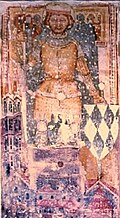 Domitian of CarantaniaRight-Believing · Slavic nobleman of CarantaniaFeb 5
 Ingenuin of SäbenSaint · Bishop of SabionaFeb 5
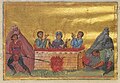 Theodula of AnazarbusMartyrFeb 5
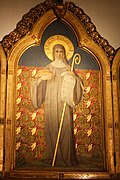 Adelaide of VilichVenerable · Abbess of VilichFeb 5
- Agatha HildegardRight-BelievingFeb 5
- Agricola of TongresSaint · Bishop of TongresFeb 5
 AlbuinSaint · Bishop of Säben and BrixenFeb 5
- Alexandra KasparovaVenerable MartyrFeb 5
- Alfred the AthelingMartyrFeb 5