
Hieromartyr
John Vasilevsky
A hieromartyr of the Russian Church, commemorated in the Orthodox calendar.
- Feast
- September 4old style September 17
- Reposed
- 193720th century
- Order
- Martyrs
Life
Holy Hieromartyr John Vasilevsky, a priest, was born on 18 March 1869 in the settlement of Krasny Kholm in the Vesyegonsk district of the Tver province, in the family of the psalmist Nicholas Vasilevsky. After the Tver Theological Seminary he was ordained priest and served at the cathedral in Vesyegonsk. In 1922 he was arrested and accused of having opposed the confiscation of church valuables and sentenced to a year in prison; he appealed, the appeal was accepted and he was released. He served at the cathedral until February 1924, then in the village of Selikhovo until October 1926, when he was named to the church of the Resurrection in the settlement of Seliharovo.
The first arrest
Three priests served here, but the most active was Father John, and this drew the persecution. On 15 July 1927 he was arrested and imprisoned at Ostashkov. The investigator asked him about the atheistic education of children, about whom he commemorated as bishop and about the processions with prayer services. The father answered that he had spoken of the Christian upbringing of children by their parents, that in his sermons he had not touched politics, that on 21 November 1926, on the feast of Saint Michael, he had set out with prayer services without an icon, but a villager from Nikva had brought the icon of the Archangel Michael and he had served with it in a few houses, until the psalmist told him that the authorities forbade it, and that he commemorates, like the other two priests, Metropolitan Seraphim (Alexandrov). To gather evidence, the investigator called witnesses, almost all of few words. The deacon Michael Shterin said that at Pascha the father had asked the children whether they had crosses and told them to tell their parents to buy them; other priests said that in a sermon of 19 December 1926 he had urged parents not to send their children to schools where their crosses are taken off, nor to the pioneers and Komsomol, but could not recall the words exactly. Laymen, among them the churchwarden Ivan Anishin, said that they knew of no agitation by him against the authorities.
On 11 August the charge was put to him that, hostile to Soviet power, he had spread counterrevolutionary and provocative rumours, had given counterrevolutionary sermons from the ambo, had urged that children not be sent to schools where the Law of God is not taught, and had stirred panic and distrust. Since the investigators too seemed not to have enough proof, they called other witnesses, among them a party member, Basil Shustrov, who told what the peasants said: that a new priest went about with little crosses on ribbons and put them on children who had none, even without the parents' consent. Another witness said that at Pascha 1927 he told the children and youths: "I myself spent three years in prison, the cross must be worn," giving crosses free to all who wanted. The psalmist added that, seeing in one house icons on one wall and portraits of leaders on another, he had told the host to take away the "filth". On 24 August a plenipotentiary of the OGPU from Tver interrogated him again about the sermons. The father said that on 19 December 1926 he had given a sermon on the theme "Obey them that have the rule over you, for they watch for your souls", had recalled Saint Nicholas as zealot of piety, had urged them to be faithful to Orthodoxy and to bring up their children in the spirit of faith, and that a negative attitude to faith leads children to the pioneers and Komsomol. This happened a year before the mass persecution began, and the inquiry decided that guilt was not proved and the father was released.
Martyrdom
In the 1930s he served at Bezhetsk, at the church of the Annunciation, whose community was made up of the nuns of a recently closed convent. Here he met the year 1937. He was arrested in the night of 14 to 15 August, interrogated the same day and imprisoned at Bezhetsk. He answered with dignity and calm. About the gatherings and feasts of the clergy held by Bishop Gregory (Kozyrev), on the bishop's name day, on ten years of his episcopate and on feast days, he said that they were held in the bishop's house and in the church porch and that only greetings were spoken. About the closing of the churches and the removal of the bells he said that he had grieved, but had come to terms with the decisions of the authorities. He denied being part of any counterrevolutionary group of the clergy. About the inquiry of 1934 he said that it was connected with the arrest of the priest Sergei Kordyukov of Bezhetsk. At the end of the investigation he said: "I do not admit guilt of belonging to a counterrevolutionary grouping of clergy and of carrying on anti-Soviet agitation."
Three weeks after the last interrogation, on 13 September, the NKVD troika sentenced him to death. The priest John Vasilevsky was shot on 17 September 1937. The Council of Bishops of August 2000 numbered him among the New Martyrs and Confessors of Russia, for veneration throughout the Church.
The Church commemorates him on 17 September, the day of his death, in the new style, on 18 July in the Synaxis of the Saints of Tver, and on the movable day of the synaxis of the new martyrs.
Commemorated the same day September 4
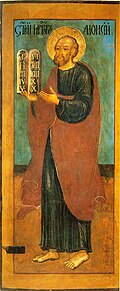 MosesProphet · The LawgiverSep 4
 Joseph the All-ComelyRighteous · Son of JacobSep 4
 Boniface I of RomeSaint · Bishop of RomeSep 4
 Babylas of AntiochHieromartyr · Patriarch of AntiochSep 4
 Hermione of EphesusMartyr · Martyr of EphesusSep 4
 Candida the ElderMartyr · Patron of NaplesSep 4
 Peter ZimonjićHieromartyr · Metropolitan of Dabar and BosniaSep 4
 Theodore, Mian, Julian and KionHoly Martyrs · Martyrs of NicomediaSep 4
- Ultan of ArdbraccanSaint · Abbot-bishop of ArdbraccanSep 4
- Babylas of NicomediaMartyrSep 4
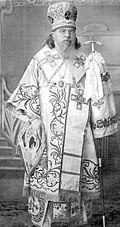 Sergius DruzhininHieromartyr · Bishop of NarvaSep 4
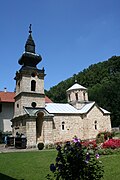 Stephen of TronošaVenerable · ArchimandriteSep 4